
Reviewed · MAUNA KEA SUMMIT & STARGAZING
MaunaKea Stellar Explorer From Kona
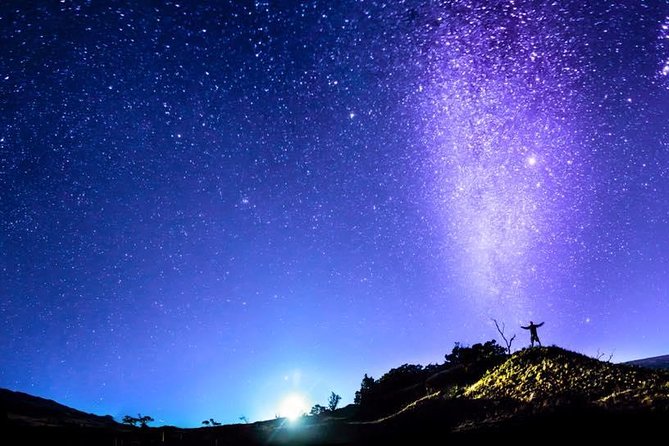
Sunlight by day, star magic by night. This 6-hour MaunaKea Stellar Explorer From Kona strings together solar telescope viewing and serious night-sky observing, plus dinner and a stop at Boiling Pots.
I especially like the balance of science and storytelling. The Dobsonian telescopes are built for wide, bright views of galaxies, nebulae, clusters, planets, double stars, and the Moon, with the guide explaining what you’re actually seeing—not just pointing.
One thing to keep in mind: the sky depends on the weather. If clouds roll in, you may get a slower start or a different observing location than you hoped for.
In This Review
- Key things that make this tour worth your time
- Kona pickup, dinner, and why the timing works
- Saddle Road drive: volcano facts, lava flows, and real island context
- Boiling Pots: an essential stop before the sky turns dark
- Solar telescope time: sunspots and prominences in daylight
- Mauna Kea stargazing with big Dobsonians and a clear target list
- Expect cold air, clean bathrooms at higher stops, and warm help
- Weather, clouds, and full-moon nights: set expectations the smart way
- Cost and value: what $239 buys you in real terms
- Who should book this MaunaKea Stellar Explorer from Kona
- Should you book it? My straight answer
- FAQ
- How long is the MaunaKea Stellar Explorer From Kona tour?
- What does the tour cost?
- What’s included with the ticket?
- Do I get pickup from my hotel in Kona?
- Does this tour visit the Mauna Kea summit or the Visitor Center?
- How big is the group?
- What should I bring and wear?
- Is free cancellation available?
Key things that make this tour worth your time
- Solar telescope session where you can safely watch sunspots, prominences, and solar activity when conditions allow
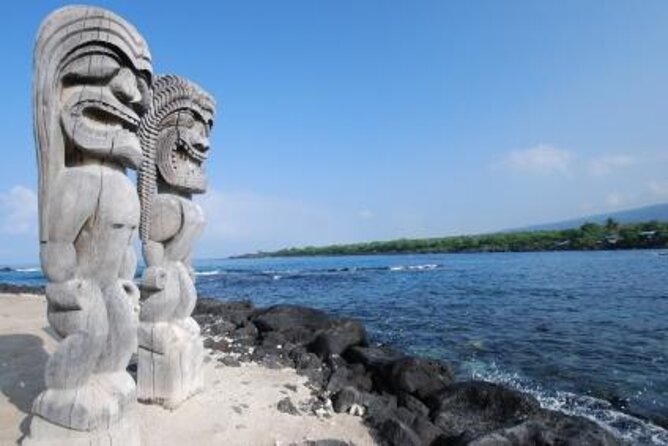
- Boiling Pots stop with guided context as you explore this volcanic/geothermal area
- Small-group vibe (up to 13 people) for easier questions and a calmer night session
- Large-aperture Dobsonians that give wide-field views you don’t get with many smaller setups
- A volcano-and-sky guide team: a National Park Service–trained guide covers geology and history on the drive
- No summit or Visitor Center visit, out of respect for Native Hawaiian concerns
More summit sunsets and stargazing on Mauna Kea
- Big Island, Hawaii: Volcano and Stargazing Tour with Dinner★ 4.8 · 179 reviews
- Mauna Kea: Stellar Explorer Tour from Hilo★ 4.5 · 67 reviews
- Mauna Kea: Stargazing Experience with Free Photos★ 4.2 · 32 reviews
Kona pickup, dinner, and why the timing works
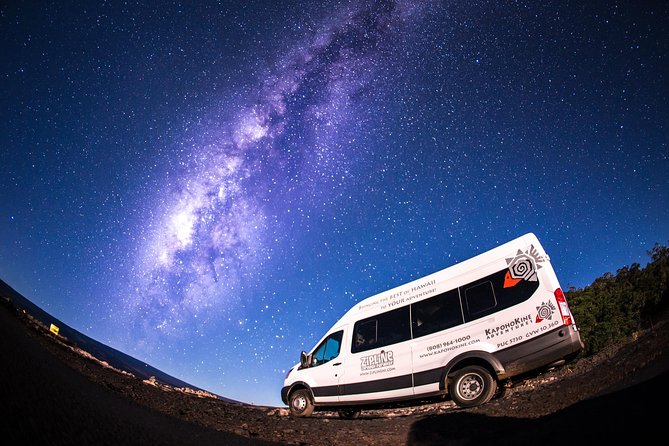
This is a 6-hour night-skies plan that starts in Kona, with pickup from major hotels. You’re not wasting the first part of the evening figuring out logistics. The van role is clear: get you out, get you fed, and get you to viewing locations on a schedule that makes sense for both daylight and nighttime astronomy.
Dinner is included, and it matters more than you’d think. You’ll be in cooler air as the drive climbs, and having a proper meal before telescope time keeps the whole night calmer—especially if you’re traveling with teens or anyone who gets cranky when dinner runs late.
Saddle Road drive: volcano facts, lava flows, and real island context
After you leave Kona, you head across Saddle Road between Mauna Kea and Mauna Loa—two of the biggest volcanoes on Earth. This part of the tour isn’t just scenic driving. Your National Park Service–trained guide shares volcanology and geology, including what you’re passing in terms of lava flows and the plants and animals that make this place home.
If you like travel that connects dots, this segment is a big deal. The stars at the end of the night are the headline, but the geology narration gives the whole trip meaning. You start understanding why the island looks the way it does—and why Mauna Kea sky viewing feels like a bonus, not a random detour.
Boiling Pots: an essential stop before the sky turns dark
You’ll also visit and explore Boiling Pots. The tour doesn’t present it as a quick photo op and move-on. Instead, the stop fits into the bigger theme of volcanic environment and how this landscape behaves.
What I like about including Boiling Pots on the same day as astronomy is simple: you get a hands-on sense of the island’s energy. Then, when darkness arrives, the shift from ground activity to sky observation feels natural rather than disconnected.
Solar telescope time: sunspots and prominences in daylight
One of the most fun twists here is the daytime program. Before full night stargazing, your guide sets up a state-of-the-art solar telescope and helps you watch the sun safely, weather permitting.
This isn’t a vague “look at the sun” moment. The goal is to show you specific solar features—sunspots, prominences, and solar flares—so you know what you’re seeing. Even if you’ve never studied astronomy before, you’ll come away with a clearer mental model: the sky is active even before sunset.
Practical tip: dress for comfort. Even though this is “daytime viewing,” you’ll still be at elevation and moving around. Long pants and a jacket are part of the plan.
Mauna Kea stargazing with big Dobsonians and a clear target list
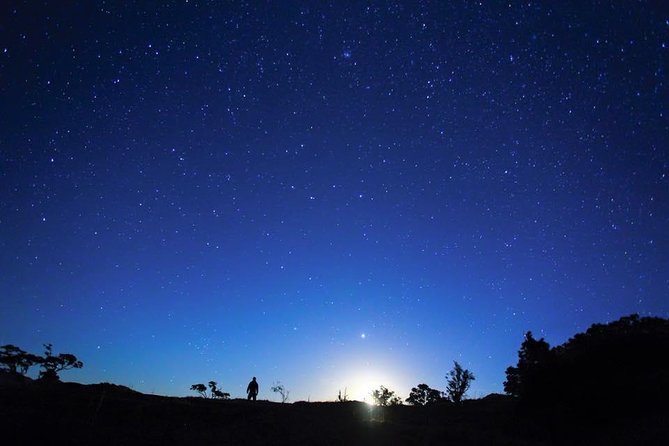
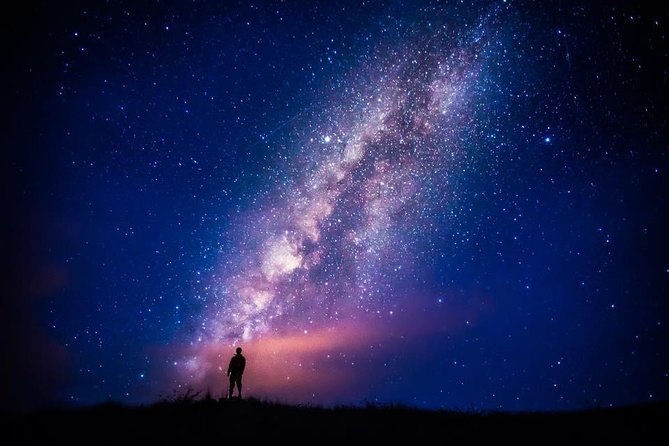
Nighttime stargazing is the payoff. You’ll go to one of the preferred locations on Mauna Kea for observing, and you’ll use a large-aperture Dobsonian telescope. These are chosen for wide-field viewing—fast focal ratio means you can capture sprawling views of objects that can be frustratingly dim or narrow in other telescope types.
Depending on what’s up in the sky that night (and on weather), you may view deep-sky objects and planets such as:
- galaxies, nebulae, and star clusters
- planets and double star systems
- the Moon
Guides often make a point of explaining constellations and what to look for first. In past groups, guides including Marcus, Thiago, Nate, Rich, Todd Wilkinson, Eric, Lucas, and Crystal have all come through with clear explanations and lots of Q&A energy.
Also, a note you should understand before you go: this tour does not visit the Mauna Kea summit or the Visitor Center. That means you won’t be walking through observatory areas. Instead, you’re focusing on the viewing experience itself at a location chosen for night skies and respect for Native Hawaiian concerns.
Expect cold air, clean bathrooms at higher stops, and warm help
The tour info is blunt about clothing: closed-toe shoes, long pants, and a jacket. Open-toed shoes aren’t allowed. That’s not just rule-following. It’s a reality of Mauna Kea-area temperatures, especially after sunset.
From guide experiences shared with me, warm extras sometimes appear at the viewing area. One guide provided extra jackets for teens who didn’t dress warm enough, and another situation included warm down jackets plus advice that gloves would help. So if you want to enjoy the whole session instead of shivering through it, pack like it’s winter.
You can also bring binoculars. The telescope will do the main work, but binoculars can be a nice add-on for sweeping star patterns on your own.
One more small but useful detail: if you’re bringing a phone camera, it can still be worth trying. In at least one night session, a guide helped take a good phone shot through the telescope even under moonlight conditions.
Weather, clouds, and full-moon nights: set expectations the smart way
This tour is built around night sky viewing, but you’re on a mountain where clouds can change everything fast. In one experience, clouds made the first attempt tough, so the group moved to a different location and waited until the view improved. That flexibility is key. Don’t treat the night like a guaranteed fixed show.
Moonlight is the other expectation check. A full moon can make some faint objects harder to see. Still, moonlit nights aren’t automatically a bust. One account included enjoyable viewing and photo attempts even with a bright Moon up.
My advice: choose nights based on your priorities. If you’re chasing faint galaxies and nebulae, avoid the brightest moon phases when you can. If you’re more focused on planets, constellations, and learning the sky, you can still have a great time even when conditions aren’t perfect.
Cost and value: what $239 buys you in real terms
At $239 per person for 6 hours, this isn’t a cheap add-on. The value comes from three things you’d otherwise have to solve separately:
- Guiding and interpretation
You get both an astronomy-focused guiding approach and a geology narration from a National Park Service–trained guide. That combination turns telescope time into understanding time.
- Included equipment
The tour includes all telescope equipment. You’re paying for access to the right gear and the setup know-how, not just a ride.
- Included dinner and entrance fees
Dinner is part of the experience. Entrance fees are included too, so you don’t end up budgeting extra on the spot.
Now, the trade-off. Since the tour doesn’t go to the summit or Visitor Center, you’re not paying for observatory access. Some people feel that’s a miss if they came with summit expectations. But the benefit is that the plan stays focused on dark-sky viewing without needing summit-area entry.
There’s also flexibility built in, with free cancellation up to 24 hours in advance for a full refund, and a reserve now & pay later option to keep plans from feeling locked too early.
Who should book this MaunaKea Stellar Explorer from Kona
This is a great match if you want more than telescope selfies. You’ll enjoy it if you like:
- a mix of science and storytelling (volcanoes by day, sky by night)
- wide-field astronomy that’s easier to enjoy than narrow, high-magnification setups
- a small group size (up to 13) where your guide can answer questions
It’s also a smart fit for families and mixed-age groups. Several guides have handled groups with teens, and the tour format is built for explanation, patience, and clear observing steps.
The biggest reason not to book is simple: if you specifically want summit/Visitor Center access or observatory dome experiences, this plan does not include that.
Should you book it? My straight answer
If you’re looking for a well-run night-sky experience with real context—geology narration, solar viewing in daylight, and telescope time at Mauna Kea from Kona—this tour is a strong yes. The price makes sense when you factor in dinner, entrance fees, and the full telescope setup.
I’d only tell you to hesitate if you’re traveling with very rigid expectations about summit access, or if you’re unwilling to handle cold air and possible weather changes. In other words: if you can dress warm and stay flexible, you’ll likely come away feeling like you saw Mauna Kea the smart way.
FAQ
How long is the MaunaKea Stellar Explorer From Kona tour?
The tour lasts 6 hours.
What does the tour cost?
It’s $239 per person.
What’s included with the ticket?
The tour includes all entrance fees, dinner, and all telescope equipment.
Do I get pickup from my hotel in Kona?
Yes. Pickup is included from all major hotels.
Does this tour visit the Mauna Kea summit or the Visitor Center?
No. This tour does not visit Mauna Kea’s summit or Visitor Center out of deference to Native Hawaiian concerns.
How big is the group?
It’s limited to 13 participants.
What should I bring and wear?
Bring binoculars. Wear closed-toe shoes, long pants, and a jacket. Open-toed shoes are not allowed.
Is free cancellation available?
Yes. You can cancel up to 24 hours in advance for a full refund.
More Tour Reviews in Island Of Hawaii
- Kailua Kona: Night Manta Ray Adventure on the Big Island
★ 4.8 · 1,199 reviews - Big Island: Night Swim with Manta Ray with Hot Chocolate
★ 4.9 · 420 reviews - Kailua-Kona: Whale Watching Cruise on the Big Island
★ 4.7 · 273 reviews - From Keauhou Bay: Snorkel Cruise to Captain Cook’s Monument
★ 4.8 · 242 reviews - Big Island, Hawaii: Volcano and Stargazing Tour with Dinner
★ 4.8 · 179 reviews - From Kona: Big Island Underwater Submarine Adventure
★ 4.6 · 162 reviews
Mauna Kea After Sunset
- Big Island, Hawaii: Volcano and Stargazing Tour with Dinner
★ 4.8 · 179 reviews - Mauna Kea: Stellar Explorer Tour from Hilo
★ 4.5 · 67 reviews - Mauna Kea: Stargazing Experience with Free Photos
★ 4.2 · 32 reviews
Just Added: The Newest Big Island Reviews



Mauna Kea Summit & Stargazing, compared.
 ★ 5.0Big Island GOAT Experience: Mauna Kea Summit, Sunset & StarsFrom $2891,706 reviews
 ★ 5.0Small Group Big Island Twilight Volcano and Stargazing TourFrom $2971,619 reviews
 ★ 5.0Mauna Kea Summit and Stars Small-Group Adventure TourFrom $3291,545 reviews
 ★ 5.0Mauna Kea Summit Tour with Free Night Star PhotoFrom $2801,449 reviews
 ★ 4.8Hilo: Mauna Kea Summit, Sunset, & Stargazing ExperienceFrom $289629 reviews
 ★ 5.0Mauna Kea Stargazing Experience + PhotosFrom $299261 reviews
 ★ 4.8MaunaKea Summit SUNSET and Star Tour with PhotoFrom $280220 reviews
 ★ 4.8Big Island, Hawaii: Volcano and Stargazing Tour with DinnerFrom $297179 reviews
Browse the lists this tour appears in