
Reviewed · MAUNA KEA SUMMIT & STARGAZING
Big Island: Mauna Kea Summit Tour with Free Night Star Photo
Mauna Kea hits hard in the cold. This small-group tour takes you up in a 4×4 van, gets you to the summit for sunset, then slows things down with guided stargazing using a telescope and laser pointer. I like that you get winter gear (snow parka, ski pants, gloves) plus hot drinks so you’re not scrambling for layers at the last minute. I also love the free DSLR photo of you with the stars, taken during sunset and stargazing. One consideration: visibility and even how long you stay up top depend on weather, moon phase, and altitude comfort—so you’ll want to go in with flexibility.
The day moves with a smart rhythm: a warm-up stop at the Onizuka Astronomy Complex for altitude acclimatization and dinner, then the summit, then back down for the sky show. With a max group size of twelve, you’ll actually get time to ask questions and get pointed to constellations instead of just staring.
In This Review
- Quick hits before you go
- What your $280 buys on Mauna Kea summit day
- Pickup points and the 4×4 van: where the day really begins
- Onizuka Astronomy Complex: acclimatize, gear up, and eat before the summit
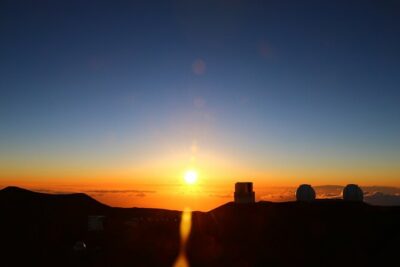
- The summit: sunset above the clouds and a view that feels unreal
- Night sky time: refractor telescope stargazing with guided laser pointers
- Free star photos: the included DSLR bonus that people remember
- The itinerary tempo: why the schedule feels long but works
- Cold-weather reality checks that actually help
- Who this Mauna Kea tour suits (and who should skip it)
- Should you book? My honest take
- FAQ
- How long is the Mauna Kea Summit Tour?
- Where are the pickup locations?
- Is the Mauna Kea admission fee included?
- What food is included during the tour?
- What winter gear do I get?
- How does the stargazing work?
- Are photos included?
- Who can participate, and who should not?
- Is sunset and stargazing guaranteed?
Quick hits before you go
- Small-group size (up to 12 people) keeps the van ride calmer and the sky time more personal
- Warm winter clothes + hot drinks make a huge difference when it turns freezing at altitude
- Two astronomy stops (Onizuka Complex before and after sunset) help with acclimatization and timing
- Refractor telescope + laser pointer stargazing gives you more than just a pretty view
- Free DSLR photos of you at sunset and during stars (weather and moon permitting)
More summit sunsets and stargazing on Mauna Kea
- Small Group Big Island Twilight Volcano and Stargazing Tour★ 5.0 · 1,619 reviews
- Big Island: Mauna Kea Summit and Stars Small-Group Adventure Tour★ 5.0 · 1,545 reviews
- Big Island: Mauna Kea Summit Tour with Free Night Star Photo★ 5.0 · 1,449 reviews
- Mauna Kea Stargazing Experience + Photos★ 5.0 · 261 reviews
What your $280 buys on Mauna Kea summit day
At $280 per person, this tour isn’t trying to be the cheapest way up Mauna Kea. It’s priced like a comfort-first, time-managed experience—because the real costs here aren’t just transportation. You’re also paying for summit admission, an organized 4×4 ride, winter gear, guided stargazing equipment, and a DSLR photo package that’s included when conditions allow.
For me, the value is strongest if you:
- don’t want to figure out gear on short notice
- care about getting to the summit at the right moment (sunset timing matters a lot here)
- want a guide to point out what you’re seeing in the sky, not just hand you a telescope and hope
If you’re the type who enjoys doing everything independently—driving yourself, managing your own layers, and handling summit timing—you might find cheaper options. But this tour’s structure is what makes it easy.
Pickup points and the 4×4 van: where the day really begins
Your day starts with pickup at one of three locations on the Big Island side:
- Target in Kailua-Kona (meet in front of the McDonald’s inside the Target parking area)
- Queens’ Marketplace in Waikoloa (meet at the shuttle bus stop in the backside parking lot near the NOT Starbucks)
- Gilbert Kahele Recreation Park in Waimea (address provided for pickup)
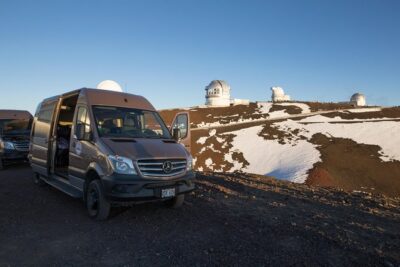
Pickup times shift by season, so you’ll want to confirm the exact window you’re given. Once you’re loaded, you’re in a 4×4 passenger van heading toward the astronomy area. Expect a long drive and a ride on mountain roads that can feel a little bumpy, especially once it starts getting dark.
This part matters because Mauna Kea isn’t a quick side-trip. You’re trading a chunk of your day for one of the most famous star locations on Earth—and you’ll feel better when the schedule isn’t chaotic.
Onizuka Astronomy Complex: acclimatize, gear up, and eat before the summit
The first real stop is Onizuka Visitor Information Station at about 2,800m (9,000 ft). This isn’t just a break. It’s the tour’s altitude-smart setup.
Here’s what you can expect:
- Early dinner (included): you’ll eat light before heading higher. The included meal is a BLT or vegan sandwich (and the default is BLT if you don’t request otherwise by the day before).
- Clothing change: you’ll switch into the provided cold-weather gear—snow parka, ski pants, and gloves.
- Gift shop time: the shop is open, but the info you’re given is clear that there’s no food or drink sale there.
I like this stop because it reduces the classic mistake people make: waiting until they’re already miserable and cold to deal with layers. Instead, you handle the cold before the summit.
The guide will also keep an eye on conditions and how rangers are managing access. If roads close or timings shift, your guide should update you so you aren’t stuck guessing.
The summit: sunset above the clouds and a view that feels unreal
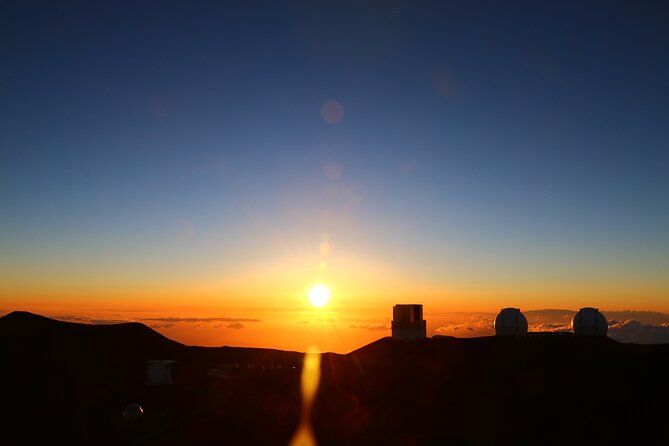
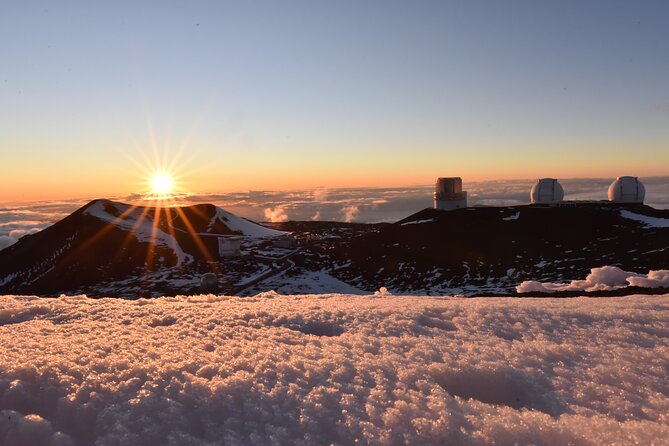
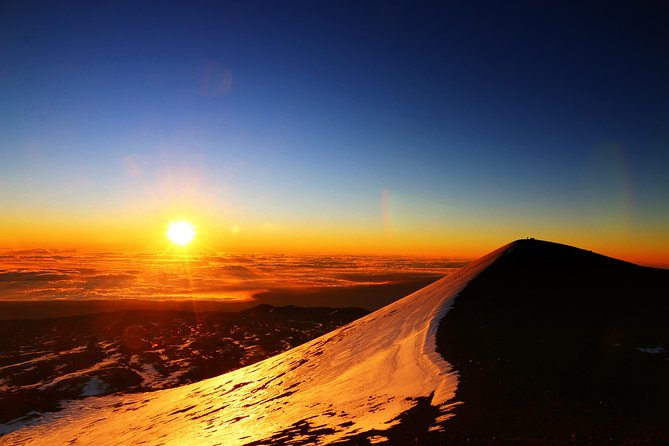
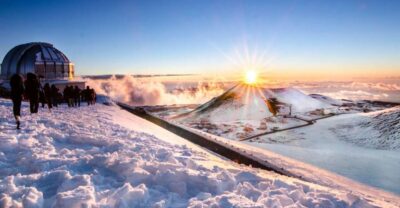
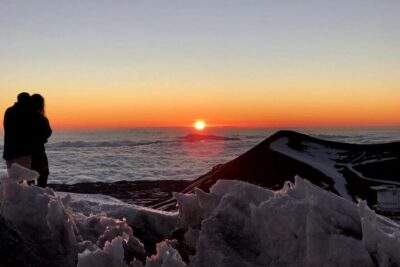
After Onizuka, you continue up to the Mauna Kea summit area at around 13,796 ft (4,205m). The summit portion of the experience is built around one main goal: getting you there for sunset.
At the peak, you’re positioned to see:
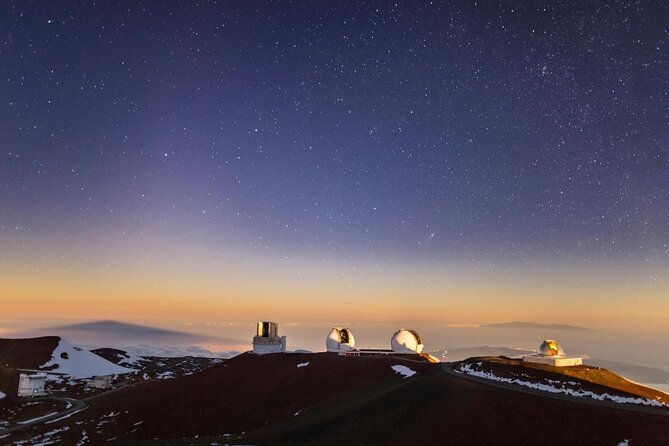
- a wide view of the summit observatories
- the sun dropping and light changing fast
- the “above-the-clouds” effect that’s become part of Mauna Kea’s legend
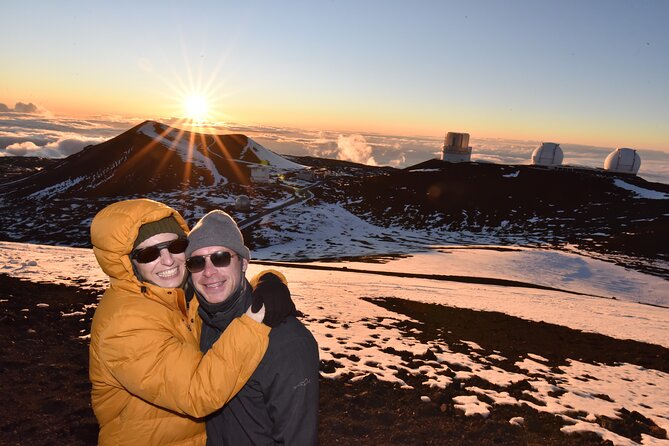
Even if the air at sea level feels warm, plan on it being freezing and windy up top. This is where the included gear earns its keep. The reviews I’ve read repeatedly mention how much the jackets, ski pants, and gloves matter once the temperature drops hard.
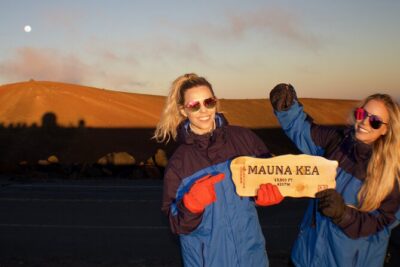
You’ll also do some posing. Your guide takes DSLR photos during sunset, and those images are part of the included photo set when the sky and timing cooperate.
One more reality check: the time you spend at the summit can be adjusted if you have altitude symptoms or if conditions shift. That’s not a failure; it’s part of operating responsibly at altitude.
More Big Island tours we have been out and rated
Night sky time: refractor telescope stargazing with guided laser pointers
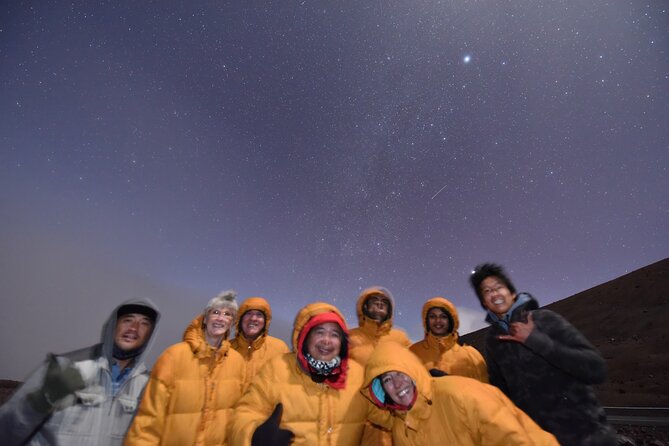
Once the sun is down, the tour doesn’t send you off into darkness with no plan. You head back toward Onizuka Astronomy Complex to stargaze for about 45 minutes.
Stargazing here is structured:
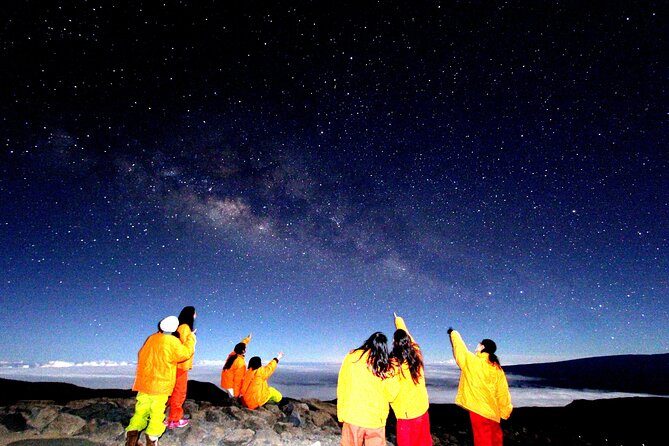
- using a refractor telescope
- using a laser pointer to help you locate constellations, stars, and planets
- having your guide explain what you’re seeing as you look through the scope
The exact stargazing location can vary based on weather conditions. If clouds roll in, you’ll feel it quickly. Also, moon phase affects visibility, and the sky won’t look the same at every stage of the lunar cycle.
If you’re expecting a single, magical “everything is clear forever” moment, you’ll be disappointed. If you’re open to a guided, weather-aware stargazing session, you’ll probably feel grateful you were taken seriously about timing and conditions.
Free star photos: the included DSLR bonus that people remember
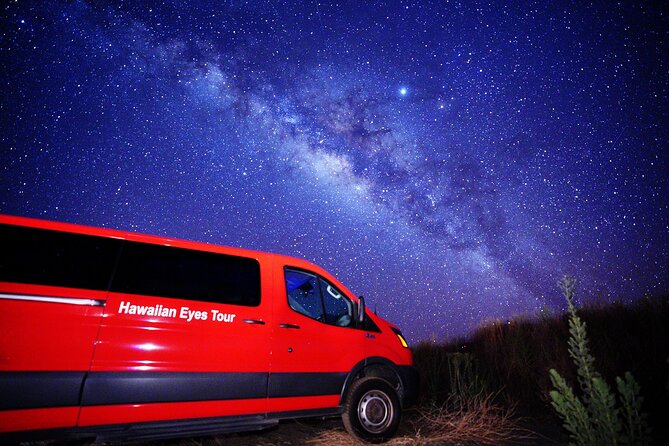
A big difference between this tour and a lot of “telescope + go” experiences is the photo promise. You’ll get DSLR photos taken of you during sunset and stargazing, included in the tour price, with the practical caveat that results depend on weather and moon phase.
This is a comfort feature, too. At Mauna Kea, selfie sticks are the least helpful tool. The guide’s job is to get your shot at the right angle while you’re shivering and trying to look up at the same time. Guides like Wes, Chris, and James are mentioned in examples of what goes right—prompt pickup, good narration up the mountain, and effective photo work during key moments.
Plan for the cold and you’ll do fine. Plan for the cold and still want photos? That’s where this included package becomes a genuine value.
The itinerary tempo: why the schedule feels long but works
The whole day runs about 8 hours. That sounds like a lot, but the pacing makes sense when you think about altitude and sunset timing.
A typical flow looks like this:
- pickup and drive up
- acclimatization stop at Onizuka with dinner and gear change
- summit drive for sunset
- return for stargazing with telescope and guide pointing
The tradeoff is you spend time in the van. A few people note there’s a long drive, and you’ll feel that if you expected something shorter and more active. But in my view, the van time is what buys you the summit access and the guided timing.
Cold-weather reality checks that actually help
This tour covers a lot, but it won’t fix everything. Here are the practical things I’d do before you go.
Plan your layers even though gear is included. The snow parka and ski pants are provided, but you’ll still want warm basics underneath (like thermal layers). If you tend to get cold fast, treat this as a “dress for survival” day.
Respect altitude. You should have moderate physical fitness, and the tour advises that altitude time may be adjusted if altitude sickness shows up. I’d take it seriously:
- avoid racing up for photos
- hydrate as you can
- move slowly once you’re at higher elevation
Weather matters more than your optimism. The tour notes that sunset and stargazing are not 100% guaranteed in bad weather, and moon phase affects star visibility. If you’re scheduling this as one shot only, you’re gambling. If you can add flexibility to your itinerary, you’ll feel better.
Who this Mauna Kea tour suits (and who should skip it)
This is one of those experiences where rules are there for a reason.
It’s not for everyone:
- No participation under 16 and no participation over 75
- Not recommended above 300 lb
- Not recommended if you have respiratory problems such as asthma
- You should have moderate physical fitness
If you match those points and you want a guided summit + stargazing experience, this tour is a strong fit, especially if:
- you want a small group (max 12)
- you value clear explanations for the sky
- you don’t want to manage summit timing or gear logistics on your own
Should you book? My honest take
Book this tour if you want the easiest path to the summit for sunset, plus guided stargazing with real tools, without having to source cold-weather gear or a telescope setup yourself. The included winter clothing and the free DSLR star photos are the kind of “small details” that keep a day from feeling stressful—and keep your memories from turning into a blur.
Skip it (or think hard) if you:
- know you get altitude sick easily
- have respiratory issues
- need a guarantee of clear skies (because the mountain doesn’t work like that)
- want a more flexible, independent adventure instead of a timed, guided day
If you go in expecting cold, being flexible about conditions, and letting the guide handle the timing, you’ll likely walk away feeling like you did something genuinely special—stars and all.
FAQ
How long is the Mauna Kea Summit Tour?
It runs about 8 hours (approx.).
Where are the pickup locations?
Pickup is available from three locations: Target in Kona, Queens’ Marketplace in Waikoloa, and Gilbert Kahele Recreation Park in Waimea. Drop-off is back to the departure point area (starting from Waikoloa Resort).
Is the Mauna Kea admission fee included?
Yes. The tour includes the admission fee for Mauna Kea.
What food is included during the tour?
You’ll get a light dinner plus hot drinks. The included meal is a BLT or a vegan sandwich (you need to request by day before, or it defaults to BLT).
What winter gear do I get?
The tour provides snow parka, ski pants, and gloves.
How does the stargazing work?
After sunset you’ll do guided stargazing using a refractor telescope and a laser pointer, with your guide explaining stars, constellations, and planets. The stargazing spot can vary with weather.
Are photos included?
Yes. The tour includes free DSLR photos (sunset and stars with you in the shot) when weather and moon phase allow.
Who can participate, and who should not?
Participation is restricted to ages 16 to 75. It’s also not recommended for people over 300 lb or for respiratory problems such as asthma.
Is sunset and stargazing guaranteed?
No. Bad weather can affect access and visibility, and moon phase affects star visibility. Time at the summit and stargazing location may also be adjusted if altitude sickness or other conditions come up.
More Tours in Big Island of Hawaii
- Big Island: Kona Manta Ray Snorkel Tour in Keauhou Harbor
★ 4.5 · 2,465 reviews - Hilo Shore Excursion: Volcanoes National Park & Black Sand Beach
★ 4.5 · 2,338 reviews - Small Group Big Island Twilight Volcano and Stargazing Tour
★ 5.0 · 1,619 reviews - Big Island: Mauna Kea Summit and Stars Small-Group Adventure Tour
★ 5.0 · 1,545 reviews - Kona Snorkel Tour: Captain Cook Reef Snorkel, Dolphin & Sea Caves
★ 4.5 · 1,411 reviews - Big Island Zipline Tour Near Akaka Falls (250-ft Waterfall!)
★ 5.0 · 1,077 reviews
More Tour Reviews in Big Island of Hawaii
- Big Island in a Day: Volcanoes Waterfalls Sightseeing and History
★ 5.0 · 6,569 reviews - Big Island Manta Ray Night Snorkel
★ 5.0 · 5,656 reviews - Big Island: Kona Manta Ray Snorkel Tour in Keauhou Harbor
★ 4.5 · 2,465 reviews - Hilo Shore Excursion: Volcanoes National Park & Black Sand Beach
★ 4.5 · 2,338 reviews - Big Island: Captain Cook Snorkel On A Power Catamaran With Lunch
★ 5.0 · 2,232 reviews - KONA Manta Ray Night Snorkel – FREE re-ride if no Sightings
★ 5.0 · 2,212 reviews
Mauna Kea After Sunset
- Big Island GOAT Experience: Mauna Kea Summit, Sunset & Stars
★ 5.0 · 1,706 reviews - Small Group Big Island Twilight Volcano and Stargazing Tour
★ 5.0 · 1,619 reviews - Big Island: Mauna Kea Summit and Stars Small-Group Adventure Tour
★ 5.0 · 1,545 reviews - Mauna Kea Stargazing Experience + Photos
★ 5.0 · 261 reviews - Mauna Kea Arnott’s Adventures
★ 5.0 · 150 reviews - Maunakea Stellar Explorer from Kona
★ 4.0 · 101 reviews
Just Added: The Newest Big Island Reviews


Mauna Kea Summit & Stargazing, compared.
 ★ 5.0Big Island GOAT Experience: Mauna Kea Summit, Sunset & StarsFrom $2891,706 reviews
 ★ 5.0Small Group Big Island Twilight Volcano and Stargazing TourFrom $2971,619 reviews
 ★ 5.0Mauna Kea Summit and Stars Small-Group Adventure TourFrom $3291,545 reviews
 ★ 4.8Hilo: Mauna Kea Summit, Sunset, & Stargazing ExperienceFrom $289629 reviews
 ★ 5.0Mauna Kea Stargazing Experience + PhotosFrom $299261 reviews
 ★ 4.8MaunaKea Summit SUNSET and Star Tour with PhotoFrom $280220 reviews
 ★ 4.8Big Island, Hawaii: Volcano and Stargazing Tour with DinnerFrom $297179 reviews
 ★ 5.0Mauna Kea Arnott’s AdventuresFrom $255150 reviews
Browse the lists this tour appears in