
Reviewed · MAUNA KEA SUMMIT & STARGAZING
Big Island GOAT Experience: Mauna Kea Summit, Sunset & Stars
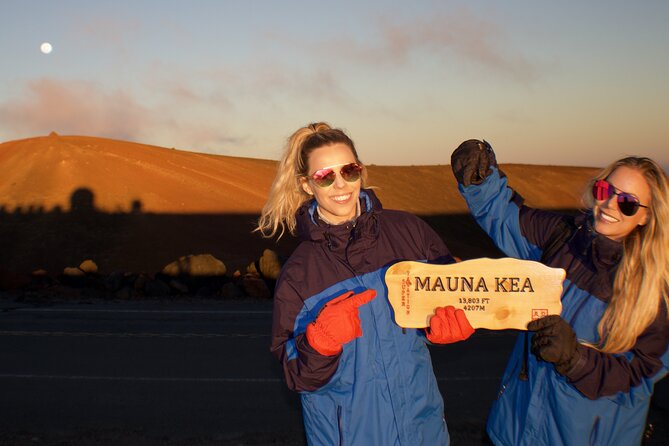
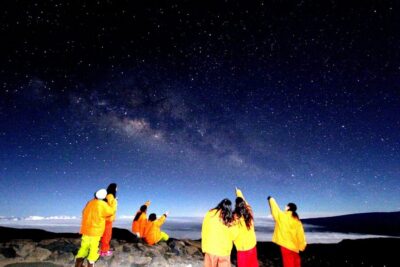
A sunset on Mauna Kea feels like a whole new planet. This small-group trip takes you up to the Mauna Kea summit by 4×4 van, then slows down for telescope time and star spotting as the night turns on. I love that your guide does more than point things out; guides like John, Tay, Chris, and Val (all named in recent tours) mix Hawaiian storytelling with hands-on astronomy, using a laser pointer so you always know what you’re looking at.
My second favorite part is the practical comfort built into the plan: you get jackets and gloves plus a hot drink and snacks, and there’s a free night photo shot with a professional camera. One drawback to plan for: it can be brutally cold and windy near the summit, and even with provided gear, you may still want to bring extra layers for your hands and feet.
In This Review
- Key highlights you should care about
- Up to the Mauna Kea summit by 4×4 van: the real logistics
- Sunset at the summit: warm gear, hot drinks, and guided sky hints
- The telescope moment: Celestron viewing and what you can realistically expect
- Halepōhaku and the Onizuka Center: astronomy with Hawaiian meaning
- Small-group care (and why it can still feel crowded)
- Price and value: is $289 really “worth it” for Mauna Kea?
- Packing tips that actually matter on this night
- Who should book this Mauna Kea sunset and stars trip
- Should you book: my quick call
- FAQ
- How long is the Mauna Kea summit sunset and stars experience?
- Where are the pickup locations?
- What’s the group size?
- What’s included for keeping warm?
- Is the telescope included?
- Are there restrooms during the tour?
- What food is included?
Key highlights you should care about
- Small-group vibe (max 14) so you’re not lost in the crowd
- 4×4 van to the summit means no wrestling with driving or navigation
- Warm jackets, gloves, hot beverage, and snacks for the long, chilly wait
- Laser pointer + professional telescope (weather permitting) to connect the sky to real objects
- Free pro night photo so you leave with more than blurry phone shots
- Halepōhaku / Onizuka Center stop adds Hawaiian cultural context to the astronomy
More summit sunsets and stargazing on Mauna Kea
- Small Group Big Island Twilight Volcano and Stargazing Tour★ 5.0 · 1,619 reviews
- Big Island: Mauna Kea Summit and Stars Small-Group Adventure Tour★ 5.0 · 1,545 reviews
- Big Island: Mauna Kea Summit Tour with Free Night Star Photo★ 5.0 · 1,449 reviews
- Mauna Kea Stargazing Experience + Photos★ 5.0 · 261 reviews
Up to the Mauna Kea summit by 4×4 van: the real logistics
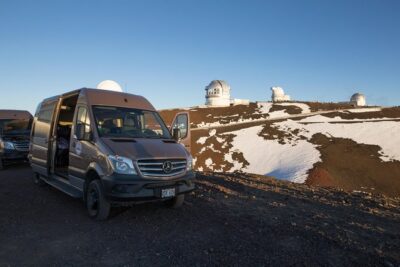
This is a full evening-plus experience, roughly 7 to 8 hours. You’ll start with afternoon pickup in one of three areas: Hilo, Waikoloa Village, or Kailua-Kona. From there, you ride in a comfortable 4×4 passenger van with a small group (listed maximum is 14). That matters more than it sounds. Mauna Kea’s summit is not an easy place to DIY after sunset, and the whole schedule is built around getting you there at the right time for the best light.
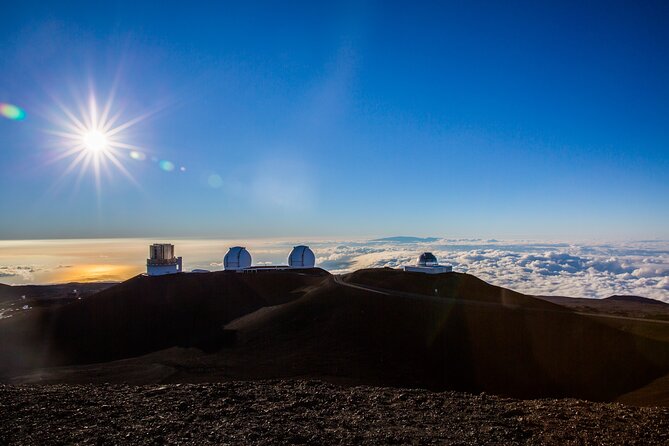
The drive itself is part of the trip. You’ll be in transit for stretches, and your guide usually uses that time to set the stage—lava/geology basics on the way up, plus sky talk before the night gets dark. It’s also the moment where you’ll feel the altitude change. You’re headed to the Mauna Kea area that starts around the Visitor Station height of 9,200 ft (2,800 m) and goes up to about 13,796 ft (4,205 m) at the summit point used for this experience. If you’re sensitive to altitude, plan for a slower pace once you’re outside.
Practical note: you’ll be switching from van warm to summit-cold quickly, and you’ll be standing around during sunset and stargazing. So don’t just pack warm clothes—pack for warmth while stationary. That’s the difference between “I’m fine” and “My toes are thinking about quitting.”
Sunset at the summit: warm gear, hot drinks, and guided sky hints
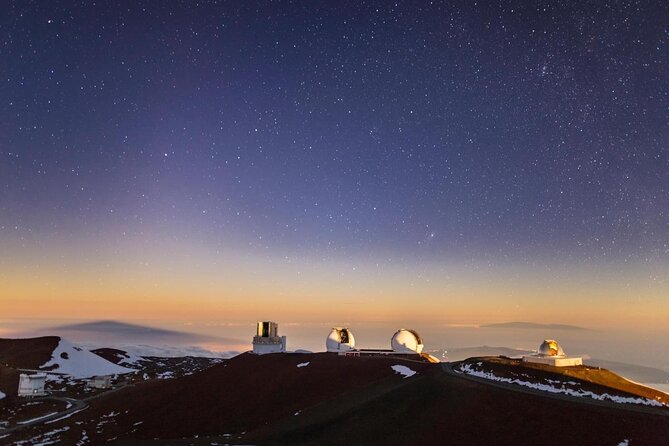
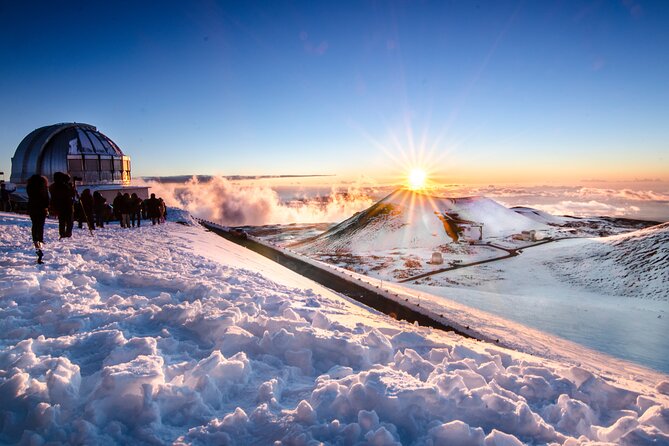
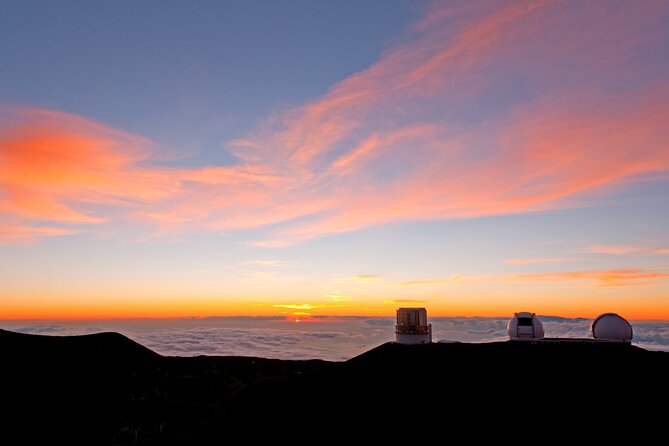
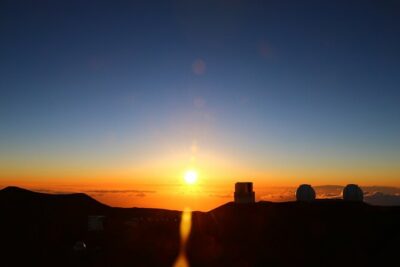
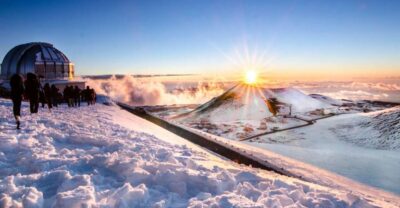
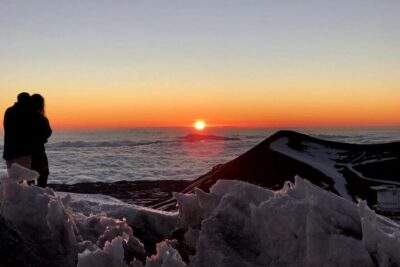
The main show starts at the Mauna Kea summit. You’ll reach it by vehicle, then get suited up with provided warm gear—a jacket and gloves—so you can handle the cold while you watch the sky change. As the sun starts to set, you’ll also have snacks and a hot beverage. This is one of the best parts of the format: instead of rushing through a scenic stop, you get time to slow down and actually enjoy the transition from daylight to night.
The sunset here isn’t just pretty. It’s also practical training for what comes next. Your guide uses a laser pointer to show you where to look as darkness falls, so stargazing doesn’t feel like random sky-watching. Reviews from recent trips highlight that guides are fun and energized—guides like Kella/Kellah and Tay are singled out for keeping people comfortable while sharing stories and pointing out what’s in front of you.
Two small realities to keep in mind:
- Cloud cover can dramatically change the experience. Some nights still deliver a gorgeous sunset even with clouds, while stargazing can be partially or fully blocked.
- Wind adds to the temperature shock. Even with provided jackets, the summit can feel colder than you expect because you’re exposed while waiting.
The telescope moment: Celestron viewing and what you can realistically expect
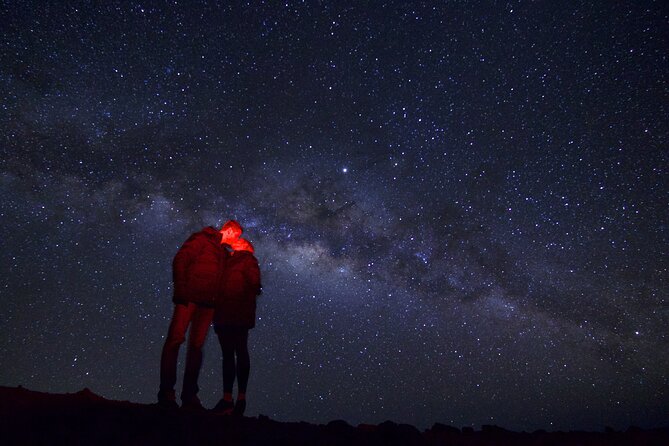
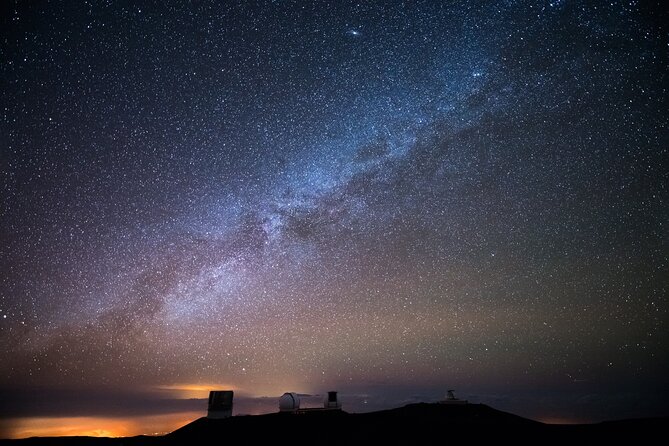
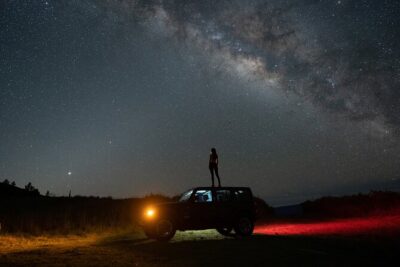
Stargazing is the core reason you’re paying for this kind of Mauna Kea tour. The experience includes time to view with a professional Celestron telescope, but it’s explicitly listed as weather dependent. That’s normal here—Mauna Kea is famous for skies, but weather is also real weather.
What makes the telescope time feel worth it is the way the night is explained. Your guide doesn’t just hand you a moment at an eyepiece. They help you understand where you are in the sky and what the telescope will reveal. Recent trip comments include highlights like the Andromeda galaxy and nebula targets when skies cooperate, plus people spotting passing satellites such as Starlink and the ISS on some nights.
Your best approach: treat the telescope stop as the peak “wow” segment, but still enjoy the build-up. The guided laser-pointer pointing before telescope time helps you feel like you’re part of the show rather than standing around waiting for your turn.
Also, set expectations about duration at the summit. The summit segment is listed at about 4 hours, and some of that time is outside. That’s why packing for cold matters as much as packing for views.
Halepōhaku and the Onizuka Center: astronomy with Hawaiian meaning
Before or during the later part of the evening (depending on how the operator sequences the timing), you’ll make a stop at Halepōhaku — Onizuka Center for International Astronomy. This is a 30-minute stop and is included, with admission ticket listed as part of the experience.
Here’s what I like about this stop: it connects astronomy to Hawaiian cultural context instead of treating “the stars” as only a science topic. The information shared for this stop centers on Mauna Kea as a sacred place in Hawaiian traditions. It’s described as connected to the goddess Poliʻahu, along with deities Lilinoe and Waiau. In ancient times, the summit was kapu—restricted access for those with the highest status, including chiefs and priests. Queen Emma is mentioned as the last royal visitor in 1881, leading a group on a long 6-hour journey to the top to see the summit and rejuvenate herself in sacred Lake Waiau.
You’ll also get context about how Mauna Kea became a hub for international observatories today—listed as 13 observatories—while still holding spiritual importance. There’s even a program note: on the fourth Saturday of every month, MKVIS hosts community speakers speaking from a cultural perspective about Mauna O Wakea. Even if you don’t catch that specific day, the stop helps explain why the mountain matters beyond the science.
If you’re the kind of traveler who loves a little meaning with your night sky, this added context is a big plus. If you came purely for telescope time, it may feel like a short detour—but it makes the sky feel more grounded.
More island farm stands, from cacao to sea salt

Small-group care (and why it can still feel crowded)
This tour is built as a small group experience, with a maximum of 14 people. That’s a big deal for a summit trip, because space outside is limited and everyone needs time to see.
That said, two things can still affect the vibe:
- You may share the area with other groups during certain parts of the evening. One review flagged noise and bus/van activity at the visitor center when multiple vans were present. So while your group size is small, the wider area may not be silent.
- Weather changes the pace. If clouds roll in, guides tend to adjust focus—more emphasis on constellations, stories, and telescope time when possible.
On the care side, the operation includes warm jackets and gloves, plus hot drinks and snacks. Some reviews also call out that guides adjust to road conditions. In one example, a Saddle Road closure due to an accident led to added driving time so guests could still get back safely. That kind of flexibility is one reason you’re not just buying views—you’re buying confidence.
Price and value: is $289 really “worth it” for Mauna Kea?
At $289 per person, this isn’t a casual outing. The best way to judge value is to look at what’s actually included that would be hard (or expensive) to DIY well.
Included value you’d otherwise pay for:
- Round-trip summit transport in a 4×4 van (this is not a simple public-bus situation)
- Warm gear (jackets and gloves) for an evening where being underprepared can ruin the experience
- Hot beverage and snacks
- A guided astronomy approach using a laser pointer plus telescope time
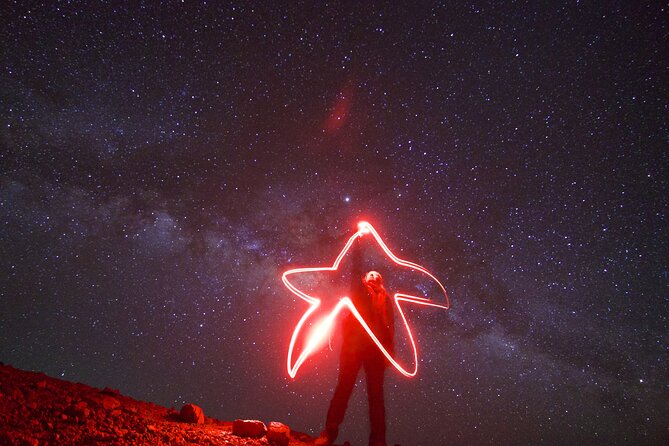
- A free night photo taken with a professional camera
Also, this is a time-bound experience. The summit trip is scheduled so you’re there for sunset and then stargazing. Getting the timing right matters, and that timing is exactly what you lose when you DIY.
Where the “cost bite” can show up:
- If clouds block stargazing, part of your money’s purpose can feel muted. One review noted a great sunset but reduced star visibility due to cloud cover.
- If you’re very sensitive to cold and don’t bring extra layers, the summit discomfort can outweigh the visuals.
So is it worth it? For most people aiming for a once-in-a-lifetime Mauna Kea night, the math usually lands in your favor because the included transport, gear, guide-led sky interpretation, and pro photo reduce the usual hassle and risk.
Packing tips that actually matter on this night
You can dress for Hawaii beach weather and still freeze at Mauna Kea. The tour provides jackets and gloves, and people consistently say those help a lot. But multiple trip notes also emphasize cold tolerance varies by person, and provided gloves/coats may not be enough for extreme wind.
Here’s what I’d pack based on the most common real-world issues:
- Extra warm layers (think: a hat and a second warm top under the provided jacket)
- Your own gloves or warmer glove option if you run cold
- Heavier socks to protect your feet while standing outside for long periods
- Hand warmers (the reviews call out toe and hand cold as a real issue)
- A small bag for extra clothes if you end up removing layers on the drive and re-dressing for the summit
- A headlamp can help inside/near restrooms and in dark setup moments; some people specifically mention needing a light source depending on moon brightness
One more practical detail: the tour lists restrooms at the Mauna Kea Visitors Center and portable restrooms near the summit. Still, on a cold night with long waits, having your own basic backup items (like tissues) can make you feel calmer.
Who should book this Mauna Kea sunset and stars trip
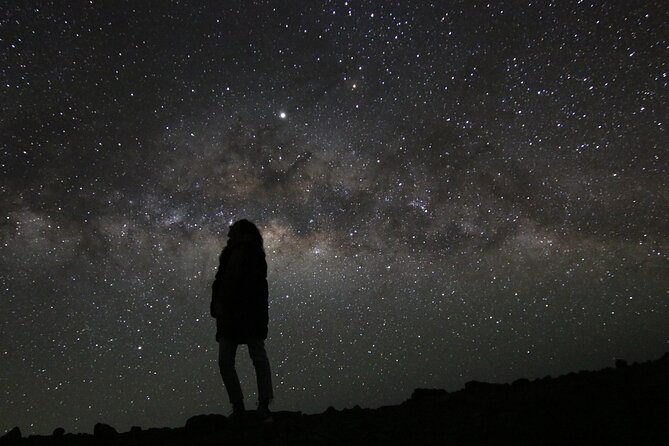
This tour is best for you if:
- You want guided stargazing rather than trying to figure the sky out on your own.
- You like the combination of Hawaiian cultural context and astronomy.
- You prefer a 4×4 summit plan with minimal driving stress.
- You’d appreciate a professional night photo rather than relying on phone zoom.
It may not be the best fit if:
- You’re under 13 (the tour lists it as not allowed under that age).
- You’re pregnant, have heart problems, or serious medical conditions (these are explicitly listed as not allowed).
- You struggle with altitude changes or have trouble standing outside for extended time.
One more thing: “moderate physical fitness level” is listed as the standard. Even if the walking isn’t described in detail here, you’re at high altitude and you’ll be outside, so plan like it’s active enough to matter.
Should you book: my quick call
I’d book it if your goal is a truly guided Mauna Kea sunset and stars experience with summit transport, warm support, telescope time, and a pro night photo. The structure makes it hard to mess up: you’re not driving, you’re not guessing where to look, and you’re not alone in the cold.
But if you’re extremely temperature-sensitive, or you’d be disappointed if clouds mute the stars, you should decide based on your risk tolerance. This is weather-dependent at the stargazing stage—so go in with layers, hand warmers, and realistic expectations.
If you’re ready for a cold, high-altitude night where the guide actually explains the sky, this is one of the most focused ways to see Mauna Kea at night.
FAQ
How long is the Mauna Kea summit sunset and stars experience?
It runs about 7 to 8 hours total.
Where are the pickup locations?
Pickup is available from Hilo, Waikoloa Village, or Kailua-Kona. You choose the pickup option when booking.
What’s the group size?
The tour has a maximum of 14 travelers.
What’s included for keeping warm?
You’ll be provided with warm jackets and gloves, plus snacks and a hot beverage.
Is the telescope included?
Yes, there is a professional Celestron telescope included, listed as weather permitting.
Are there restrooms during the tour?
There are restrooms at the Mauna Kea Visitors Center, and portable restrooms near the summit.
What food is included?
No dinner is included. You may bring your own packed dinner, and there is no food available for purchase on arrival.
More Tour Reviews in Big Island of Hawaii
- Big Island in a Day: Volcanoes Waterfalls Sightseeing and History
★ 5.0 · 6,569 reviews - Big Island Manta Ray Night Snorkel
★ 5.0 · 5,656 reviews - Big Island: Kona Manta Ray Snorkel Tour in Keauhou Harbor
★ 4.5 · 2,465 reviews - Hilo Shore Excursion: Volcanoes National Park & Black Sand Beach
★ 4.5 · 2,338 reviews - Big Island: Captain Cook Snorkel On A Power Catamaran With Lunch
★ 5.0 · 2,232 reviews - KONA Manta Ray Night Snorkel – FREE re-ride if no Sightings
★ 5.0 · 2,212 reviews
Island Farm Stands and Tastings
- Hawaiian Salt Farm Tour in Kona
★ 5.0 · 767 reviews - Award Winning Farm Tour: Coffee, Chocolate and Unique Gifts
★ 5.0 · 484 reviews - Small-Group Big Island Tour: Hawaii Volcanoes National Park and Kona Coffee Farm
★ 5.0 · 343 reviews - Volcano, Chocolate and Waterfalls of the Big Island
★ 5.0 · 238 reviews - Experience Our Honey Farm And Beekeeping Tour
★ 5.0 · 167 reviews - Abalone Farm Tour
★ 5.0 · 151 reviews
Mauna Kea After Sunset
- Small Group Big Island Twilight Volcano and Stargazing Tour
★ 5.0 · 1,619 reviews - Big Island: Mauna Kea Summit and Stars Small-Group Adventure Tour
★ 5.0 · 1,545 reviews - Big Island: Mauna Kea Summit Tour with Free Night Star Photo
★ 5.0 · 1,449 reviews - Mauna Kea Stargazing Experience + Photos
★ 5.0 · 261 reviews - Mauna Kea Arnott’s Adventures
★ 5.0 · 150 reviews - Maunakea Stellar Explorer from Kona
★ 4.0 · 101 reviews
Just Added: The Newest Big Island Reviews


Mauna Kea Summit & Stargazing, compared.
 ★ 5.0Small Group Big Island Twilight Volcano and Stargazing TourFrom $2971,619 reviews
 ★ 5.0Mauna Kea Summit and Stars Small-Group Adventure TourFrom $3291,545 reviews
 ★ 5.0Mauna Kea Summit Tour with Free Night Star PhotoFrom $2801,449 reviews
 ★ 4.8Hilo: Mauna Kea Summit, Sunset, & Stargazing ExperienceFrom $289629 reviews
 ★ 5.0Mauna Kea Stargazing Experience + PhotosFrom $299261 reviews
 ★ 4.8MaunaKea Summit SUNSET and Star Tour with PhotoFrom $280220 reviews
 ★ 4.8Big Island, Hawaii: Volcano and Stargazing Tour with DinnerFrom $297179 reviews
 ★ 5.0Mauna Kea Arnott’s AdventuresFrom $255150 reviews
Browse the lists this tour appears in