
Reviewed · MAUNA KEA SUMMIT & STARGAZING
Big Island: Mauna Kea Summit and Stars Small-Group Adventure Tour
The stars start before it gets dark. This small-group Mauna Kea tour mixes a summit sunset above the clouds with a private show later at lower elevation. I like the way they build in altitude comfort with stops and warm food, not just a rush to the top. You also get serious gear time: an 11-inch Celestron plus a digital astro-photography setup that helps you leave with more than just memories.
The trade-off? Expect cold, wind, and altitude. The climb is high—around 9,000 feet at the visitor area and up to the summit—and the road can be bumpy, so this is not a “sit back and forget about it” outing. If you have respiratory, circulatory, or heart issues, are pregnant, or generally feel unwell with altitude, you’ll want to skip this one.
In This Review
- Key highlights worth planning around
- Mauna Kea by 4×4: the ride up with a small-group plan
- Cold up top: layers, parkas, gloves, and how altitude feels
- The pre-summit picnic stop: why that warm meal matters
- Sunset above the clouds: the summit moment to aim for
- After dark, your private stargazing show: Celestron plus digital astrophotography
- What you’ll learn beyond astronomy: Hawaii sky, culture, geology, and ecology
- The real value of paying $329.84: why this beats DIY for most people
- Practical notes that can make or break your night
- Who should book, and who should skip this Mauna Kea summit tour
- Should you book this Mauna Kea Summit and Stars tour?
- FAQ
- How long is the Big Island Mauna Kea Summit and Stars small-group tour?
- Where do I meet the guide for pickup in Kona?
- What telescopes are included for the stargazing portion?
- Are parkas and gloves provided?
- Is food included?
- What should I wear?
- Do I need to bring water?
- Is there an age limit?
- What happens if the weather is bad?
Key highlights worth planning around
- Small group (max 12): easier pacing, more time at each stop, less crowding for stargazing.
- Warm gear included: hooded parka and gloves help a lot once the sun drops.
- Real viewing tools: a private stargazing show with an 11-inch Celestron.
- Digital astro-photography scope: view deep space objects and get captured images to share.
- Acclimation stops built in: picnic dinner before the summit to help your body adjust.
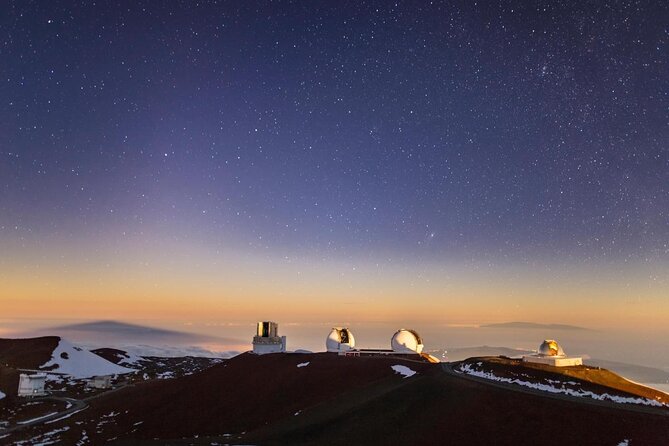
- Sunset and stars from two elevations: summit views first, then stargazing at about 9,000 feet.
More summit sunsets and stargazing on Mauna Kea
- Small Group Big Island Twilight Volcano and Stargazing Tour★ 5.0 · 1,619 reviews
- Big Island: Mauna Kea Summit and Stars Small-Group Adventure Tour★ 5.0 · 1,545 reviews
- Big Island: Mauna Kea Summit Tour with Free Night Star Photo★ 5.0 · 1,449 reviews
- Mauna Kea Stargazing Experience + Photos★ 5.0 · 261 reviews
Mauna Kea by 4×4: the ride up with a small-group plan
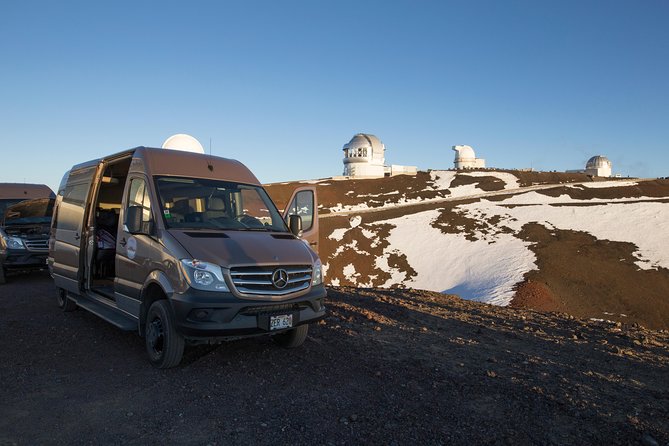
This tour runs about 8 hours, and it’s designed around the fact that Mauna Kea isn’t “easy to reach.” You start in Kona and head out in a 4-wheel-drive off-road van (custom transit vans that can carry up to 12 people). The access road is 4×4 only, so yes, there can be bumps and gravel. Think “adventure transport,” not smooth highway cruising.
Pickup is centralized. If you’re staying in Kailua Kona, the meeting point is at Courtyard by Marriott King Kamehameha’s Kona Beach Hotel, at the benches closest to the hotel parking entrance at the curb. The operator notes there may be additional meeting location stops along the way to Mauna Kea, so don’t assume it’s only one pickup.
What I like about the small-group setup: the guide can manage timing without herding people through chaos. When stargazing depends on clear skies and dark-adapted eyes, crowd control matters more than you’d think.
Cold up top: layers, parkas, gloves, and how altitude feels
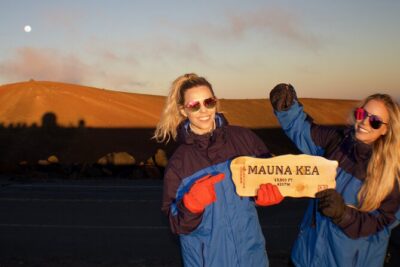
Mauna Kea is famous for big skies—and it earns that reputation by being cold and windy much of the year. This trip gives you a hooded parka and gloves, which is a huge value-add. Still, I’d plan like it’s winter. Wear long pants and closed-toe shoes. Add layers you can peel on and off during the ride.
Altitude is the other main reality check. You go up to the summit, then down to stargazing time around 9,000 feet (2,743 meters). That climb can affect breathing even for people who are otherwise fit. The guide emphasizes pacing and safety, and the itinerary includes time to acclimate at the visitor area before you reach the top.
Who should be extra cautious: the tour is not suitable for people with respiratory, circulatory, or heart conditions, for pregnancy, or for poor health. Also note the scuba warning: if you scuba dive, don’t plan to reach the summit within 24 hours after diving due to altitude risks.
Practical tip from how this is structured: take the climb slow. If you feel headachy or out of sorts, don’t “push through” it. Tell the guide early.
The pre-summit picnic stop: why that warm meal matters
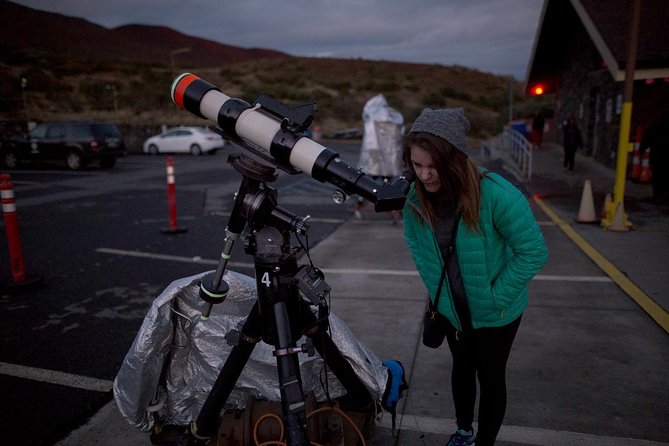
Before heading higher, you stop at the Maunakea Visitor Information Station for about 45 minutes. This is where you acclimate. You’ll have a warm picnic-style dinner while learning about Hawaiian star navigation before you go up for sunset and the summit view.
The food isn’t meant to be a fancy sit-down. It’s there so you’re warm, fed, and a little less stressed before the cold and altitude hit harder. From a value perspective, this matters because you’d otherwise be trying to solve food and warmth on the fly in a place that’s not set up for spontaneous comfort.
There’s another quiet benefit: restrooms. The itinerary builds in breaks at the visitor station level, which reduces scrambling later when the sky show is getting good.
One more note: you’ll need to bring your own water bottle. The operator provides filtered water refills, but they don’t say you can show up empty-handed. I’d bring one you can easily sip from during the ride.
Sunset above the clouds: the summit moment to aim for
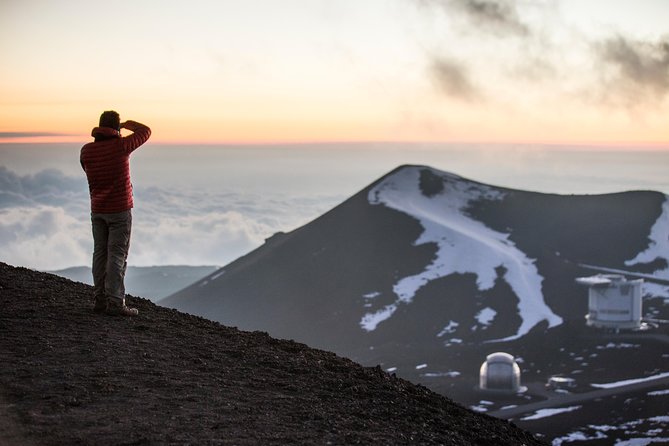
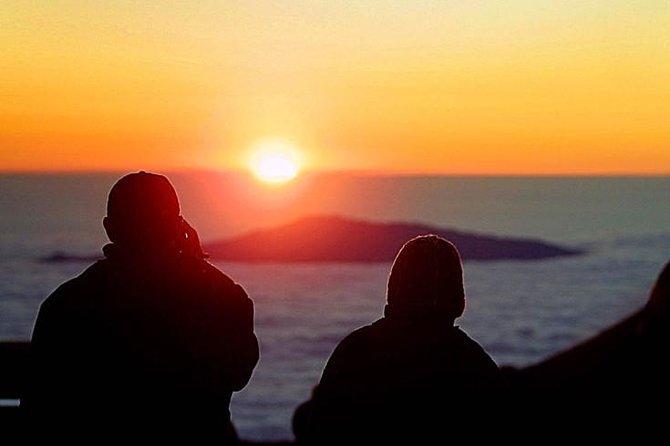
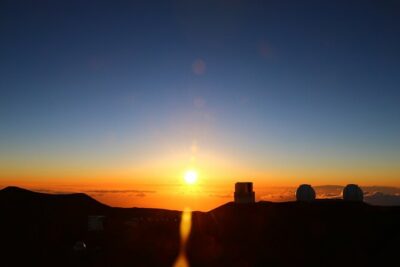
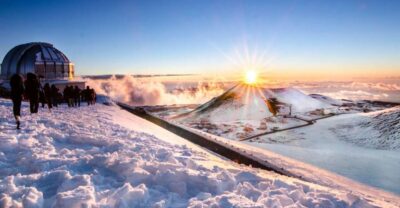
After the pre-acclimation stop, you continue up to the Mauna Kea Summit for about 30 minutes. This is the big payoff: sunset from above the clouds with the Pacific Ocean in view.
Is the timing tight? It can feel that way. You’re traveling between elevations and then transitioning quickly from daytime views to night. But that’s part of why a guided plan is helpful here. Sunsets on Mauna Kea depend on weather and cloud cover, and the guide is managing a sequence that gives you the best chance to catch that moment.
Wind is common at the top, so don’t treat the summit like a picnic blanket situation. Keep your layers on, listen to safety instructions, and let your eyes adjust as the light fades.
If you get a guide like Jon, Wilson, Jeff, Jason, or Eugene, you may notice a similar theme: they’ll keep the group calm and moving at the right pace, and they tend to connect the view to the mountain’s science and culture while you’re standing still enough to really look.
After dark, your private stargazing show: Celestron plus digital astrophotography
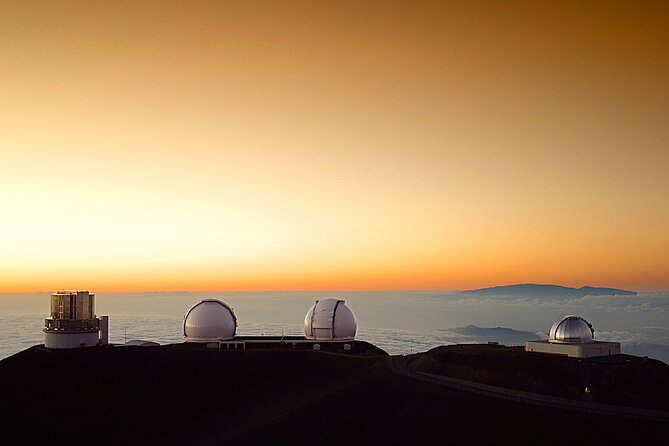
Once the sun goes down, you move back down to a more comfortable elevation—around 9,000 feet—for the stargazing session. This portion is built for dark skies and hands-on viewing.
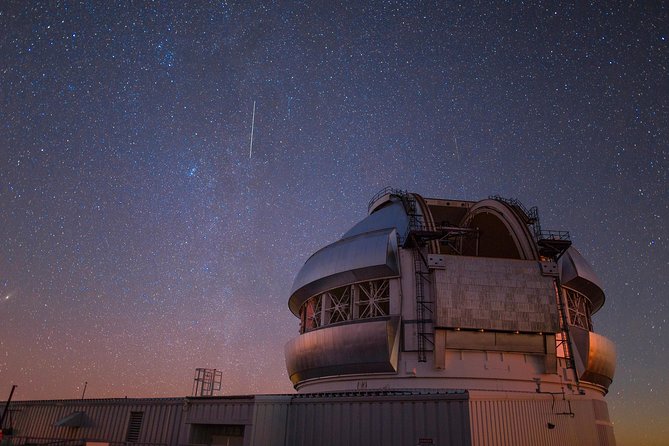
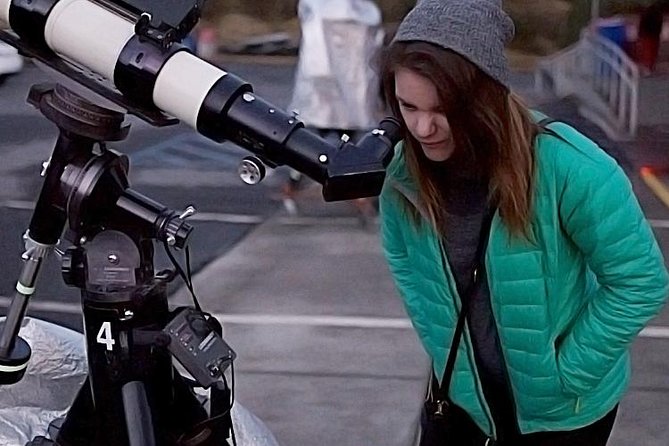
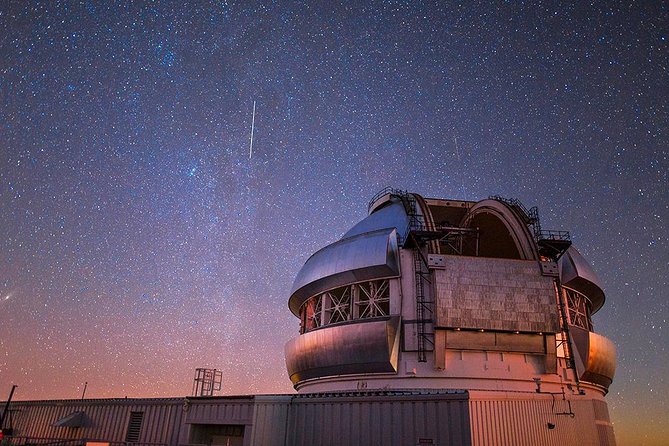
You’ll enjoy a private star show with an 11-inch Celestron telescope. The idea is not just “point at the sky.” You’ll see constellations and deep space objects, and the guide helps you make sense of what you’re looking at.
The tour also includes a state-of-the-art digital astro-photography scope (the equipment is described as Stellina digital telescope). That matters for two reasons:
- You get help getting images you might not manage on your own in freezing conditions.
- You’ll be able to view captured images of the Hawaiian night sky and share them with friends and family.
One of the most practical bits: hot cocoa and cookies show up during the night portion. When you’re cold enough for your fingers to feel slow, warm drinks make it easier to stay for the full show. This is the kind of thoughtful comfort detail that turns “we looked for 10 minutes” into a real stargazing session.
And yes, cloud cover can happen. When clouds break just enough, you can still catch a lot. This tour’s structure is built to keep you in the right place for those windows.
What you’ll learn beyond astronomy: Hawaii sky, culture, geology, and ecology
This trip isn’t only about stars. The tour also includes context about Hawaii—history, culture, and ecology—woven into stops and during the ride.
At the visitor station, you get star navigation education before the summit. Later, your guide talks about the night sky, and many guides also connect what you’re seeing to Mauna Kea’s place in Hawaiian understanding of the land and sky.
Even the drive up can be educational. Some guides focus on volcanoes and the mountain’s story while explaining safety. You’ll likely come away with a better sense of why this mountain matters on multiple levels, not just because it’s tall.
If you like tours that mix science with lived-in meaning, this is the right format: short explanations at the right times, with enough silence to actually look.
The real value of paying $329.84: why this beats DIY for most people
At $329.84 per person, this isn’t a budget tour. But on Mauna Kea, “cheap” often turns into expensive hassle: the 4×4 access road, the need to dress for extreme cold, and the altitude timing you can’t fully control.
Here’s what you’re buying for the money, based on what’s included:
- Round-trip transport from Kona in a vehicle built for the road conditions
- Warm parka and gloves
- Warm picnic dinner plus hot cocoa and cookies
- Guided, private telescope viewing
- Digital astro-photography with shareable results
- A guided plan with acclimation time and multiple elevation stops
For many people, the value is simply risk reduction. Driving up yourself on a schedule you control can be stressful, and the summit roads aren’t for casual driving. This is also a small-group experience with a guide to keep you safe and paced at altitude.
The one thing I’d weigh personally: if you already have cold-weather gear and you’re comfortable with altitude, you might feel you could DIY the rest. But DIY doesn’t give you the same “warm + planned + equipped” bundle, and it doesn’t guarantee you’ll get the best stargazing setup.
Practical notes that can make or break your night
A few details really matter here.
Bring water: they refilled from filtered water sources, but you still need your bottle.
Wear the right clothes: long pants and closed-toe shoes are required. Layers help you deal with changing temps on the van ride and at elevation.
Communicate your parka size and meal choice when booking: the operator asks for parka size (small through xx-large) and a meal choice. If you don’t provide it at booking, you’ll need to contact the operator directly.
Expect seasonal snow: snow is seasonal at Mauna Kea, with the heaviest snowfall during winter months. That can mean more cold, more wind, and more reason to layer up.
Weather decides everything: the tour requires good weather. If it’s canceled for weather, you’ll be offered a different date or a full refund.
Who should book, and who should skip this Mauna Kea summit tour
This tour is a strong fit for:
- People who want small-group stargazing instead of a crowd
- Anyone who likes structure: sunset first, then telescopes at night
- Visitors who want warm comfort (parka, gloves, cocoa) without planning a gear strategy
- Stargazing beginners who want help identifying what they’re seeing
Skip or rethink if you:
- Have respiratory, circulatory, or heart conditions, are pregnant, or feel medically unwell at altitude
- Need a strict “no cold” plan (it can be very cold and windy)
- Have scuba timing conflicts (no summit within 24 hours)
One more “yes, but” thought: even fit people can feel the altitude. If you’re sensitive to breathing changes, take it seriously and talk with your guide.
Should you book this Mauna Kea Summit and Stars tour?
If you want a guided, comfortable, equipment-backed stargazing night at one of the world’s best dark-sky areas, I think this is a smart pick. The biggest win is not just the telescopes—it’s the whole package: acclimation with a warm meal, summit sunset time, then a private star show at the right elevation, all wrapped in gear that keeps you warm.
If you hate cold, can’t handle altitude, or want total freedom with no structure, you may find it stressful. But for most people who come to the Big Island hoping for a night they’ll remember, this tour’s value is in how it handles the hard parts for you.
FAQ
How long is the Big Island Mauna Kea Summit and Stars small-group tour?
It runs about 8 hours.
Where do I meet the guide for pickup in Kona?
For people staying in Kailua Kona, pickup starts at the benches closest to the Courtyard by Marriott King Kamehameha’s Kona Beach Hotel parking lot entrance. Additional meeting stops may happen.
What telescopes are included for the stargazing portion?
The tour includes a private star show with an 11-inch Celestron telescope and a Stellina digital telescope for deep space viewing and captured images.
Are parkas and gloves provided?
Yes. You’ll get hooded parkas and gloves.
Is food included?
Yes. You’ll have a hot picnic dinner plus hot cocoa and cookies during the experience.
What should I wear?
You must wear closed-toe shoes and long pants. The tour recommends bringing a sweatshirt or sweater for layering.
Do I need to bring water?
Yes. You should bring your own water bottle; the operator provides filtered water refills.
Is there an age limit?
Yes. The minimum age is 13, and no children under 13 can participate.
What happens if the weather is bad?
This tour requires good weather. If it’s canceled due to poor weather, you’ll be offered a different date or a full refund.
More Tours in Big Island of Hawaii
- Big Island: Kona Manta Ray Snorkel Tour in Keauhou Harbor
★ 4.5 · 2,465 reviews - Hilo Shore Excursion: Volcanoes National Park & Black Sand Beach
★ 4.5 · 2,338 reviews - Small Group Big Island Twilight Volcano and Stargazing Tour
★ 5.0 · 1,619 reviews - Big Island: Mauna Kea Summit Tour with Free Night Star Photo
★ 5.0 · 1,449 reviews - Kona Snorkel Tour: Captain Cook Reef Snorkel, Dolphin & Sea Caves
★ 4.5 · 1,411 reviews - Big Island Zipline Tour Near Akaka Falls (250-ft Waterfall!)
★ 5.0 · 1,077 reviews
More Tour Reviews in Big Island of Hawaii
- Big Island in a Day: Volcanoes Waterfalls Sightseeing and History
★ 5.0 · 6,569 reviews - Big Island Manta Ray Night Snorkel
★ 5.0 · 5,656 reviews - Big Island: Kona Manta Ray Snorkel Tour in Keauhou Harbor
★ 4.5 · 2,465 reviews - Hilo Shore Excursion: Volcanoes National Park & Black Sand Beach
★ 4.5 · 2,338 reviews - Big Island: Captain Cook Snorkel On A Power Catamaran With Lunch
★ 5.0 · 2,232 reviews - KONA Manta Ray Night Snorkel – FREE re-ride if no Sightings
★ 5.0 · 2,212 reviews
Mauna Kea After Sunset
- Big Island GOAT Experience: Mauna Kea Summit, Sunset & Stars
★ 5.0 · 1,706 reviews - Small Group Big Island Twilight Volcano and Stargazing Tour
★ 5.0 · 1,619 reviews - Big Island: Mauna Kea Summit Tour with Free Night Star Photo
★ 5.0 · 1,449 reviews - Mauna Kea Stargazing Experience + Photos
★ 5.0 · 261 reviews - Mauna Kea Arnott’s Adventures
★ 5.0 · 150 reviews - Maunakea Stellar Explorer from Kona
★ 4.0 · 101 reviews
Just Added: The Newest Big Island Reviews


Mauna Kea Summit & Stargazing, compared.
 ★ 5.0Big Island GOAT Experience: Mauna Kea Summit, Sunset & StarsFrom $2891,706 reviews
 ★ 5.0Small Group Big Island Twilight Volcano and Stargazing TourFrom $2971,619 reviews
 ★ 5.0Mauna Kea Summit Tour with Free Night Star PhotoFrom $2801,449 reviews
 ★ 4.8Hilo: Mauna Kea Summit, Sunset, & Stargazing ExperienceFrom $289629 reviews
 ★ 5.0Mauna Kea Stargazing Experience + PhotosFrom $299261 reviews
 ★ 4.8MaunaKea Summit SUNSET and Star Tour with PhotoFrom $280220 reviews
 ★ 4.8Big Island, Hawaii: Volcano and Stargazing Tour with DinnerFrom $297179 reviews
 ★ 5.0Mauna Kea Arnott’s AdventuresFrom $255150 reviews
Browse the lists this tour appears in