
Reviewed · BIG ISLAND FARM & CHOCOLATE TASTINGS
Edible Hibiscus Guided Farm Tour (Big Island)
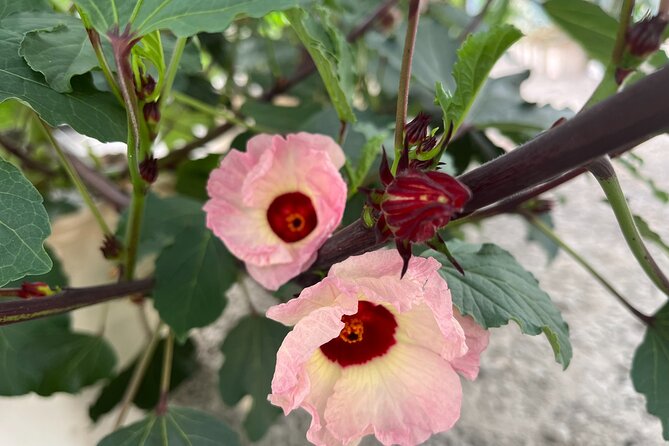
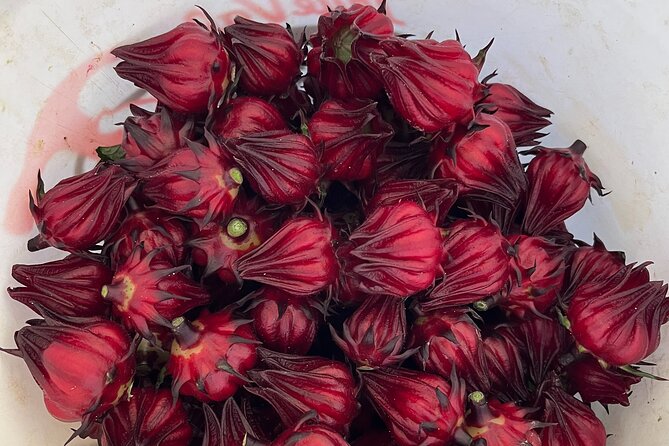
Edible hibiscus tastes like Hawaii in a bite. I love how this small, owner-led tour (run by Susan and her husband Lance) turns hibiscus from a pretty flower into real food, with a guided tasting of tea, preserves, and flower products. I also like the hands-on focus on hydroponic growing and the clear difference between culinary hibiscus and ornamental hibiscus. One thing to keep in mind: if you’re hoping for lots of pure eye-candy ornamental blooms, you’ll get more farming, labels, and edible use than big decorative photo stops.
You’ll meet at 44-2790 Kalopa Mauka Rd in Honokaa and spend about 1.5 hours on the Hamakua Coast countryside, in English, with a group capped at 12 people. Expect an outside demonstration garden, a visit to the greenhouse production area, and some ocean-view scenery during the walk. You finish back at the meeting point, and the tour runs in good weather since the experience is weather-dependent.
In This Review
- Key Highlights You Should Know
- Why Edible Hibiscus Here Feels Different From a Usual Farm Visit
- Hamakua Coast Setup: Honokaa Countryside, Ocean Air, and a 12-Person Max
- The Outside Demonstration Garden: Spotting Varieties and Learning What Changes When You Eat
- Hydroponic Greenhouse Stop: How Controlled Growing Supports Consistent Harvests
- The Tasting Portion: Tea, Flower Products, and the Fun Surprises
- Buying Hibiscus Products at the Farm: What’s Worth Taking Home
- Who Should Book This Tour (And Who Might Want to Skip It)
- Practical Tips for a Smooth 1.5 Hours in Honokaa
- Should You Book the Edible Hibiscus Guided Farm Tour in Honokaa?
- FAQ
- How long is the Edible Hibiscus Guided Farm Tour?
- Where does the tour start?
- Is the tour offered in English?
- How many people are in the group?
- What will I learn during the tour?
- What do I get to taste?
- Can I buy products at the farm?
- Does weather affect the tour?
- Is there free cancellation?
Key Highlights You Should Know
- Small group cap of 12 keeps this from feeling rushed or generic
- Culinary vs ornamental hibiscus explained in practical, food-focused terms
- Hydroponic greenhouse visit shows how hibiscus can be grown with control
- Guided tasting includes hibiscus tea and multiple on-site flower products
- Buy-ready farm products: preserves, teas, and treats are available to take home
More island farm stands, from cacao to sea salt
- Big Island GOAT Experience: Mauna Kea Summit, Sunset & Stars★ 5.0 · 1,706 reviews
- Hawaiian Salt Farm Tour in Kona★ 5.0 · 767 reviews
- Award Winning Farm Tour: Coffee, Chocolate and Unique Gifts★ 5.0 · 484 reviews
- Small-Group Big Island Tour: Hawaii Volcanoes National Park and Kona Coffee Farm★ 5.0 · 343 reviews
Why Edible Hibiscus Here Feels Different From a Usual Farm Visit
This tour is for people who like their travel experiences with a purpose. Hibiscus can look like a tropical postcard, but it also has an actual role in food on Hawaii’s farms. What I like is that you don’t just hear about hibiscus as a concept. You learn the plant, then you taste what the farm makes from it.
The big win is the culinary angle. You’ll sort out why some hibiscus is grown for looks while other types are grown for eating, and how that choice affects cultivation. That sounds basic until you’re in the garden and see how the growers talk through varieties and use.
The second win is that the tasting isn’t an afterthought. It’s built into the flow: education, walk-through, greenhouse check, then a guided taste of the farm’s hibiscus products. On this kind of tour, food is usually the finish line. Here, food is the point.
Hamakua Coast Setup: Honokaa Countryside, Ocean Air, and a 12-Person Max
The tour starts just outside Honokaa on the Hamakua Coast, at 44-2790 Kalopa Mauka Rd (and it ends back at the same meeting spot). This matters because the setting is part of why the hibiscus story makes sense. You’re in working farmland country, not a fenced-off attraction.
It’s also a small-group experience with a maximum of 12 people. That size is ideal if you like asking questions and getting direct answers from the owners. It’s also the right scale for a tasting without turning it into a hurried food line.
English is the operating language, and the duration is about 1 hour 30 minutes. Most people can participate, and the pacing is friendly for a short guided outing. If you’re the type who likes to move around and then sit down for food, this format fits.
The Outside Demonstration Garden: Spotting Varieties and Learning What Changes When You Eat
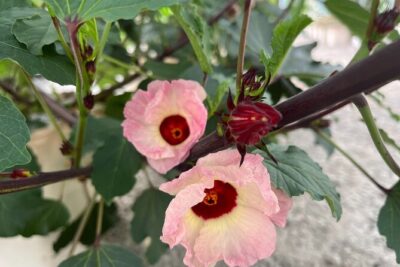
After you get oriented, the tour begins with a demonstration garden visit. This is where you get the “what you’re looking at” basics quickly. You’ll see different hibiscus plants and talk through the difference between ornamental hibiscus and culinary hibiscus.
This is more useful than it sounds. In Hawaii, hibiscus shows up everywhere as a symbol and a flower. But the edible question is a separate one. The tour frames it around farming decisions: which varieties are grown for the kitchen, and how cultivation supports that.
You’ll also hear conversation about Hawaii’s agriculture history as it relates to plant cultivation and growing choices. Even if you’re not a “plant person,” that context helps you understand why farmers select certain crops and how hibiscus fits into the broader food story.
A small practical note: in a working garden, you may notice insect nibbling. One gardener described seeing flowers and plants that looked noticeably affected by bugs. In other words, this isn’t a sterile showroom. It’s real farm life, and that realism is part of the charm.
Hydroponic Greenhouse Stop: How Controlled Growing Supports Consistent Harvests
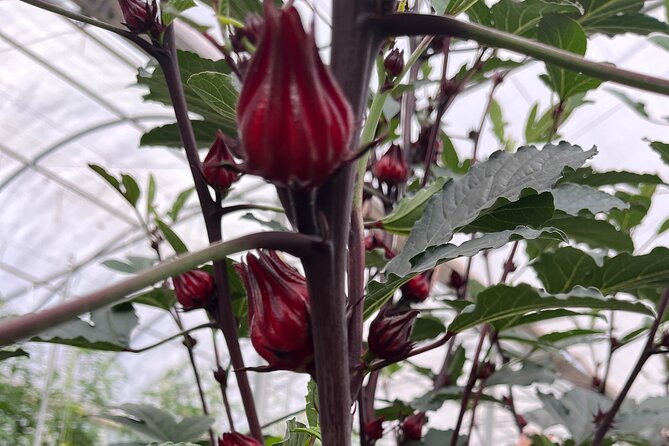
Next comes the hydroponic greenhouse production area. If you’re curious about hydroponics, you’ll get a simple, farm-focused explanation. This isn’t a lab lecture. It’s growers showing how they manage production.
Hydroponics tends to interest people who like process. The value here is that you can connect it to the food you later taste. You’ll see how the farm talks about cultivation and how growing methods can support the production of hibiscus flowers and the products made from them.
If you are not into gardening or the mechanics of growing systems, this stop may feel more technical than you expect. One person even noted that the hydroponic portion was the best match for people who enjoy gardening. Still, you’ll likely find something to enjoy even if you’re more of a casual food lover, because the guide ties the growing back to what ends up in the tasting.
Also, keep an eye out for the general atmosphere. Several people called out the setting and views, including ocean views as a bonus during the experience. That combination helps: you get both education and a sense of place.
Let a local guide plan the whole day

The Tasting Portion: Tea, Flower Products, and the Fun Surprises
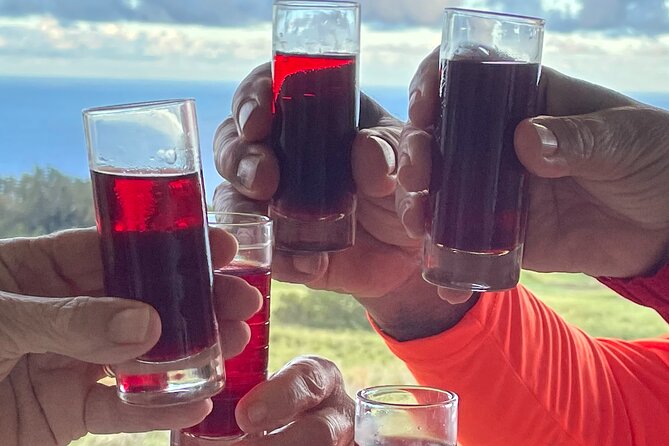
The tour ends with a guided tasting of hibiscus flowers, preserves, and teas. This is where you go from learning names and categories to tasting the range.
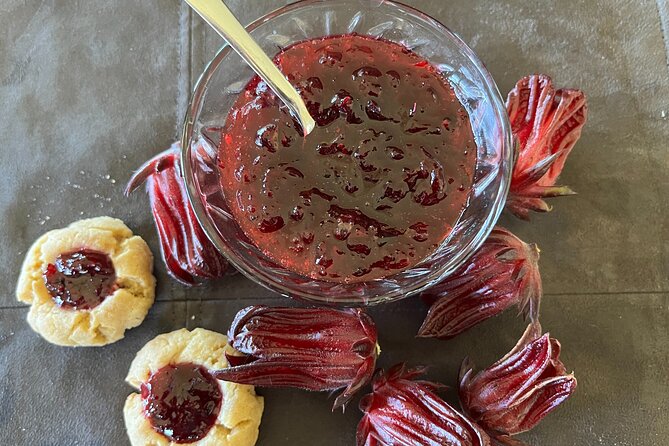
You should plan for more than just one flavor. The hibiscus products are made on-site, and the tasting can include hibiscus tea and other treats based on the farm’s hibiscus flowers. Based on what people describe, you might get samples such as:
- Hibiscus tea (including a refreshing style sometimes described like hibiscus ice tea)
- Preserves made from hibiscus
- Flowers in syrup
- Sweets using hibiscus jam or flavors, such as shortbread with jam
- Desserts like hibiscus panacotta (when included)
Even if you’re not sure you like hibiscus, I’d approach this tasting with an open mind. Hibiscus flavor can surprise you: bright, slightly tart, and not always like the same thing you’ve had in store-bought drinks. Tasting multiple forms helps you understand that culinary hibiscus is being used like an ingredient, not just a garnish.
One more detail that makes this portion feel special: the guide style. People highlighted Susan’s energy and the playful way she runs the tour, including a sense of humor and quick comebacks. That doesn’t change the food, but it makes the learning stick because you’re paying attention.
If you’re the kind of eater who likes to compare textures—tea versus syrup versus preserve—this segment is built for you.
Buying Hibiscus Products at the Farm: What’s Worth Taking Home
You can purchase products at the farm at the end. People strongly recommend getting the hibiscus preserves and the hibiscus tea, and the tasting helps you decide what you’ll actually use.
Here’s how I’d think about it if you want value:
- If you want the easiest souvenir to enjoy right away, start with hibiscus tea. It’s practical and refreshing.
- If you want something that feels more “giftable,” preserves and flower-in-syrup products can be a memorable pantry item.
- If you’re planning to cook or bake with hibiscus, buy a product that matches what you liked during the tasting (jam/preserve for spreads, syrup for desserts or drizzling).
Bring some money with you. People specifically advised this because the tasting may make it hard to leave without a purchase. The good part is you’re buying from the place that makes the food you sampled, so it doesn’t feel like a random shop stop.
Who Should Book This Tour (And Who Might Want to Skip It)
This is a strong fit for:
- Food-first travelers who want local farming with a tasting payoff
- People who enjoy gardening or want to learn how hydroponics works in a real farm setting
- Anyone curious about the difference between edible and ornamental plants (and why that matters)
It’s not the best fit for:
- You if your main goal is scenic, purely ornamental flower viewing with lots of photo moments
- You if you dislike any discussion of cultivation methods, since hydroponics and farming practices are part of the experience
If you’re somewhere in the middle—interested in learning, but mostly here for the food—you’ll probably still have a great time because the tour keeps tying plant talk to edible outcomes.
Practical Tips for a Smooth 1.5 Hours in Honokaa
A few things will make the experience easier:
- Wear comfortable shoes for farm paths and greenhouse areas. You’ll do some walking.
- Expect good weather to matter. The experience requires good weather, and if it’s canceled due to poor conditions, you’ll be offered another date or a full refund.
- Bring some cash for purchases. You can buy preserves, teas, and other products after the tasting.
- Keep your expectations aligned with the format. It’s a guided learning + tasting experience, not a long open-ended wandering tour.
Small group also means you’ll want to arrive on time for the meeting point at 44-2790 Kalopa Mauka Rd. The schedule is about 1.5 hours total, so quick starts help everything flow.
Should You Book the Edible Hibiscus Guided Farm Tour in Honokaa?
Book it if you want an honest-to-goodness food farm experience on the Big Island. This tour gives you more than a label or a single sample. You get the story of hibiscus cultivation, a look at hydroponic production, and then a tasting that shows you what culinary hibiscus becomes in the kitchen.
Skip or reconsider if you’re mainly after big scenic flower photography or you don’t want any focus on gardening and growing systems. In that case, the greenhouse and cultivation talk may not be your thing.
My bottom line: if you like learning by tasting and you’re excited by the idea that a flower can be food, this is one of the more memorable hibiscus experiences you can do on the north side of the Big Island.
FAQ
How long is the Edible Hibiscus Guided Farm Tour?
It’s about 1 hour 30 minutes total.
Where does the tour start?
The meeting point is 44-2790 Kalopa Mauka Rd, Honokaa, HI 96727, USA.
Is the tour offered in English?
Yes, the tour is offered in English.
How many people are in the group?
The tour is capped at a maximum of 12 travelers.
What will I learn during the tour?
You’ll learn about hibiscus cultivation, including the difference between ornamental hibiscus and culinary hibiscus, plus how the farm produces its hibiscus products.
What do I get to taste?
The tour includes a guided tasting of hibiscus flowers, preserves, and teas, along with additional hibiscus products made on-site.
Can I buy products at the farm?
Yes. You can purchase hibiscus products at the farm.
Does weather affect the tour?
Yes. The experience requires good weather. If it’s canceled due to poor weather, you’ll be offered a different date or a full refund.
Is there free cancellation?
Yes. You can cancel up to 24 hours in advance for a full refund. If you cancel less than 24 hours before the start time, the amount paid is not refunded.
More Tours in Big Island of Hawaii
- Big Island: Kona Manta Ray Snorkel Tour in Keauhou Harbor
★ 4.5 · 2,465 reviews - Hilo Shore Excursion: Volcanoes National Park & Black Sand Beach
★ 4.5 · 2,338 reviews - Small Group Big Island Twilight Volcano and Stargazing Tour
★ 5.0 · 1,619 reviews - Big Island: Mauna Kea Summit and Stars Small-Group Adventure Tour
★ 5.0 · 1,545 reviews - Big Island: Mauna Kea Summit Tour with Free Night Star Photo
★ 5.0 · 1,449 reviews - Kona Snorkel Tour: Captain Cook Reef Snorkel, Dolphin & Sea Caves
★ 4.5 · 1,411 reviews
More Tour Reviews in Big Island of Hawaii
- Big Island in a Day: Volcanoes Waterfalls Sightseeing and History
★ 5.0 · 6,569 reviews - Big Island Manta Ray Night Snorkel
★ 5.0 · 5,656 reviews - Big Island: Kona Manta Ray Snorkel Tour in Keauhou Harbor
★ 4.5 · 2,465 reviews - Hilo Shore Excursion: Volcanoes National Park & Black Sand Beach
★ 4.5 · 2,338 reviews - Big Island: Captain Cook Snorkel On A Power Catamaran With Lunch
★ 5.0 · 2,232 reviews - KONA Manta Ray Night Snorkel – FREE re-ride if no Sightings
★ 5.0 · 2,212 reviews
Island Farm Stands and Tastings
- Big Island GOAT Experience: Mauna Kea Summit, Sunset & Stars
★ 5.0 · 1,706 reviews - Hawaiian Salt Farm Tour in Kona
★ 5.0 · 767 reviews - Award Winning Farm Tour: Coffee, Chocolate and Unique Gifts
★ 5.0 · 484 reviews - Small-Group Big Island Tour: Hawaii Volcanoes National Park and Kona Coffee Farm
★ 5.0 · 343 reviews - Volcano, Chocolate and Waterfalls of the Big Island
★ 5.0 · 238 reviews - Experience Our Honey Farm And Beekeeping Tour
★ 5.0 · 167 reviews
Just Added: The Newest Big Island Reviews



Big Island Farm & Chocolate Tastings, compared.
 ★ 5.0Big Island GOAT Experience: Mauna Kea Summit, Sunset & StarsFrom $2891,706 reviews
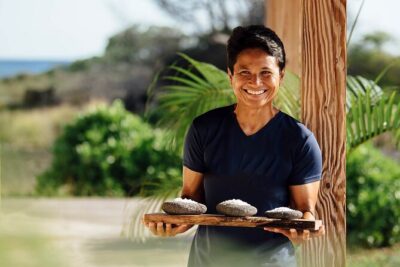 ★ 5.0Hawaiian Salt Farm Tour in KonaFrom $27767 reviews
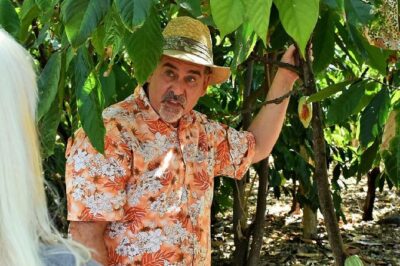 ★ 5.0Award Winning Farm Tour: Coffee, Chocolate and Unique GiftsFrom $50484 reviews
 ★ 4.9Night Swim with Manta Ray with Hot ChocolateFrom $146420 reviews
 ★ 4.9Volcanoes, Waterfalls, & Coffee Farm Day-TripFrom $264414 reviews
 ★ 5.0Small-Group Big Island Tour: Hawaii Volcanoes National Park and Kona Coffee FarmFrom $209343 reviews
 ★ 5.0Volcano, Chocolate and Waterfalls of the Big IslandFrom $308238 reviews
 ★ 5.0Experience Our Honey Farm And Beekeeping TourFrom $30167 reviews
Browse the lists this tour appears in