
Reviewed · BIG ISLAND FARM & CHOCOLATE TASTINGS
Abalone Farm Tour
Abalone farm tours beat museum boredom. On the Big Island, you get a close-up look at a working operation where live abalone are part of the story and tasting is built in. I love that it feels hands-on without being hard work.
Two things I particularly like are the sustainability focus and the way guides turn biology into something you can actually picture. Guides such as Carlos (and others like Kai and Diana) keep the pace lively, and you learn what’s going on at each stage of farming.
One possible drawback: this is an outdoor walk, so plan for sun or a passing rain shower and bring water.
In This Review
- Key points at a glance
- A working abalone farm, not a staged attraction
- The 1-hour flow: walk, talk, touch, then taste
- Sustainable abalone farming on a tropical island
- The tasting: abalone, seaweed, and superfood-ish samples
- Guides who make the science feel human
- Who this is best for (and how physical it really is)
- Price and value: why $35 can feel like a steal
- After the tour: food truck add-on and live seafood options
- Should you book this abalone farm tour on Big Island?
- FAQ
- How long is the abalone farm tour?
- What does it cost?
- Where is the meeting point?
- What’s included in the experience?
- Is the tour offered in English?
- What’s the maximum group size?
- Do I need good weather?
- Are service animals allowed?
- Is there a mobile ticket?
Key points at a glance
- Live animal time: you may touch live abalone and other sea creatures during the tour
- Real sustainable farming talk: you’ll learn why raising abalone matters in Hawaii
- Included seaweed and abalone tasting: you try samples during and at the end of the experience
- Small group feel: group size tops out at 20 people, so questions actually get answered
- Good for mixed ages and abilities: you can keep it low-energy and still have a great time
More island farm stands, from cacao to sea salt
- Big Island GOAT Experience: Mauna Kea Summit, Sunset & Stars★ 5.0 · 1,706 reviews
- Hawaiian Salt Farm Tour in Kona★ 5.0 · 767 reviews
- Award Winning Farm Tour: Coffee, Chocolate and Unique Gifts★ 5.0 · 484 reviews
- Small-Group Big Island Tour: Hawaii Volcanoes National Park and Kona Coffee Farm★ 5.0 · 343 reviews
A working abalone farm, not a staged attraction
This tour is set up like a real farm visit. You’re walking around the pens and culture areas, watching how abalone and seaweed fit into a working system. That matters because abalone isn’t just a seafood product here. It’s also a species with real conservation weight, and the farm’s whole pitch is about doing it responsibly.
What makes it more interesting than a typical “see it and go” tour is the tone. The guide doesn’t just recite facts. They explain why the farm’s approach matters, and they connect it to the bigger story of abalone in the ocean.
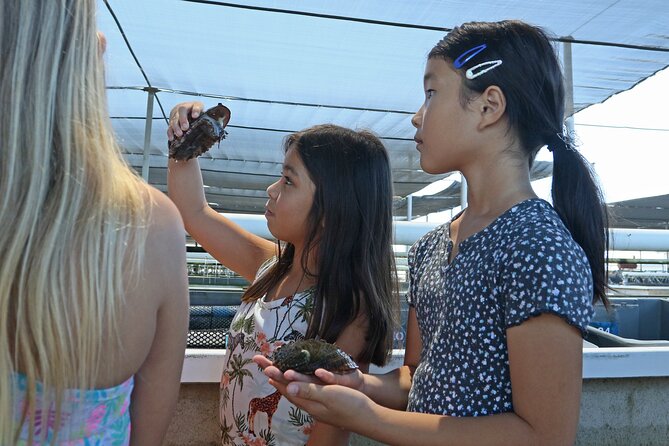
You also get the sensory part that so many “education” tours skip. You’re not only looking. You’re tasting and, in a very memorable way, getting the chance to handle live abalone or other sea creatures. If you like experiences that show instead of tell, this is your kind of stop.
The 1-hour flow: walk, talk, touch, then taste
The tour runs about an hour. It’s paced as a guided stroll, so you can follow along without needing special skills. Most of it takes place outdoors, and from what I’ve seen firsthand in how people describe it, there’s usually enough shade to keep things comfortable.
Here’s what to expect during the farm time:
Stop: Big Island Abalone
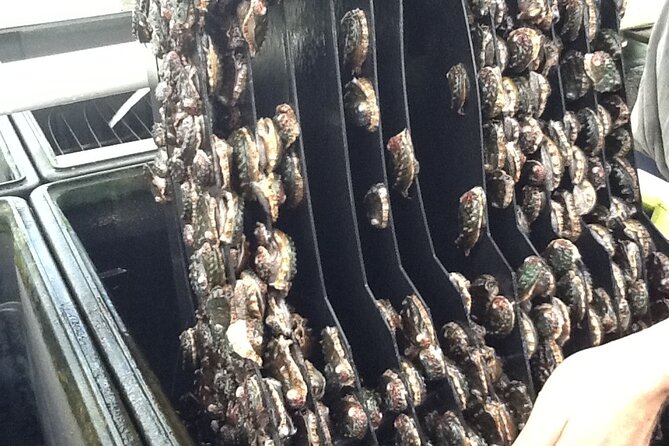
You’ll get an interactive tour that covers the full arc: how abalone are raised, how they reach maturity, and why the farm focuses on sustainable methods. A big theme is how people can produce abalone in a tropical island setting, and the guide explains what makes the local approach workable.
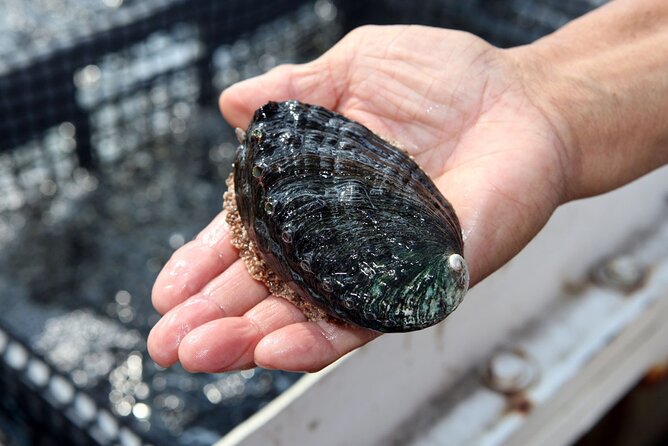
Along the way, you may get a rare chance to touch live abalone or other sea creatures. That’s one of the most praised parts because it changes how you understand the animal. Reviews mention seeing details like the shell, foot, radula, and even the eyes when you’re holding it (that’s the kind of specificity that makes the lesson stick).
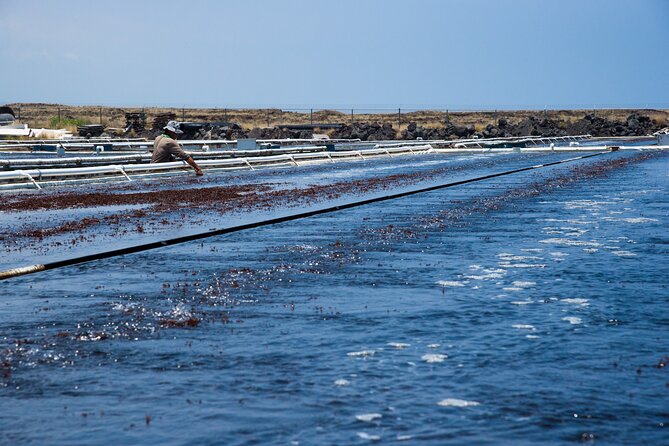
The visit also includes a seaweed component. You’ll learn about seaweed cultivation as part of the farming system, and you’ll get samples to taste during the experience. If you’re hoping for a mix of “hands on” and “why it works,” this tour hits that balance.
Why the format works
A lot of tours try to cram too much into too little time. This one stays focused. You get the farm story in about an hour, then you cap it with tasting. It’s not a marathon, and it doesn’t feel rushed.
Sustainable abalone farming on a tropical island
One of the most useful parts of this tour is the sustainability framing. The farm focuses on how raising abalone responsibly can help support populations and reduce pressure on wild animals. Even if you’ve never thought about aquaculture before, the guide makes the logic clear.
The story is also grounded in place. Big Island conditions let farmers grow abalone and seaweed, but it’s not just “plant and hope.” You learn that the farm is operating as a system—abalone and seaweed aren’t random add-ons. They belong together in how the operation functions.
If you care about food choices, this tour adds context to the seafood aisle. You start to understand that premium seafood doesn’t have to be an extractive story. It can be a managed, planned process—when the practices are done right.
The tasting: abalone, seaweed, and superfood-ish samples
This is the part that turns the tour from educational to actually fun. Included tastings cover both abalone and seaweed/seaweed-type foods. Depending on what’s available that day, you might see items like sea grapes, seaweed varieties, and other sea greens such as dulse or sea peas. Some people describe the sea greens as tasting like kale, which is a helpful comparison if you’re wondering what to expect.
Then, at the end of the tour, you get a more direct abalone taste experience. People report being served a steamed shell of abalone to eat. One person even notes the shell comes with you, which is a satisfying souvenir twist: you don’t just learn the animal’s anatomy—you get to experience it as food.
How to approach the tasting
Keep your expectations flexible. If you’ve never tried abalone, don’t worry about knowing what it should taste like. The tour’s purpose is partly to introduce it in a guided, low-stress way. And if you’re already a seafood fan, it’s still worth it because you’re eating the product after seeing how it’s raised.
Also, the tasting is just enough to feel included. If you want a bigger meal, there’s an easy next step.
Guides who make the science feel human
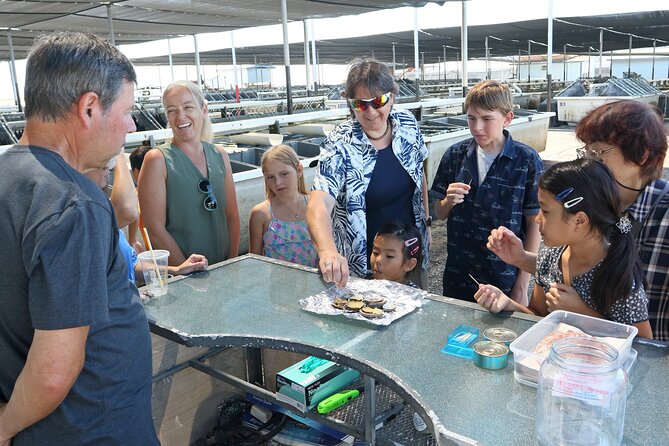
The tour’s success rides heavily on the guide. Carlos is one name that comes up a lot, with people praising his humor and his ability to explain the process in a way that makes abalone feel fascinating rather than complicated. Kai is another guide mentioned for clarity and enthusiasm, especially during the explanation of how abalone grow and how seaweed farming fits in.
Diana also shows up in comments as energetic and kind, and that personality difference matters. When the guide keeps the group moving and answering questions, the tour feels like a conversation rather than a lecture.
Another quiet win: the group size. With a maximum of 20 people, it’s easier to actually hear the explanation and see what the guide wants you to notice. Smaller groups also tend to mean better pacing—less waiting, more time in the pens.
Who this is best for (and how physical it really is)
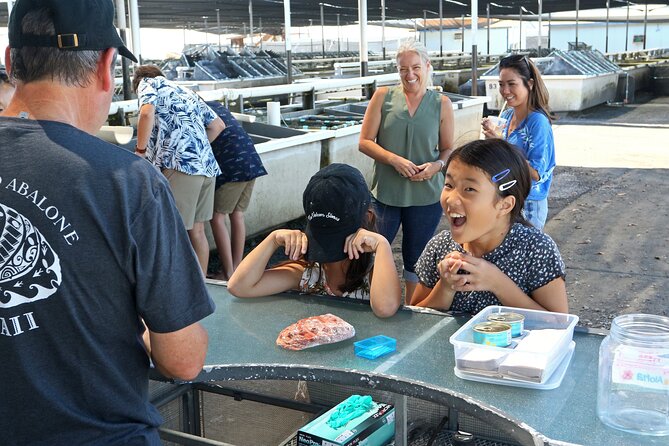
This works for a wide range of ages and abilities. That’s not marketing fluff—it shows up in the details. People mention bringing kids (including toddlers and a ten-year-old), and also mention older adults who used a cane and still managed the walk comfortably.
What you should plan for:
- It’s outdoors, so bring water.
- Wear a hat and sun protection.
- Expect a walk-around style experience that doesn’t sound like heavy hiking.
If you’re traveling with family, this is a strong choice because kids get the sensory payoff: touching, looking closely at live animals, and then tasting. If you’re traveling solo or as a couple, you’ll still get a full story in one hour without needing a full day commitment.
If you’re sensitive to crowds, the group cap at 20 is reassuring. If you’re worried about mobility, pay attention to how people describe the experience as low physical activity. You should still dress for uneven outdoor ground, though, because it’s a farm.
Price and value: why $35 can feel like a steal
At $35 per person for about an hour, this lands in the “good value” zone because you’re not just paying for narration. You’re paying for a guided working-farm experience that includes:
- hands-on moments with live animals (when the guide allows)
- multiple tastings (abalone and seaweed/sea greens)
- a real explanation of the farming system and why sustainable raising matters
Also, because the tour ends back at the starting point, you aren’t stuck planning a complicated route. You can slot it into a half-day on the Kona side and still have time for other island activities.
One more detail that affects value: the operation also has food options on site. Many people follow the tour with food at the food truck next door or on the property. That lets you turn your tasting into a full meal if you want it.
Practical note: this is popular. It’s often booked about 12 days in advance on average, so if you have a tight itinerary, book sooner rather than later.
After the tour: food truck add-on and live seafood options
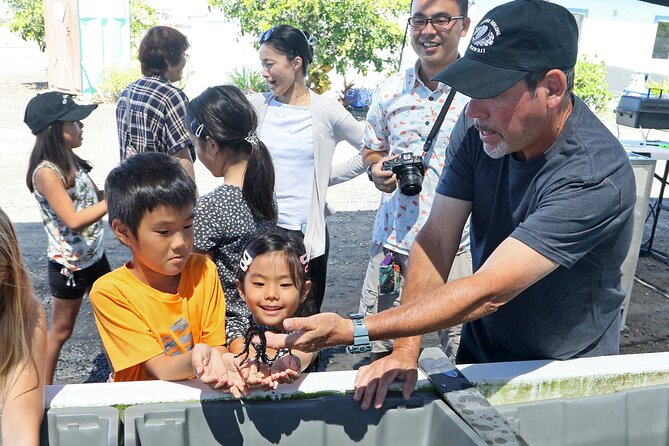
The farm area includes a food truck with abalone-focused dishes. People mention abalone poke and sushi dishes, and describe the food as delicious. If you’re the type who likes to keep tasting going, this is a natural follow-up.
There’s also mention of being able to purchase fresh abalone per piece at the end, and possibly other live abalone options at the venue. I wouldn’t assume every option is available every day, but the key takeaway is that the tour isn’t your only chance to eat abalone.
This is a nice combo for two kinds of travelers:
- Food-first travelers who want a story + a meal
- Learning-first travelers who like to test what they just learned
If you’re short on time and you want one focused activity that doesn’t require extra transit planning, this tour plus the food truck is a solid one-two.
Should you book this abalone farm tour on Big Island?
Book it if you want an hour of real, practical learning that doesn’t feel like school. I’d especially recommend it if you’re curious about seafood origins, like hands-on experiences, or you’re traveling with family and want something that keeps kids engaged.
Skip it only if you strongly dislike outdoor walks, or if you don’t care about tastings and farm processes at all. This isn’t a scenery tour where you just take photos and move on. It’s a working farm visit built around understanding abalone—and tasting your way into the answer.
If you’re on Kona time and want an easy, satisfying activity with a small group feel, this is a smart buy.
FAQ
How long is the abalone farm tour?
The tour is about 1 hour.
What does it cost?
It costs $35.00 per person.
Where is the meeting point?
You start at 73-357 Makako Bay Dr, Kailua-Kona, HI 96740, USA. The activity ends back at the meeting point.
What’s included in the experience?
The tour includes admission and tastings, including abalone and seaweed. It’s also described as interactive, with opportunities to touch live abalone or other sea creatures.
Is the tour offered in English?
Yes, the tour is offered in English.
What’s the maximum group size?
The tour has a maximum of 20 people.
Do I need good weather?
Yes. The experience requires good weather. If it’s canceled due to poor weather, you’ll be offered a different date or a full refund.
Are service animals allowed?
Yes, service animals are allowed.
Is there a mobile ticket?
Yes, it’s a mobile ticket.
If you’d like, tell me your travel month and whether you’re going with kids or anyone with limited mobility, and I’ll suggest a smart time slot and what to pair it with nearby.
More Tours in Big Island of Hawaii
- Big Island: Kona Manta Ray Snorkel Tour in Keauhou Harbor
★ 4.5 · 2,465 reviews - Hilo Shore Excursion: Volcanoes National Park & Black Sand Beach
★ 4.5 · 2,338 reviews - Small Group Big Island Twilight Volcano and Stargazing Tour
★ 5.0 · 1,619 reviews - Big Island: Mauna Kea Summit and Stars Small-Group Adventure Tour
★ 5.0 · 1,545 reviews - Big Island: Mauna Kea Summit Tour with Free Night Star Photo
★ 5.0 · 1,449 reviews - Kona Snorkel Tour: Captain Cook Reef Snorkel, Dolphin & Sea Caves
★ 4.5 · 1,411 reviews
More Tour Reviews in Big Island of Hawaii
- Big Island in a Day: Volcanoes Waterfalls Sightseeing and History
★ 5.0 · 6,569 reviews - Big Island Manta Ray Night Snorkel
★ 5.0 · 5,656 reviews - Big Island: Kona Manta Ray Snorkel Tour in Keauhou Harbor
★ 4.5 · 2,465 reviews - Hilo Shore Excursion: Volcanoes National Park & Black Sand Beach
★ 4.5 · 2,338 reviews - Big Island: Captain Cook Snorkel On A Power Catamaran With Lunch
★ 5.0 · 2,232 reviews - KONA Manta Ray Night Snorkel – FREE re-ride if no Sightings
★ 5.0 · 2,212 reviews
Island Farm Stands and Tastings
- Big Island GOAT Experience: Mauna Kea Summit, Sunset & Stars
★ 5.0 · 1,706 reviews - Hawaiian Salt Farm Tour in Kona
★ 5.0 · 767 reviews - Award Winning Farm Tour: Coffee, Chocolate and Unique Gifts
★ 5.0 · 484 reviews - Small-Group Big Island Tour: Hawaii Volcanoes National Park and Kona Coffee Farm
★ 5.0 · 343 reviews - Volcano, Chocolate and Waterfalls of the Big Island
★ 5.0 · 238 reviews - Experience Our Honey Farm And Beekeeping Tour
★ 5.0 · 167 reviews
Just Added: The Newest Big Island Reviews


Big Island Farm & Chocolate Tastings, compared.
 ★ 5.0Big Island GOAT Experience: Mauna Kea Summit, Sunset & StarsFrom $2891,706 reviews
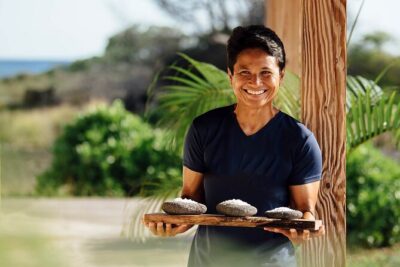 ★ 5.0Hawaiian Salt Farm Tour in KonaFrom $27767 reviews
 ★ 5.0Award Winning Farm Tour: Coffee, Chocolate and Unique GiftsFrom $50484 reviews
 ★ 4.9Night Swim with Manta Ray with Hot ChocolateFrom $146420 reviews
 ★ 4.9Volcanoes, Waterfalls, & Coffee Farm Day-TripFrom $264414 reviews
 ★ 5.0Small-Group Big Island Tour: Hawaii Volcanoes National Park and Kona Coffee FarmFrom $209343 reviews
 ★ 5.0Volcano, Chocolate and Waterfalls of the Big IslandFrom $308238 reviews
 ★ 5.0Experience Our Honey Farm And Beekeeping TourFrom $30167 reviews
Browse the lists this tour appears in