
Reviewed · HAWAII VOLCANOES NATIONAL PARK TOURS
Guided 3-Hour Hike in Volcanoes National Park
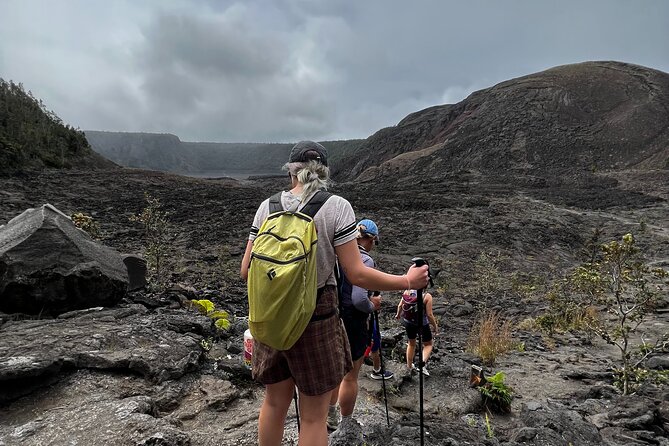
Three hours, and the volcano grabs you. This guided hike takes you down into Halemaumau Crater, where you start with steam vents and sulfur deposits, then walk through rainforest plants adapted to the volcanic world. I love the way the route actually gets you to the crater floor, and I also love the human touch from guides like Jennifer and Yvonne, who explain what you’re seeing and why it matters. One watch-out: rain and mist can turn the footing slick and make some views tougher.
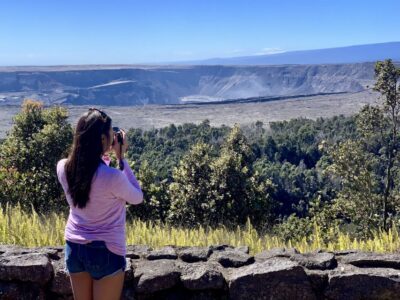
At a maximum of 10 people, it feels more like a conversation than a bus-tour pause button. You’ll wrap up back at the Kīlauea Visitor Center, with crater views and, on clear days, a distant look toward Moana Loa. Because this is a moderate hike with real elevation changes, it’s best for anyone who’s comfortable walking on uneven ground for a few hours.
In This Review
- Key Highlights You Should Know Before You Go
- Why This 3-Hour Hike Feels Like a Front-Row Seat to Kīlauea
- Meeting at Kīlauea Visitor Center and What the Small Group Changes
- Mile One: Steam Vents, Sulfur Deposits, and the Volcano’s Quick Start
- Rainforest Crater Walk: Tree Ferns, Ōhia, and Honeycreeper Birds
- The Crater Floor: The Lava Lake Moment
- Views at the End: Back Up, Crater Overlook, and Moana Loa in the Distance
- Pace, Elevation, and What Moderate Fitness Really Means
- Price and Value: $120 Plus Park Fees That You Should Budget
- Gear and Clothing Tips for Rain, Mist, and Crater Conditions
- How the Guide Turns Steam Vents into a Real Story
- Should You Book This Guided Volcano Hike?
- FAQ
- FAQ
- How long is the guided hike?
- Where does the tour start and end?
- How much does the tour cost?
- What’s included in the tour price?
- What park fees are not included?
- What fitness level do I need?
- Is this tour offered in English?
- What is the maximum group size?
- What happens if weather is poor?
Key Highlights You Should Know Before You Go
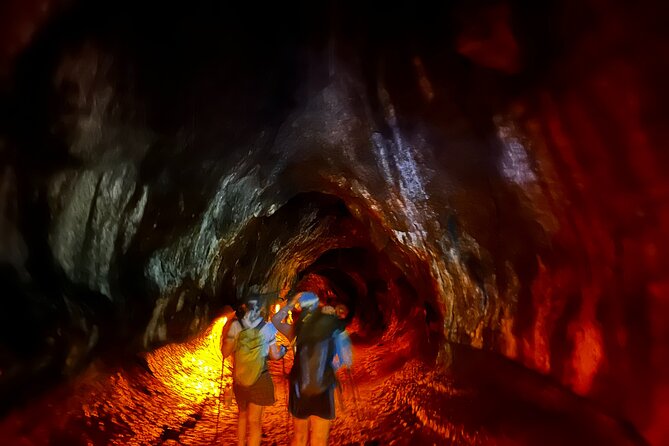
- First-mile steam vents and sulfur deposits show you the volcano’s working parts right away
- Small group limit (10 max) helps you move at a steady pace and ask questions
- Backpacks and trekking poles included make the descent and climb feel more manageable
- Crater rainforest species like tree ferns, ōhia, and honeycreeper birds turn the walk into more than scenery
- Lava-lake views at the crater floor are the big payoff when conditions allow
More ways into Hawaii Volcanoes National Park
- Big Island in a Day: Volcanoes Waterfalls Sightseeing and History★ 5.0 · 6,569 reviews
- Hilo Shore Excursion: Volcanoes National Park & Black Sand Beach★ 4.5 · 2,338 reviews
- Small Group Big Island Twilight Volcano and Stargazing Tour★ 5.0 · 1,619 reviews
- Big Island Highlights: Coffee, Volcano, Black Sands & Waterfall★ 5.0 · 1,054 reviews
Why This 3-Hour Hike Feels Like a Front-Row Seat to Kīlauea
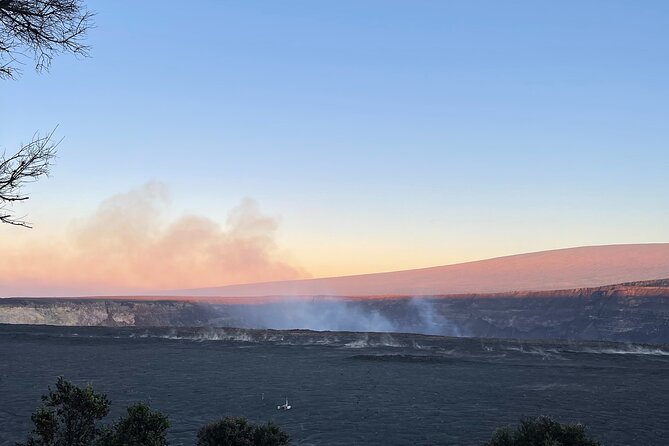
This hike is built for people who want more than photos. The point isn’t just to say you were in Volcanoes National Park. It’s to walk down through the layers of what Kīlauea shows—heat and gases near the start, crater ecology in the middle, and the raw power down at the bottom.
The route also has a nice rhythm. You begin with clear, in-your-face volcanic features (steam vents and sulfur deposits), then the landscape shifts to rainforest life that survives in a place most plants would struggle. That contrast is part of the magic: geology and biology in the same three hours, right in front of you.
Meeting at Kīlauea Visitor Center and What the Small Group Changes
You start at the Kīlauea Visitor Center (1 Crater Rim Drive, Volcano, HI 96785) and finish right back there. No complicated shuttle logic, no mysterious pickup window. Just show up and get ready to walk.
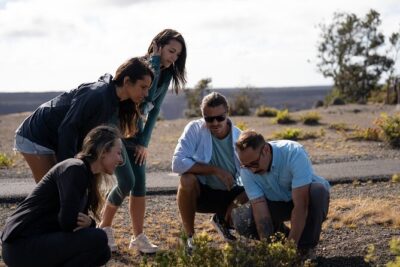
The group size matters here. With a maximum of 10 travelers, you’re not squeezed into a line. You get time to stop, look, and listen, including when your guide points out small details you might otherwise miss—like how the crater plants manage to thrive in a harsh volcanic setting.
This tour also runs in English, and you get a mobile ticket. That’s a small thing, but it helps you spend less effort on logistics and more on actually being outside.
Mile One: Steam Vents, Sulfur Deposits, and the Volcano’s Quick Start
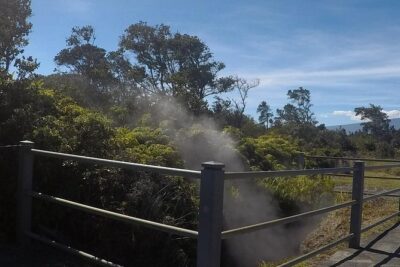
In the very first mile, you’ll see remnants of an active volcano—steam vents and sulfur deposits that give the crater a distinctive smell and feel. Even before you reach the deepest parts of the route, you get the sense that you’re walking in a living system, not a museum.
If you’ve never stood near volcanic steam before, here’s what you’ll notice fast: the ground and air feel different. Steam can drift, and sulfur deposits can look pale and textured. This is the moment where the guide’s explanations pay off, because the features can seem random until someone tells you what you’re looking at.
There’s also an offhand practical benefit: this early section helps you “get your bearings fast.” You’ll learn what the route is like before it gets steeper later.
Rainforest Crater Walk: Tree Ferns, Ōhia, and Honeycreeper Birds
After the volcanic start, the hike shifts into a rainforest scene inside the crater. This is where the walk becomes more than dramatic views. You’ll pass tree ferns and ōhia trees, plus you may hear honeycreeper birds.
What I like about this part is the way it changes your attention. Instead of scanning for heat and smoke, you start noticing living adaptations. In a volcanic crater, conditions can be extreme, and many species here have survival strategies that you wouldn’t expect.
It’s also where a good guide makes the experience feel personal. Jennifer and Yvonne, for example, were praised for connecting plants and animals to Hawaiian context and legends, not just listing species like they’re on a field guide checklist. If you enjoy cultural stories as much as natural science, this section is where that balance shows up.
Let a local guide plan the whole day


The Crater Floor: The Lava Lake Moment
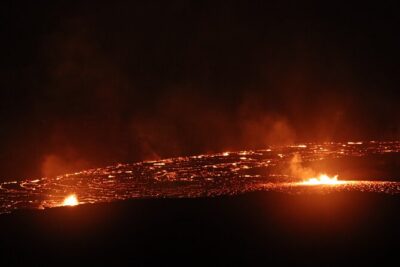
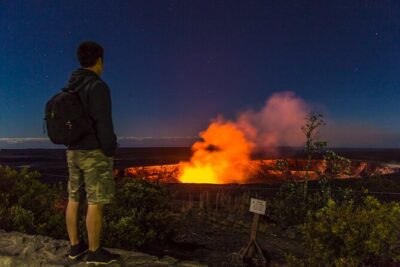
The big payoff arrives at the bottom of the Kīlauea crater. The tour description calls out the magnificence of the lava lake, and that’s the reason most people sign up. If conditions and timing line up, seeing the lava area is the kind of moment you don’t forget.
A quick reality check: volcanic viewing can depend on weather and conditions. The experience is described as requiring good weather, and it’s also framed as a possibility that you might even witness an eruption. So think of this as a guided hike with a shot at truly high drama, not a guaranteed fiery spectacle.
Still, even without fireworks, getting down into the crater floor changes everything. You feel the scale. You see how close the power is to the world around it. It’s not just a viewpoint; it’s a working environment.
Views at the End: Back Up, Crater Overlook, and Moana Loa in the Distance

Once you reach the ending stretch, you’ll return toward the visitor area, finishing back at the meeting point. The wrap-up includes views of the Kīlauea crater and, if fortune smiles (and skies cooperate), a distant look toward Moana Loa.
This part matters because it gives you perspective. From down low, the crater feels intense and enclosed. From higher ground, you can better understand how the volcano and surrounding terrain relate. It turns the hike from a series of stops into a story with a beginning, middle, and payoff.
Pace, Elevation, and What Moderate Fitness Really Means
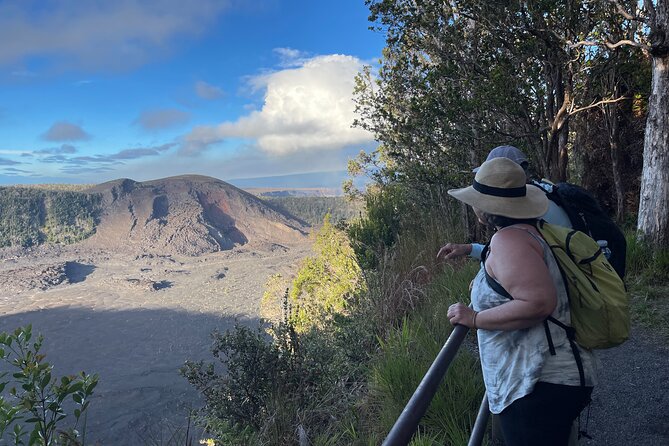
This tour is about three hours on foot, with a climb and descent as you go down into the Halemaumau Crater area and then back up. The fitness requirement is listed as moderate.
Here’s how I’d interpret that for your planning: you don’t need to be a trail athlete, but you should be comfortable with sustained walking on uneven ground and the effort of going back uphill at the end of a 3-hour hike. Trekking poles help a lot with stability, especially during wet weather.
The route is also short enough that you’re not hiking for an entire day. For many people, that’s the sweet spot: you get a full volcano experience without needing recovery plans for the rest of the week.
Price and Value: $120 Plus Park Fees That You Should Budget
The tour price is $120 per person. That can sound steep until you look at what you’re paying for: a licensed guide, a small-group hike, and included gear (backpacks and trekking poles). You’re also paying for the interpretation—how the guide connects the volcanic terrain, the crater ecosystem, and Hawaiian stories so it all clicks.
Then there are the park fees. The information provided lists a $15 national park entrance fee and an additional $15 Volcanoes National Park admission fee per person. So your real total depends on how those fees apply at the time of entry, but you should plan on paying those on top of the tour cost.
If you’re weighing options, this one makes sense when:
- you want a guided descent rather than a self-guided walk
- you prefer small groups
- you’d rather spend money on interpretation and support than on extra equipment
Gear and Clothing Tips for Rain, Mist, and Crater Conditions
Weather is a big factor here. One review note called out rain the whole time, and the experience was still described as interesting thanks to a prepared guide. That’s encouraging, but it also tells you to plan like you’ll get wet and that the ground could be slick.
Since trekking poles and backpacks are included, you don’t need to bring the same gear yourself. What you should bring is comfort and traction:
- layers you can manage in cool air and mist
- a rain layer you trust
- closed-toe shoes with decent grip
- a small personal item bag for essentials
Even if it’s not raining when you start, crater weather can change fast. Bring clothes you’ll be happy in after the hike, not just at the trailhead.
How the Guide Turns Steam Vents into a Real Story
This tour leans hard on guided interpretation, and the reviews are consistent on that point. Jennifer was praised for being organized, friendly, and clear with explanations about volcano history, plants, animals, and Hawaiian culture. Yvonne also received top marks for knowledge and explanations.
That kind of guiding matters because volcanoes can look like random chaos if you’re not sure what you’re looking at. When a guide points out steam vents, sulfur deposits, specific crater plants, and how all of that fits together, your brain stops treating it like background scenery.
Also, the small touches are real. One review mentioned a guide arriving prepared with hiking sticks, jackets, and backpacks, which suggests you’ll see a level of readiness that makes the hike smoother from start to finish.
If you like learning that feels connected to place—science plus Hawaiian perspective—this is one of the better formats for it.
Should You Book This Guided Volcano Hike?
Book it if you want a structured, guided descent into the Kīlauea crater area within a manageable time window, and if you’d rather have a licensed guide help you read the terrain than wander and guess. The small group size, included trekking poles, and the chance for lava-lake views make it a strong value play, especially compared with paying for gear and spending your own energy figuring things out.
Skip or rethink if you’re sensitive to uneven footing, or if you’re hoping for a guaranteed lava spectacle regardless of weather. Since this experience depends on good conditions and the fiery finale is framed as a possibility, you’re booking a great chance, not a guaranteed show.
If your goal is to come away understanding what you saw—steam, sulfur, rainforest plants, and the crater’s dramatic power—then this is exactly the kind of tour that earns its place on your Big Island plan.
FAQ
FAQ
How long is the guided hike?
It lasts about 3 hours.
Where does the tour start and end?
It starts at the Kīlauea Visitor Center (1 Crater Rim Drive, Volcano, HI 96785, USA) and ends back at the meeting point.
How much does the tour cost?
The price is $120.00 per person.
What’s included in the tour price?
The tour includes backpacks and trekking poles, plus a licensed guide.
What park fees are not included?
The national park entrance fee is listed as $15.00, and the Volcanoes National Park admission fee is also listed as $15.00 per person.
What fitness level do I need?
The tour recommends travelers have a moderate physical fitness level.
Is this tour offered in English?
Yes, it is offered in English.
What is the maximum group size?
The tour has a maximum of 10 travelers.
What happens if weather is poor?
The experience requires good weather. If it’s canceled due to poor weather, you’ll be offered a different date or a full refund.
More Guided Big Island Days
- Guided Outrigger Canoe Tour in Kealakekua Bay
★ 5.0 · 218 reviews - Private Guide Meet In Hawaii Volcanoes National Park
★ 5.0 · 181 reviews - Self-Guided GPS Audio E-Bike Tour Hawaii Volcanoes National Park
★ 4.5 · 131 reviews - Self-Guided Audio Driving Tour in Big Island
★ 5.0 · 98 reviews - 2-Hour Guided Private Surf Lesson in Kona
★ 5.0 · 84 reviews - Big Island Hawaii Self-Guided Driving Tour
★ 4.0 · 45 reviews
More Tour Reviews in Big Island of Hawaii
- Big Island in a Day: Volcanoes Waterfalls Sightseeing and History
★ 5.0 · 6,569 reviews - Big Island Manta Ray Night Snorkel
★ 5.0 · 5,656 reviews - Big Island: Kona Manta Ray Snorkel Tour in Keauhou Harbor
★ 4.5 · 2,465 reviews - Hilo Shore Excursion: Volcanoes National Park & Black Sand Beach
★ 4.5 · 2,338 reviews - Big Island: Captain Cook Snorkel On A Power Catamaran With Lunch
★ 5.0 · 2,232 reviews - KONA Manta Ray Night Snorkel – FREE re-ride if no Sightings
★ 5.0 · 2,212 reviews
Deeper Into Volcanoes National Park
- Big Island in a Day: Volcanoes Waterfalls Sightseeing and History
★ 5.0 · 6,569 reviews - Hilo Shore Excursion: Volcanoes National Park & Black Sand Beach
★ 4.5 · 2,338 reviews - Small Group Big Island Twilight Volcano and Stargazing Tour
★ 5.0 · 1,619 reviews - Big Island Highlights: Coffee, Volcano, Black Sands & Waterfall
★ 5.0 · 1,054 reviews - Deluxe Volcano Experience with Restaurant Dinner
★ 5.0 · 620 reviews - Big Island: Fat Tire E-Bike Tour through Volcanoes National Park
★ 5.0 · 546 reviews
Just Added: The Newest Big Island Reviews




Hawaii Volcanoes National Park Tours, compared.
 ★ 5.0Big Island in a Day: Volcanoes Waterfalls Sightseeing and HistoryFrom $2646,569 reviews
 ★ 4.5Hilo Shore Excursion: Volcanoes National Park & Black Sand BeachFrom $1592,338 reviews
 ★ 5.0Small Group Big Island Twilight Volcano and Stargazing TourFrom $2971,619 reviews
 ★ 5.0Big Island Highlights: Coffee, Volcano, Black Sands & WaterfallFrom $2991,054 reviews
 ★ 5.0Deluxe Volcano Experience with Restaurant DinnerFrom $341620 reviews
 ★ 5.0Fat Tire E-Bike Tour through Volcanoes National ParkFrom $199546 reviews
 ★ 4.5Big Island, Hawaii: Volcanoes National Park SafariFrom $379545 reviews
 ★ 4.9Volcanoes, Waterfalls, & Coffee Farm Day-TripFrom $264414 reviews
Browse the lists this tour appears in