
Reviewed · HAWAII VOLCANOES NATIONAL PARK TOURS
Self-Guided GPS Audio E-Bike Tour Hawaii Volcanoes National Park
If you like volcano views without the stress, this fits. This self-guided GPS audio e-bike tour lets you move at your own pace across Hawaii Volcanoes National Park, with a downhill-leaning route and built-in narration for geology, Hawaiian mythology, and key sights.
I especially like the freedom: you’re not stuck with a coach pace, and you avoid a lot of the parking and crowd headaches around the park’s most popular stops. I also like that you don’t need to bring much gear—an e-bike, helmet, lock, and a safety briefing are handled for you.
One thing to consider: the whole experience depends on a fully functioning smartphone for the GPS audio app, and battery drain can be real. If your phone is weak, you’ll want a backup power plan.
In This Review
- Key things to know before you go
- The big appeal: volcano views with your own timing
- Price and value: what $159 really buys you
- E-bike setup, smartphone GPS, and why your battery matters
- Stop 1: crater rim riding and crater-side lunch at Volcano House
- Stop 2: Nahuku Crater and Thurston Lava Tube (15-minute reset, big payoff)
- Stop 3: Kīlauea Visitor Center as your story anchor
- Stop 4: Keanakakoi Crater Overlook and the bike-only lava view
- Pacing and crowd control: why the self-guided style feels better
- Weather, clothing, and safety you can actually plan for
- Who this tour is best for
- Staff support and the human touch (even on a self-guided day)
- Should you book this e-bike GPS tour at Volcanoes National Park?
- FAQ
- How long is the tour?
- When do I pick up the e-bike?
- Do I need to pay for Hawaii Volcanoes National Park entry separately?
- Is a smartphone required for the GPS audio?
- What’s included in the price besides the bike?
- What should I wear for riding?
- What if it rains?
- Is this tour suitable for beginners?
- Is it available for kids?
- Where do I start and end?
Key things to know before you go
- Mostly downhill, level, paved riding makes the distance feel manageable
- GPS audio narration keeps you informed without dragging you off-trail
- Short hikes to major wow-stops like Thurston Lava Tube
- Bike-only access helps you reach views that most visitors can’t get by car
- Rain and cold at elevation can make roads slick and air feel chilly fast
More ways into Hawaii Volcanoes National Park
- Big Island in a Day: Volcanoes Waterfalls Sightseeing and History★ 5.0 · 6,569 reviews
- Hilo Shore Excursion: Volcanoes National Park & Black Sand Beach★ 4.5 · 2,338 reviews
- Small Group Big Island Twilight Volcano and Stargazing Tour★ 5.0 · 1,619 reviews
- Big Island Highlights: Coffee, Volcano, Black Sands & Waterfall★ 5.0 · 1,054 reviews
The big appeal: volcano views with your own timing
This tour is built for the way you actually travel: you pause when you want, ride on when you’re ready, and don’t have to negotiate for time windows. In Volcanoes National Park, that matters. Roads can be slow, parking can be a hassle, and viewpoints fill up fast. An e-bike changes the math. You can see more angles of the volcano without spending your day in traffic circles.
The route is designed so that “most roads and paths are downhill, level, and paved.” That doesn’t mean it’s effortless (you still steer, brake, and shift), but it does mean the ride stays comfortable for a wider range of fitness levels than a typical bike day. You’re also not locked into a group’s march.
Another smart part: it’s half-day, so you still have the afternoon or morning free for other Big Island priorities. That’s great if you also want to pair this with a beach day, a drive to Mauna Kea, or an evening of stargazing on your own schedule.
Price and value: what $159 really buys you
At $159 per person, you’re paying for the full experience structure: e-bike rental (not just “use of a bike”), helmet and lock, a staging area, and staff support, plus the GPS audio app that guides your route and points of interest.
Then there’s the part to plan for: the National Park entrance fee is not included and is listed as $15 per person. That’s normal for Hawaii Volcanoes National Park tours, but it’s still the kind of cost that can sneak up if you’re only budgeting the tour price.
You should also budget for real-world “tech taxes.” The GPS app needs a smartphone that’s fully charged and working. Reviews and the tour rules back up the same point: bring a backup battery if you don’t want to worry about your phone dying midway through the crater stories.
Overall, I think the value is strongest if you want:
- more viewpoint access than a car-and-parking day
- a lower-stress way to cover distance
- narration that explains what you’re looking at while you ride
E-bike setup, smartphone GPS, and why your battery matters
Before you move, you’ll stop at the staging area for equipment orientation and a safety lecture. You get an electric comfort hybrid bicycle, a helmet, and a lock. Live staff support is on hand for safety and park guidance.
Here’s the key practical point: the tour uses a GPS audio app, and you need a fully charged, functioning smartphone. The app is provided as a free download, but your device needs to be ready. Some riders have warned that the GPS/audio drain can be noticeable. My advice is simple: start the day with a phone at 100%, and add a power bank to your day pack.
Also, audio control can be slightly fiddly. One rider noted that at points of interest, audio may need to be played separately from another link in the app. It’s not a deal-breaker, but if you want a smooth experience, be ready to tap and confirm audio playback when you stop at a listed spot.
Finally, use the app as your anchor, but don’t ignore physical basics. You’ll be pedaling an e-bike, braking, and shifting on paved and some gravel surfaces. The tour says it’s not recommended for beginner cyclists, and you’ll need to be able to steer, shift, and balance comfortably.
Stop 1: crater rim riding and crater-side lunch at Volcano House
Your day starts with e-bike pickup at 9:30 AM for the morning tour or 12:30 PM for the afternoon tour. Afternoon requires a minimum of 4 riders, so if you’re traveling in a smaller group, the morning slot may be easier to schedule.
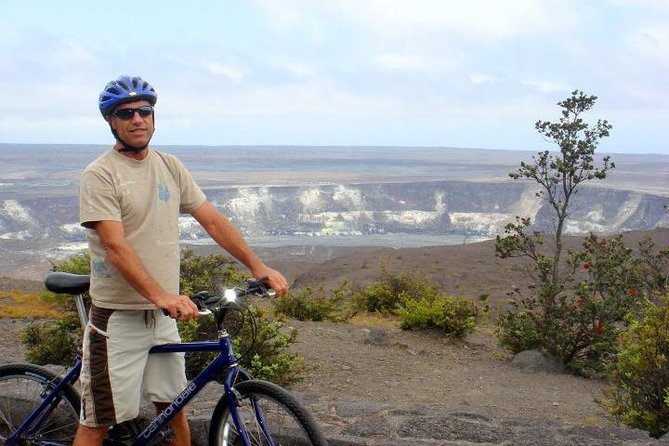
From the bike pickup location, you ride less than a mile to the park’s bike trail entrance, then you head toward the scenic crater rim area on trails that are closed to most guided tours. That’s one of the big “why this works” parts: you’re seeing volcano scenery from the bike corridor rather than just pulling up to the same car viewpoints everyone else drives to.
Along the way, you can expect the kind of variety Volcanoes National Park is famous for:
- native fern rainforest
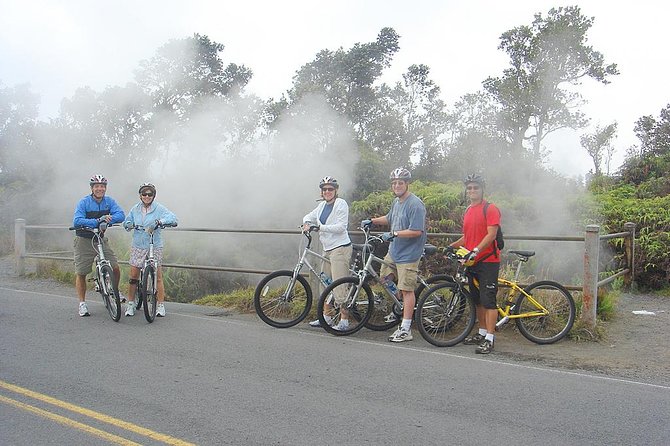
- steaming vents and volcanic heat you can feel
- massive craters and dramatic volcanic fields
A lunch stop is built into the ride: you’ll eat at Volcano House with crater views. If you’ve ever tried to plan lunch around volcanic viewpoints, you’ll appreciate that this tour doesn’t dump you at an exposed bench and call it done. You get a defined break inside the flow of the bike route.
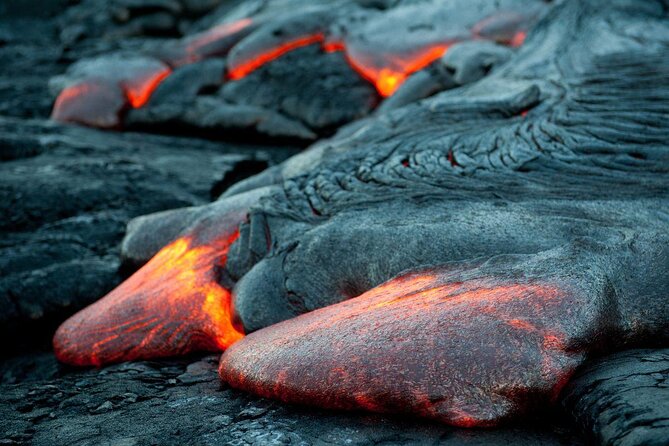
Rarely, conditions can allow for an extra-level wow moment: the tour notes you may even witness active lava flowing into the sea. That’s not something you can count on, but it’s exactly the kind of “on the right day” magic Volcanoes National Park can deliver.
Possible downside here: because you’re riding, weather changes matter. Cold, mist, and rain at elevation are common, and wet roads can be slick. Take corners slower than you think you need, especially if you feel a fine mist on pavement.
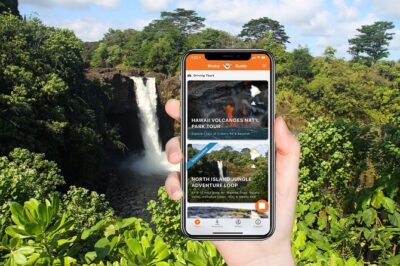
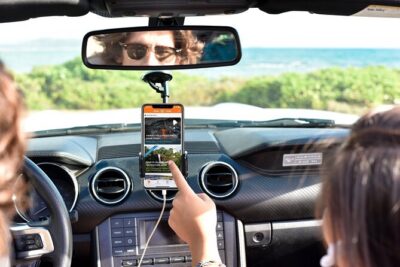
Drive it yourself with another audio trail

Stop 2: Nahuku Crater and Thurston Lava Tube (15-minute reset, big payoff)
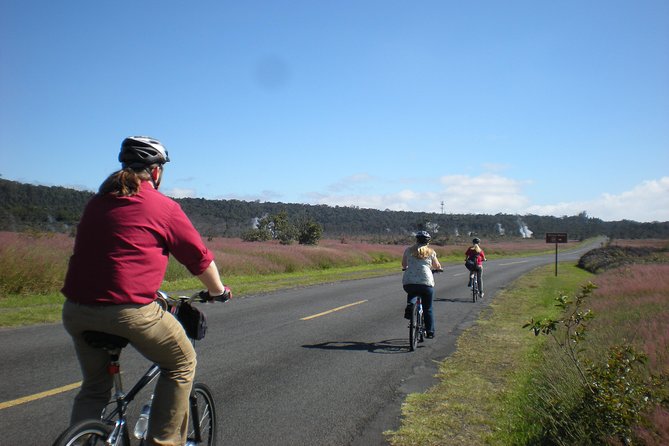
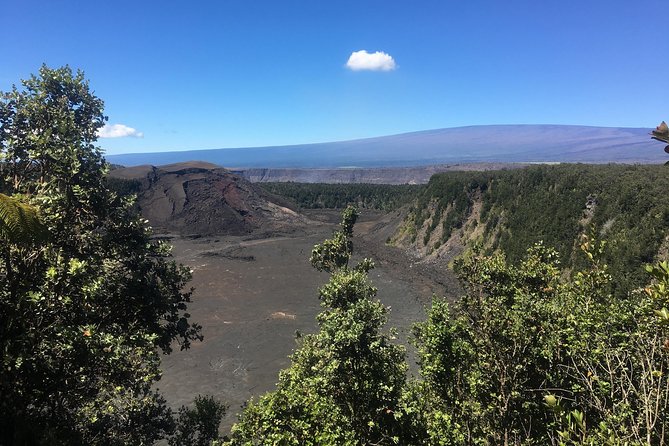
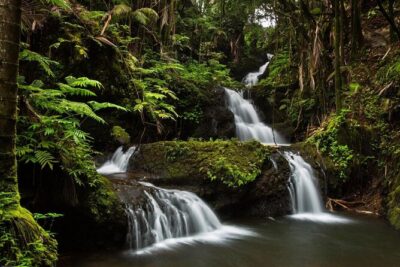
After the main ride, you add a short hike: a 15-minute loop through lush native rainforest to Nahuku Crater. The crater is described as about 500 years old and you’ll pass stands of native Hawaiian hapuʻu ferns and other unique flora.
This portion includes GPS audio in two parts. The first audio lecture is meant to help you read the ecosystem you’re walking through—endemic plants and the area’s cultural significance. Then you continue into the crater area and head toward the iconic Thurston Lava Tube.
Once you reach the lava tube, the second audio lecture guides you through the cave’s winding passages. This is one of those experiences that changes the whole feel of a volcano trip. Instead of looking outward, you step inside the geology: smooth walls shaped by molten lava, cave features like stalactites, and vegetation that grows around openings where air and moisture can move.
This stop is short on paper, but it’s a strong contrast to the open-air bike scenery. It’s also a good moment to breathe, cool down, and reset before the next overlook.
Stop 3: Kīlauea Visitor Center as your story anchor
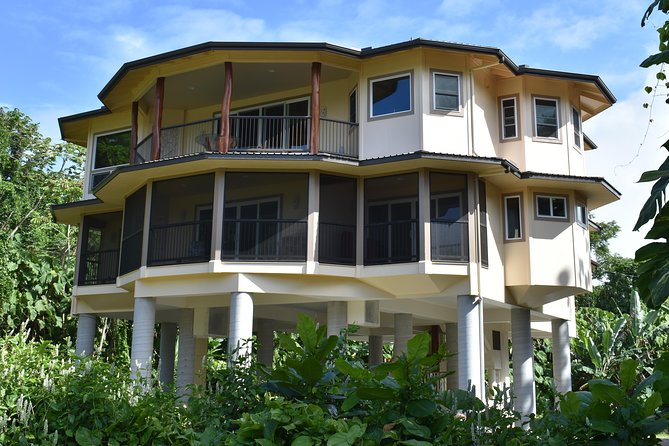
Your route includes time at the Kīlauea Visitor Center, and I think this is more than a filler stop. The exhibits are there to connect the dots: the forces shaping the island, wildlife you might spot, and the cultural heritage tied to Pele.
Interactive displays and detailed maps help you understand what you’ve been riding past. You can also ask rangers questions and get safety updates and exploration advice. If you want to plan a follow-up hike later (or just make sense of what you saw at the rim), this is a smart place to do it.
A bookstore and gift shop are also available. If you’re the type who likes to bring home a guidebook for next time, this is where you can do it without hunting around on the road.
Stop 4: Keanakakoi Crater Overlook and the bike-only lava view
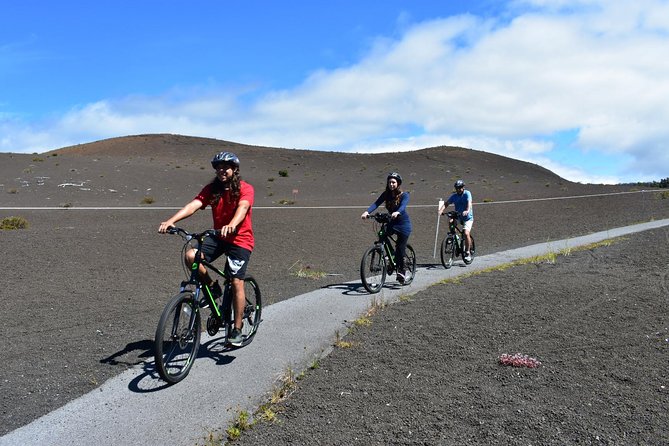
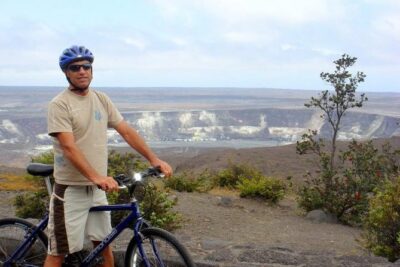
This is the stop that many people think about when they picture “access” for volcano trips. Keanakakoi Crater Overlook is reachable on this self-guided route by bike or foot—meaning you’re not competing with car parking or foot traffic in the same way.
The views are oriented toward Halemaʻumaʻu Crater, described as sacred and associated with Madame Pele. The tour notes the possibility of lava fountains over 1,000 feet and highlights the area across from the crater as a strong lava viewing location, where you might see active lava lake activity up close.
On the ride to this overlook, you also pass through koa and ʻōhiʻa forests along a 2-mile bike trail. That gives you a nice change in texture: rainforest greens, then stark volcanic terrain, then back to forests and open views. It helps the day feel like you’re traveling through distinct zones rather than repeating the same scenery from one pull-off.
The GPS audio here adds context—geological history, basalt quarry stories, and ecological notes to help you see patterns rather than just landmarks. If you like learning, this is where the narration pays off most.
One consideration: this is a photo-heavy area. If you want your day to feel relaxed, give yourself time to stop and frame shots without rushing back onto the bike.
Pacing and crowd control: why the self-guided style feels better
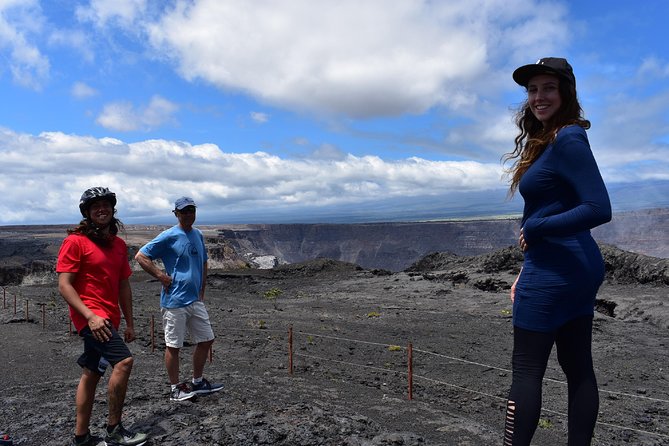
A guided tour can be fun, but self-guided has a specific advantage at Volcanoes National Park: you can match your pace to the day. Some people will ride fast and snack late. Others will linger at lava-tube moments and take fewer pictures.
Because the route is designed with a lot of downhill and easy grade, you’re not forced to pedal like a workout class. You can use assist as needed. One review even described the ride as easy for riders who wanted support, and another highlighted that it still lets you feel the terrain without a huge physical demand.
Crowd control is also real. You’re not stuck with everyone arriving at the same moment to fight for the same viewpoint. The bike trail approach and the defined stops help spread riders out, and the itinerary is built to avoid that constant stop-and-start of car driving.
One more practical point: the park has rules about where you can ride. One rider noted that rangers may remind people about biking not being allowed on walking trails. So keep it simple: stay on your route, follow posted bike rules, and don’t improvise detours onto pedestrian-only paths.
Weather, clothing, and safety you can actually plan for
Kīlauea conditions can change fast, and the tour specifically warns you to be ready for wet, windy, and misty weather. Temperatures at summit elevation (around 4,000 feet) can be 12 to 15 degrees cooler than sea level, and you might run into chilly conditions even when it looks okay earlier.
Dress in layers. The tour asks for layered clothing, and that’s the right call: a light base layer, a warmer mid layer, and a jacket you can manage if you feel sweaty on the bike but cold at overlooks. Closed-toed shoes are required, and a hat, sunglasses, and sunscreen are strongly recommended.
If you get caught without rain protection, there’s a plan: a rain jacket can be purchased at the Kīlauea General Store. You can also pick up bottled water there.
Safety-wise, don’t treat this like an amusement ride. Wet pavement plus faster speeds equals slippery corners. One crash story in the feedback serves as a reminder to ride slower if the roads are damp and to keep control in turns. Your best “volcano confidence” comes from braking early and not trying to match someone else’s pace.
Who this tour is best for
This experience is a strong match if you want:
- a half-day that still covers major park sights
- a volcano-focused day that’s easier than hiking the whole time
- viewpoint access that’s harder by car
- GPS audio narration that turns stops into learning moments
It’s also a good fit for families and couples, especially if you want a fun, active day without long steep climbs. Many riders described the ride as fun, comfortable, and a great way to see the volcano from multiple angles.
It may not be the best fit if you:
- are brand-new to bikes (especially shifting/balancing on mixed surfaces)
- can’t use a smartphone for GPS audio
- prefer fully guided storytelling with no app involved
- travel in a group where someone’s phone battery is always low
There are also clear limits: not available for cyclists under 15, and not available for persons weighing over 270 lbs.
Staff support and the human touch (even on a self-guided day)
Even though it’s self-guided, you’re not on your own. The tour includes live human operator assistance for safety and park guidance, and the orientation at the staging area can make the difference between a smooth start and a confusing one.
In feedback, I’ve seen several staff names come up with praise, including Gwen/Gwendolyn, Chris, Pretty, Aaron, Lauren, and Matt. Even when the tour is technically self-guided, these people help you get set up with the bike and app so you can actually use the narration and follow the route confidently.
This matters because the biggest technical risk is your phone. Having staff who explain app use, audio playback, and where to look on the map is how you avoid getting stuck mid-ride.
Should you book this e-bike GPS tour at Volcanoes National Park?
I’d book it if you want a volcano day with a smart mix of freedom and structure. The combination of e-bike mobility, mostly easy riding, and GPS audio narration is a practical way to see major park areas without spending your day solving parking puzzles.
I would pause and think twice if you know your phone battery usually dies early, if you’re uncomfortable riding in the rain, or if you’re a brand-new cyclist. In those cases, the tour’s requirements (smartphone, riding control, layered-weather readiness) can turn from simple to stressful fast.
If you’re comfortable with the tech side and you want crater views at your own pace, this is one of the more efficient ways to experience Hawaii Volcanoes National Park in half a day.
FAQ
How long is the tour?
It runs about 4 hours 30 minutes (approx.).
When do I pick up the e-bike?
You can pick up your e-bike at 9:30 AM (morning) or 12:30 PM (afternoon). Afternoon requires a minimum of 4 riders.
Do I need to pay for Hawaii Volcanoes National Park entry separately?
Yes. National Park entrance fees are not included and are listed as $15.00 per person.
Is a smartphone required for the GPS audio?
Yes. A fully functioning smartphone is required to use the GPS audio app, and it should be fully charged.
What’s included in the price besides the bike?
Included items listed are the electric comfort hybrid bicycle, helmet, lock, secure customer parking and restroom access, a canopy staging area for orientation and safety lecture, and live human operator assistance.
What should I wear for riding?
Wear layered clothing and closed-toed shoes (required). The tour also recommends sunglasses, sunscreen, and a hat.
What if it rains?
You should be prepared for wet, windy, misty conditions. A rain jacket can be purchased at the Kilauea General Store.
Is this tour suitable for beginners?
It’s not recommended for beginner cyclists. You need to be able to steer, shift, and balance on gravel and paved terrain.
Is it available for kids?
The tour says it is not available for cyclists under 15 years old.
Where do I start and end?
The experience ends back at the meeting point. The start location listed is at Bike Volcano, 19-3972 Old Volcano Rd, Volcano, HI 96785. The FAQ also lists Hilo Hawaiian Hotel (71 Banyan Dr.) as a pick-up meeting point, so confirm which applies to your booking.
More Tour Reviews in Big Island of Hawaii
- Big Island in a Day: Volcanoes Waterfalls Sightseeing and History
★ 5.0 · 6,569 reviews - Big Island Manta Ray Night Snorkel
★ 5.0 · 5,656 reviews - Big Island: Kona Manta Ray Snorkel Tour in Keauhou Harbor
★ 4.5 · 2,465 reviews - Hilo Shore Excursion: Volcanoes National Park & Black Sand Beach
★ 4.5 · 2,338 reviews - Big Island: Captain Cook Snorkel On A Power Catamaran With Lunch
★ 5.0 · 2,232 reviews - KONA Manta Ray Night Snorkel – FREE re-ride if no Sightings
★ 5.0 · 2,212 reviews
Drive the Island Yourself
- Big Island Adventure Bundle: 5 Epic Audio Driving Tours
★ 4.5 · 138 reviews - Self-Guided Audio Driving Tour in Big Island
★ 5.0 · 98 reviews - Big Island – Hawaii Volcanoes National Park Driving Tour
★ 4.0 · 95 reviews - Big Island Hawaii Self-Guided Driving Tour
★ 4.0 · 45 reviews - Hawaii Volcanoes National Park Self-Guided Driving Audio Tour
★ 4.5 · 29 reviews - Big Island – South Island Coastal Loop Driving Tour
★ 4.5 · 17 reviews
Deeper Into Volcanoes National Park
- Big Island in a Day: Volcanoes Waterfalls Sightseeing and History
★ 5.0 · 6,569 reviews - Hilo Shore Excursion: Volcanoes National Park & Black Sand Beach
★ 4.5 · 2,338 reviews - Small Group Big Island Twilight Volcano and Stargazing Tour
★ 5.0 · 1,619 reviews - Big Island Highlights: Coffee, Volcano, Black Sands & Waterfall
★ 5.0 · 1,054 reviews - Deluxe Volcano Experience with Restaurant Dinner
★ 5.0 · 620 reviews - Big Island: Fat Tire E-Bike Tour through Volcanoes National Park
★ 5.0 · 546 reviews
Just Added: The Newest Big Island Reviews



Hawaii Volcanoes National Park Tours, compared.
 ★ 5.0Big Island in a Day: Volcanoes Waterfalls Sightseeing and HistoryFrom $2646,569 reviews
 ★ 4.5Hilo Shore Excursion: Volcanoes National Park & Black Sand BeachFrom $1592,338 reviews
 ★ 5.0Small Group Big Island Twilight Volcano and Stargazing TourFrom $2971,619 reviews
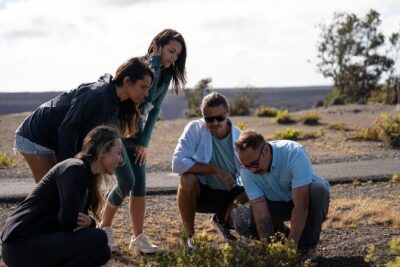 ★ 5.0Big Island Highlights: Coffee, Volcano, Black Sands & WaterfallFrom $2991,054 reviews
 ★ 5.0Deluxe Volcano Experience with Restaurant DinnerFrom $341620 reviews
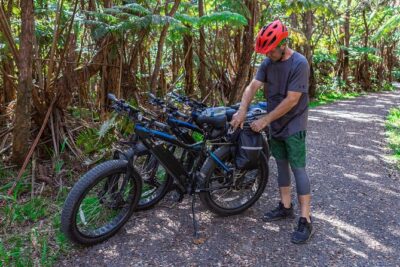 ★ 5.0Fat Tire E-Bike Tour through Volcanoes National ParkFrom $199546 reviews
 ★ 4.5Big Island, Hawaii: Volcanoes National Park SafariFrom $379545 reviews
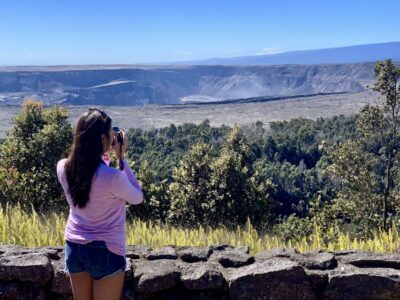 ★ 4.9Volcanoes, Waterfalls, & Coffee Farm Day-TripFrom $264414 reviews
Browse the lists this tour appears in