
Reviewed · HISTORICAL TOURS
Kailua-Kona Haunted History Walking Ghost Tour
Creepy stories, on a smart walking loop. This Kailua-Kona Haunted History Walking Ghost Tour puts you in front of major downtown landmarks while the guide connects Hawaiian history, spiritual beliefs, and haunting tales into one easy, 2-hour route. I especially like how the stops stay location-based (you’re walking right past the places the stories attach to) and how the guide builds context so you can ask follow-ups. The main drawback: the “ghost” angle can feel lighter than some people expect, because this tour spends a lot of time on culture and history too.
With a start time of 5:30pm and a typical pace that hits about eight stops in roughly two hours, it’s a great way to use one evening efficiently without committing to a full night out. The group is capped at 30, and the feel can lean small-group depending on who shows up. One more practical note: since it’s weather-dependent, bring a light layer and expect you’ll want decent walking shoes.
Here’s the good news if you like questions. The tour is built around explaining what things mean in Hawaiian culture (not just tossing out spooky lines), so you’ll often come away with a clearer sense of why these stories stick around in Kona.
In This Review
- Key highlights worth planning for
- Starting at the Courtyard by Marriott Kona Beach Hotel at 5:30pm
- Kailua Pier: steamship Mauna Loa and the okolehao question
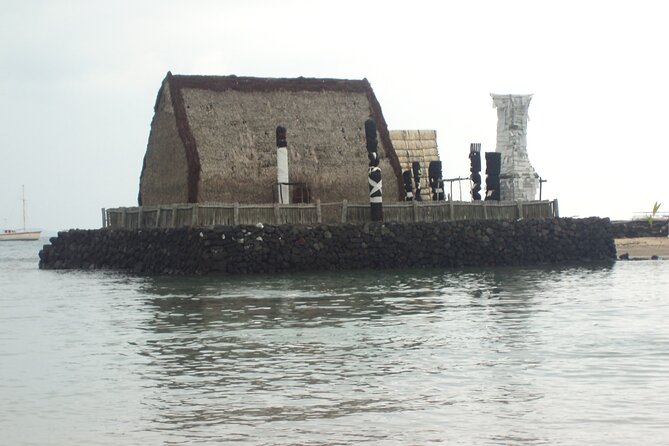
- Kamakahonu National Historic Landmark: ki’i akua and Kamehameha’s final chapter
- Hulihe’e Palace: sacred artifacts and what a pohaku means
- Kona Inn Shopping Village: former hotel legend and the story you might sign a waiver for
- Mokuaikaua Church: first Christian church in Hawaii and miracle talk with fish
- King Kamehameha’s Kona Beach Hotel: guest accounts and restless spirits
- Kamakahonu Beach: UFO sightings, gods vs warnings, and the curse debate
- Lost Coast Tattoo Studio: why Hawaiian tattoos connect body and spirit
- The guide factor: why names like Heather, Tricia, Gabby, and Cosmin matter
- Price and value: why $59 can feel fair for an organized evening walk
- Who should book this Kona haunted history walk
- FAQ
- FAQ
- How long is the Kailua-Kona Haunted History Walking Ghost Tour?
- What time does the tour start?
- How much does it cost?
- Where do I meet the guide?
- Is the tour offered in English?
- Do I get a mobile ticket?
- Is there a group size limit?
- What’s the cancellation policy?
- Should you book this tour?
Key highlights worth planning for
- Real Kona landmarks, in one evening: pier, royal-era sites, churches, beaches, and a tattoo studio.
- Hawaiian spiritual terms in plain language: you’ll hear ideas like okolehao, ki’i akua, and pohaku explained in context.
- Guides you’ll want to talk to: names that come up often include Heather, Tricia, Gabby, and Cosmin.
- A history-heavy version of haunted storytelling: expect cultural background alongside ghostly accounts, not just jump-scare vibes.
- Free admission at each stop: the walk is designed so you’re not paying extra entry fees at the landmarks.
More Big Island tours we have been out and rated
- Kona Walking Food Tour★ 5.0 · 402 reviews
- Hamakua Coast Farm Small-Group Walking and Tasting Tour★ 5.0 · 4 reviews
Starting at the Courtyard by Marriott Kona Beach Hotel at 5:30pm
Your tour begins at the Courtyard by Marriott King Kamehameha’s Kona Beach Hotel (75-5660 Palani Rd). It’s set for 5:30pm, which matters: Kona evenings cool down, and the oceanfront and historic core feel more atmospheric without needing late-night driving.
This is a walking tour with a tight loop back to the meeting point, and each stop is about 15 minutes. That timing is one of the best parts of the format. You get movement, you avoid that slow “standing around for 45 minutes” feeling, and you still have time at each location for the story to land.
A few practical tips so you enjoy it:
- Wear shoes you don’t mind on uneven sidewalks.
- Bring a light layer; the coast breeze can shift fast.
- Have a charged phone for your mobile ticket.
- If you’re traveling with a service animal, that’s allowed.
Also worth noting: the tour is weather-dependent. On a rainy night, expect changes to your schedule rather than a cancellation that leaves you stranded.
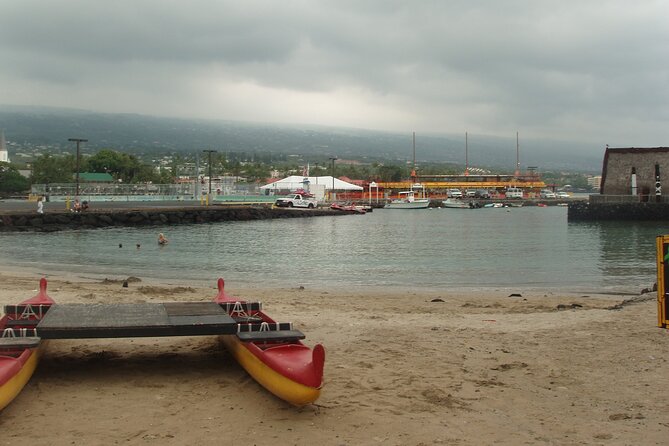
Kailua Pier: steamship Mauna Loa and the okolehao question
Your first stop is Kailua Pier, an oceanfront launch point for stories that feel tied to the water. One of the opening threads is the steamship Mauna Loa and accounts that sound like they’re halfway between maritime history and supernatural folklore.
Then the guide connects the mood to Hawaiian ideas about remedies, including a mention of a ti leaf liquor called okolehao. Even if you don’t treat any of this as “true” in a modern sense, you’ll hear how legends try to explain fear, illness, and mystery using the culture’s own language.
What to watch for at the pier:
- Look at it as a scene-setter. The ocean is basically the tour’s mood engine here.
- Pay attention to how the guide ties specific locations to the story. That’s the pattern you’ll see at every stop.
Why this stop is valuable: it gives you context for the rest of the walk. If you start confused about why a tour calls itself haunted history, the pier is where the guide earns your trust.
Kamakahonu National Historic Landmark: ki’i akua and Kamehameha’s final chapter
Next up is Kamakahonu National Historic Landmark, centered on Kamehameha’s compound, including the fact that he died there in 1819. That date matters because it anchors the stories in a real political turning point, not just spooky vibes.
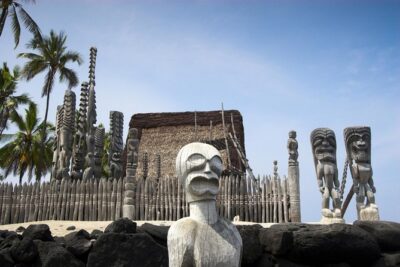
This is also where the tour brings in ki’i akua, described as giant wooden statues. The guide’s job here is crucial: they explain what these figures signify so they don’t sound like generic “haunted objects.” If you care about Hawaiian beliefs, this stop tends to be one of the most memorable because it sits at the intersection of leadership, spirituality, and place.
Potential drawback: if you came only for ghosts, this is more solemn and historical than scary. But it’s also where the tour’s deeper value shows. You can’t understand the haunted stories without understanding what the sites meant to people long before modern tourism labels them “spooky.”
Hulihe’e Palace: sacred artifacts and what a pohaku means
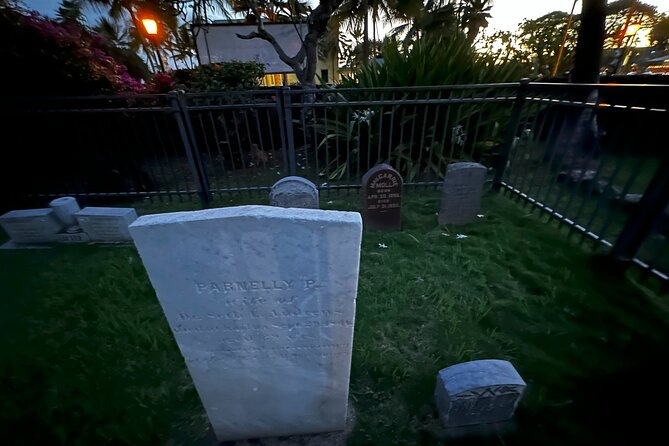
At Hulihe’e Palace, the story shifts into sacred objects and museum-held meaning. The tour specifically asks what a pohaku is, framing it as something that belongs in Hawaiian belief systems and not just as a random word you’re meant to remember.
This stop works well for people who like interpretive history. You’re not just looking at walls and displays; you’re learning how sacred items get treated with respect and how meaning can change depending on context.
A practical consideration: palatial stops can feel short and fast because your time is capped at about 15 minutes. If a specific artifact detail catches your attention, be ready to ask the guide. Guides on this tour are used to answering follow-ups, and that’s where you can slow down the story without slowing the group.
More island history, Kamehameha to the plantations
Kona Inn Shopping Village: former hotel legend and the story you might sign a waiver for
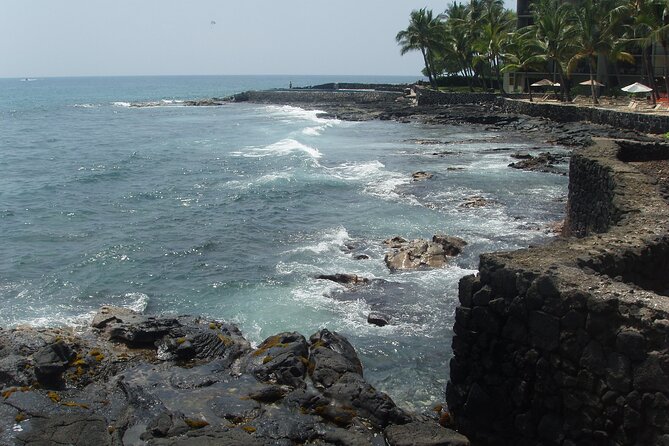
At Kona Inn Shopping Village, the theme becomes “what happened here” rather than “what was built here.” The tour connects the location to strange events and the legacy of a well-known Hawaiian sports figure associated with the site.
This stop is also where you may encounter a more direct “dark history” note. One guest review mentioned a waiver tied to stories that can include mention of human sacrifice, and that it wasn’t told in a graphic way. So if your comfort level is low for heavier topics, it’s worth knowing that the tour can touch on them.
How to approach this stop:
- Listen for tone. The guide usually keeps things interpretive, not sensational.
- If you want the spooky angle, this is one of the better places to ask: what’s folklore versus moral lesson versus a historical claim?
Even if you’re not sure what to believe, this stop is memorable because it blends entertainment with cultural framework. It doesn’t treat haunting as a gimmick; it treats it as storytelling that carries meaning.
Mokuaikaua Church: first Christian church in Hawaii and miracle talk with fish
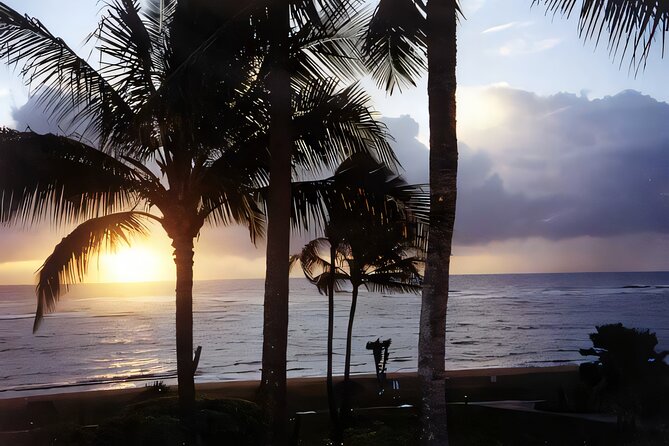
Then you’ll head to Mokuaikaua Church, described as the first Christian church in Hawaii. That’s a big cultural pivot in the tour, and it matters because the guide uses it to show how different belief systems layered over time.
One of the most intriguing story prompts here is miracles, including the idea that fish behave strangely. This kind of account tends to blur the line between legend and observation. Even if you’re skeptical, you’ll see how supernatural claims often grow around natural events when people try to make sense of sudden changes.
Why this stop is worth your attention:
- It adds variety. The tour doesn’t stay trapped in one belief lane.
- It helps you understand how communities can treat unusual events as messages, warnings, or signs.
If you’re short on patience for religious history, this stop can feel like a chapter change. But if you want the full “haunted history” framing, it’s a key piece.
King Kamehameha’s Kona Beach Hotel: guest accounts and restless spirits
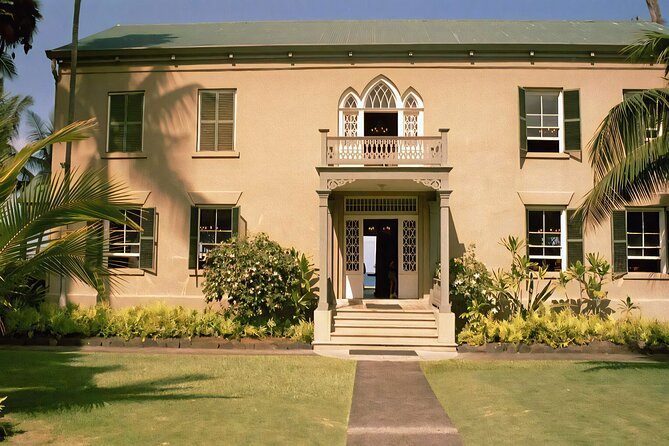
Back near your meeting area, the tour includes the Courtyard by Marriott King Kamehameha’s Kona Beach Hotel again as a themed stop. Here, the tour leans into hotel haunting accounts—spirited stays, creepy coincidences, and the question of who might be watching guests.
This is one of the easiest stops to enjoy because you’re not trekking anywhere new. You’re standing in a familiar modern setting while the guide layers in older stories that make the hotel feel less ordinary.
Tip: take this stop as an opportunity to ask your “how does this legend work?” questions. Guides who lead this tour well will connect the stories back to local culture and why certain places get remembered.
Kamakahonu Beach: UFO sightings, gods vs warnings, and the curse debate
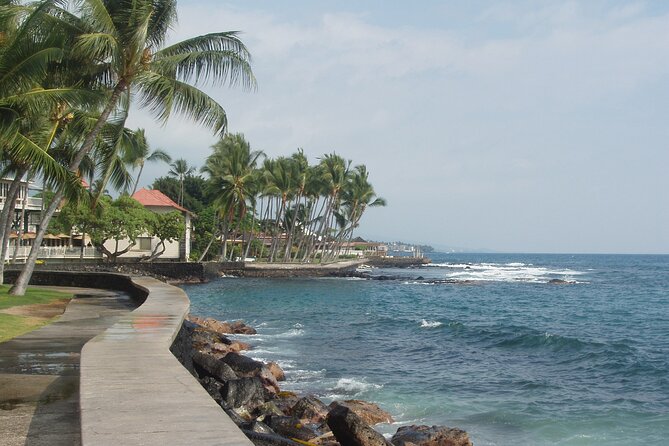
Next is Kamakahonu Beach, where the tour turns to accounts of unidentified flying objects. The guide doesn’t treat the UFO topic like a standalone internet mystery. Instead, the story frames questions about spiritual interpretation: gods, warnings, spirits of the dead, or a curse.
This is where the tour’s tone may feel most like a traditional ghost tour, because people are often drawn to unknown visitors from the sky. But the twist is that the guide keeps it grounded in local storytelling logic. You’re not just hearing “aliens.” You’re hearing a range of cultural interpretations for the same experience.
If you want a spooky ending energy, this is a strong contender. It’s also a good time to listen carefully to how the guide transitions between historical context and supernatural claim. That skill is what separates a fun walk from a random ramble.
Lost Coast Tattoo Studio: why Hawaiian tattoos connect body and spirit
Your final stop is Lost Coast Tattoo Studio, where the tour shifts away from hauntings and into meaning. Hawaiian tattoos are presented as more than decoration, tied to beliefs about the intertwining of physical and spiritual realms.
This is a smart ending because it gives you something concrete you can carry home: a cultural practice explained through respect and context. It also makes the tour feel broader than “spooky places.” You end with a tradition, not just a scare story.
A practical idea: if you’re considering any tattoo work in Hawaii later (or you just want to understand the symbolism before you see someone else’s), this stop is a good starting point for better conversations. You’ll know which questions to ask that don’t feel like you’re trying to flatten sacred meaning.
The guide factor: why names like Heather, Tricia, Gabby, and Cosmin matter
A big part of the tour’s reputation comes from how guides shape the experience. You’ll see recurring names in feedback, including Heather, Tricia, Gabby, Cosmin, and Costman. The common thread is storytelling style: personable delivery, clear cultural context, and time for questions.
That matters for two reasons:
- Haunted history can turn into a scattershot “and then this happened.” A strong guide keeps the thread connecting each landmark to the broader themes.
- If you’re curious—about Hawaiian history, spiritual beliefs, or why certain places get remembered—a guide who answers follow-ups can double the value of your $59.
Balanced expectation check: some guests found the experience more history-and-legends than ghost-only. If that’s your preference, you’re still likely to enjoy it. But if you only want intense paranormal focus, you should treat this as haunted history storytelling first, not a scream-at-night theater show.
Price and value: why $59 can feel fair for an organized evening walk
At $59 per person for about 2 hours, this tour lands in the “worth it if you like context” category. You’re paying for:
- A structured route (eight stops on a walkable loop).
- Guided storytelling that connects culture, place, and legend.
- The chance to ask questions directly.
You’re also not paying extra entry fees at the stops listed, since admission is noted as free at each location on the route. That’s a quiet but real value point, especially when downtown tours often stack ticket costs.
If you’re comparing options, think of this as a history-informed walking show. If your goal is to check landmarks with personality and meaning, the price makes sense. If your goal is purely spooky entertainment, you may want to look for a more paranormal-heavy tour style.
Who should book this Kona haunted history walk
Book it if you:
- Want a compact evening plan that hits major Kona landmarks.
- Like Hawaiian culture and spiritual beliefs presented with context.
- Enjoy ghost stories that are tied to place and history, not just generic hauntings.
- Like small-group energy. The tour caps at 30, and reviews mention personalization when the group size is small.
Consider skipping (or choosing another style) if you:
- Need nonstop scary moments and little historical background.
- Get uncomfortable with heavier historical topics, since at least one guest noted human-sacrifice mentions in a waiver context (non-graphic).
FAQ
FAQ
How long is the Kailua-Kona Haunted History Walking Ghost Tour?
It runs for about 2 hours.
What time does the tour start?
The start time is 5:30pm.
How much does it cost?
The price is $59.00 per person.
Where do I meet the guide?
You meet at the Courtyard by Marriott King Kamehameha’s Kona Beach Hotel, 75-5660 Palani Rd, Kailua-Kona, HI 96740.
Is the tour offered in English?
Yes, it is offered in English.
Do I get a mobile ticket?
Yes, the tour uses a mobile ticket.
Is there a group size limit?
Yes. The maximum is 30 travelers.
What’s the cancellation policy?
Free cancellation is available up to 24 hours in advance for a full refund. If you cancel within 24 hours of the start time, it’s not refunded.
Should you book this tour?
I’d book it if you want an easy evening walk that connects Kona’s landmarks to Hawaiian culture, sacred meaning, and haunting legends. The $59 price feels reasonable when you’re getting guided context at multiple major stops and a route that keeps you moving. Just go in with the mindset that this is haunted history storytelling—less “all ghosts, all the time,” more culture plus spook, with great chances to ask your questions.
More Walking Tours in Big Island of Hawaii
- Kona Walking Food Tour
★ 5.0 · 402 reviews - Hamakua Coast Farm Small-Group Walking and Tasting Tour
★ 5.0 · 4 reviews
More Tours in Big Island of Hawaii
- Big Island: Kona Manta Ray Snorkel Tour in Keauhou Harbor
★ 4.5 · 2,465 reviews - Hilo Shore Excursion: Volcanoes National Park & Black Sand Beach
★ 4.5 · 2,338 reviews - Small Group Big Island Twilight Volcano and Stargazing Tour
★ 5.0 · 1,619 reviews - Big Island: Mauna Kea Summit and Stars Small-Group Adventure Tour
★ 5.0 · 1,545 reviews - Big Island: Mauna Kea Summit Tour with Free Night Star Photo
★ 5.0 · 1,449 reviews - Kona Snorkel Tour: Captain Cook Reef Snorkel, Dolphin & Sea Caves
★ 4.5 · 1,411 reviews
More Tour Reviews in Big Island of Hawaii
- Big Island in a Day: Volcanoes Waterfalls Sightseeing and History
★ 5.0 · 6,569 reviews - Big Island Manta Ray Night Snorkel
★ 5.0 · 5,656 reviews - Big Island: Kona Manta Ray Snorkel Tour in Keauhou Harbor
★ 4.5 · 2,465 reviews - Hilo Shore Excursion: Volcanoes National Park & Black Sand Beach
★ 4.5 · 2,338 reviews - Big Island: Captain Cook Snorkel On A Power Catamaran With Lunch
★ 5.0 · 2,232 reviews - KONA Manta Ray Night Snorkel – FREE re-ride if no Sightings
★ 5.0 · 2,212 reviews
Just Added: The Newest Big Island Reviews




Historical Tours, compared.
 ★ 5.0Big Island in a Day: Volcanoes Waterfalls Sightseeing and HistoryFrom $2646,569 reviews
 ★ 4.5Big Island Historical Dinner Cruise to Kealakekua BayFrom $1891,279 reviews
 ★ 4.8From Hawaii: Historical Dinner Cruise Tour to Kealakekua BayFrom $199198 reviews
 ★ 4.5Kona Tour: Bee Farm, Kona Coffee, and National Historical ParksFrom $19878 reviews
 ★ 4.0Cruise Ship Shore Excursion of Historic KonaFrom $7933 reviews
 ★ 4.5Historic Hilo Bay and Coconut Island Guided Kayak AdventureFrom $16028 reviews
 ★ 4.5Historic Hilo Bay Waterfalls by KayakFrom $16012 reviews
 ★ 4.1Kailua-Kona: Haunted History Ghost Walking TourFrom $648 reviews
Browse the lists this tour appears in