
Reviewed · HAWAIIAN CRAFT & CULTURE WORKSHOPS
Big Island: Tiki Carving Workshop
A tiki you make yourself. This Kona workshop pairs hands-on carving with cultural context, led by a Tonga master carver and guided to a finished, take-home piece. I love the small-group pace with up-close help from carvers like Monte and Mani, and I love the ocean-view setting from the carving hut. One thing to plan for: food and drinks aren’t included, so bring water and time your meal before or after.
You’ll start at a farm meeting point off Mamalahoa Hwy (watch for Aloha Adventure Farms or Holualoa Kona Coffee signs), then ride up to the workshop area by UTV. You choose your wood, shape your tiki design, carve with starter pieces and tools provided, and get help cleaning up so you leave with something you’ll actually want to display.
In This Review
- Key highlights you’ll feel immediately
- Kona’s carving hut: the UTV ride sets the tone
- Choosing your wood and designing your tiki (without needing to be an artist)
- The carving lesson: tools, technique, and what the faces mean
- A small group class that actually feels guided
- What your 2 hours looks like (and where time goes)
- Views that make the lesson feel like a moment, not a chore
- Price and value: what $219 is really paying for
- What to bring (and how to make the session smoother)
- Who should book this workshop (and who might skip it)
- Should you book the Big Island Tiki Carving Workshop?
- FAQ
- How long is the Big Island Tiki Carving Workshop?
- Where do I meet for the workshop?
- What time should I arrive?
- What should I bring?
- Is food or drinks included?
- Is the workshop wheelchair accessible?
- Can children participate?
Key highlights you’ll feel immediately
- Hands-on tiki carving with a Tonga master carver and real instruction on tools and technique
- Locally sourced wood you select at the farm before you start shaping your tiki
- Ocean views at the carving hut that make the whole session feel special, even if you’re a beginner
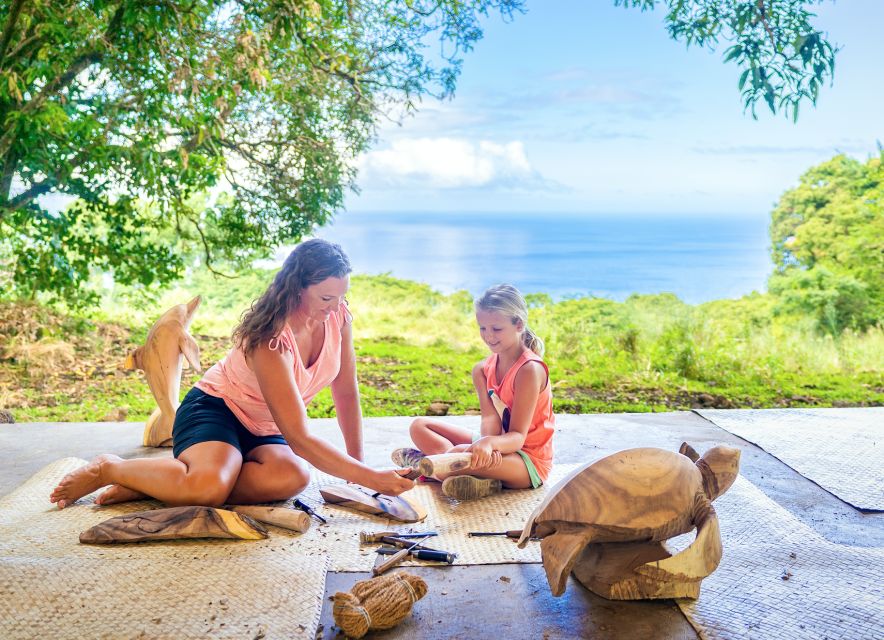
- Starter carvings and traced designs so you aren’t guessing where to place details
- Small-group setup (max 10) that keeps the class relaxed and lets the carver guide you one-on-one
- A take-home souvenir: you keep your personalized tiki at the end of the 2 hours
Still deciding? Here is how this one stacks up against the Big Island tours people book most.
- Kailua Kona: Night Manta Ray Adventure on the Big Island★ 4.8 · 1,199 reviews
- Big Island: Night Swim with Manta Ray with Hot Chocolate★ 4.9 · 420 reviews
- Kailua-Kona: Whale Watching Cruise on the Big Island★ 4.7 · 273 reviews
- From Keauhou Bay: Snorkel Cruise to Captain Cook’s Monument★ 4.8 · 242 reviews
Kona’s carving hut: the UTV ride sets the tone
The experience starts with you arriving at the farm meeting point and checking in early. You’re asked to be there 30 minutes before the start time, which helps the group get organized and keeps the schedule smooth.
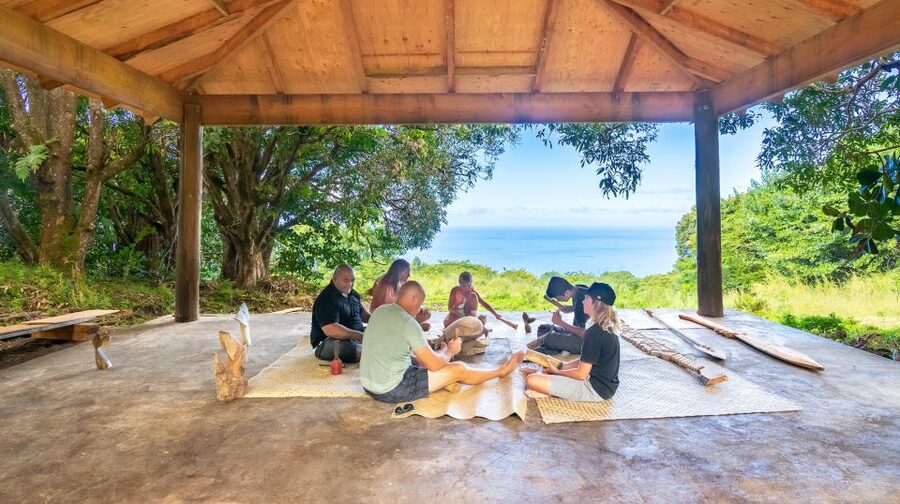
From there, your guide brings you to the workshop area by UTV, not a long bus ride. Once you reach the carving hut, the setting does a lot of work for the experience: you’re up high with views over Kona, and the physical change from road to viewpoint helps you shift into workshop mode fast.
This is one of those activities where the location isn’t just a backdrop. You’re carving during a moment that feels quiet and focused, and the ocean view makes the time pass in a good way.
Choosing your wood and designing your tiki (without needing to be an artist)
One of the best parts is that you don’t show up and randomly start cutting. You first pick out the piece of wood you’ll carve, using locally sourced material from the farm.
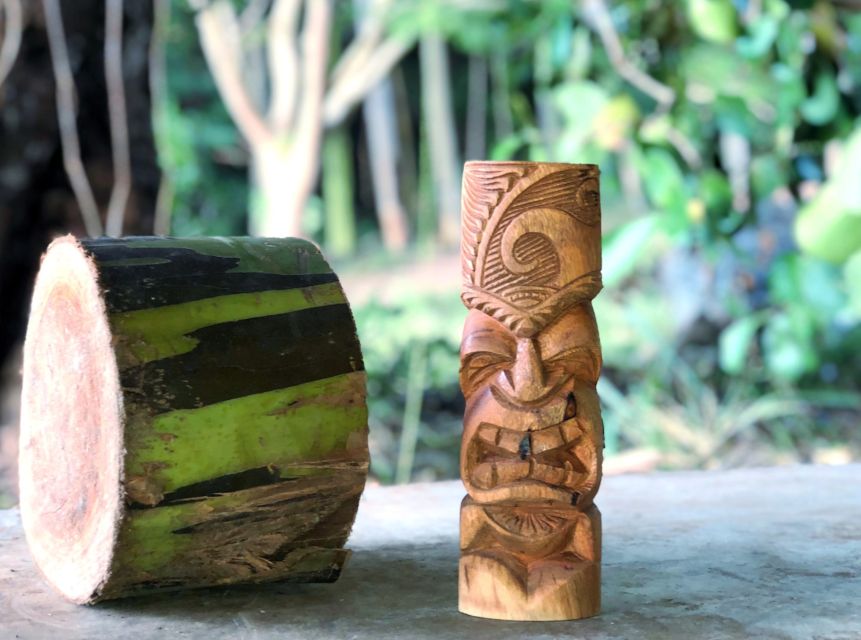
Then you choose an expression and details for your tiki. In practice, this matters because it turns the session from generic “craft time” into something personal—you can aim for a style that fits your taste, rather than only copying a template.
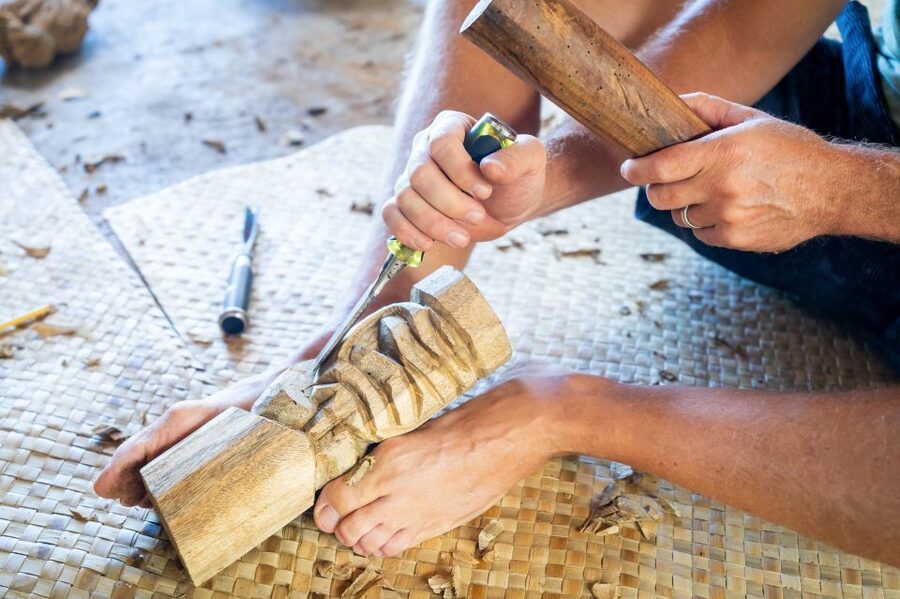
You also get structure while still keeping creative control. At the start, you’ll have starter carvings at your station, and your design can be traced onto the wood with guidance on how to carve the added features. That combination helps you feel productive even if you’ve never held a chisel before.
The carving lesson: tools, technique, and what the faces mean
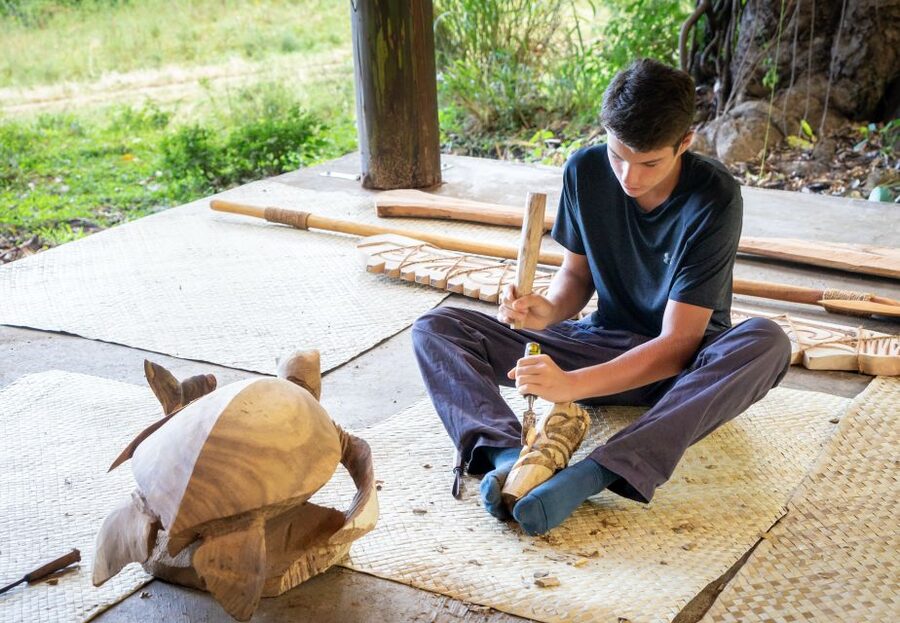
Your carving happens with a professional carver guiding you through technique as you go. The tone across the experience is hands-on and encouraging, and you’re not left to figure out tool angles by trial and error.
Expect to learn the basics of using your carving utensils, including how to approach details on the tiki face. There’s also a cultural layer: you’ll hear explanations of the history and meaning behind tikis and faces, not just the steps to shape wood.
The result is that you’re not only making a souvenir—you’re building understanding as you work. When someone explains why faces and features matter, you naturally pay more attention to placement and finishing.
A small group class that actually feels guided
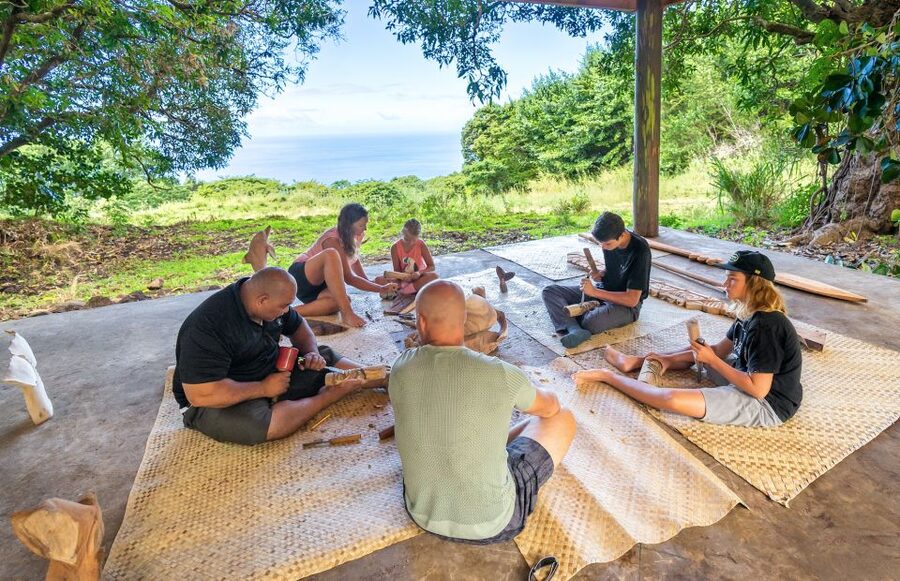
This workshop runs with a small group limited to 10 participants, and you can feel the difference. Smaller classes mean the master carver can notice what your hands are doing, step in when you need a correction, and keep you moving toward a finished piece.
It also makes the workshop more relaxed if you’re carving slowly. The setup includes stations for each person, and help doesn’t get crowded out by big numbers.
Families can also work well here. The workshop includes a note about children under age 5 only participating with a paid adult, and the vibe tends to be practical and patient—useful if you’re traveling with kids who want hands-on activities.



What your 2 hours looks like (and where time goes)
This is a 2-hour workshop, usually offered in the morning or afternoon. The structure is straightforward, which is helpful when you’re building a day around Kona traffic and other activities.
Here’s how the time typically flows:
- You arrive and get oriented, then hop into the UTV with your guide.
- You reach the scenic viewpoint and carving hut area, then choose wood and talk through your tiki design.
- You carve with the master carver’s guidance while your station setup supports you with starter carvings and traced details.
- You finish up, get help cleaning up, then return by UTV to the meeting point.
The workshop is long enough for real carving, but short enough that you’re not stuck in a classroom for hours. If you want a meaningful activity that doesn’t eat your whole day, this hits that sweet spot.
Views that make the lesson feel like a moment, not a chore
The carving hut viewpoint is a quiet perk that you’ll appreciate more than you might expect. You get an ocean view while you carve, which changes your mood and helps the session feel like something you’re doing in Hawaii—not “doing crafts on Hawaii.”
It also makes timing easier. If you’re traveling with a packed itinerary, it’s good to have one part of the day that feels scenic and restorative, not rushed.
If it’s foggy or rainy, the experience still runs (it’s scheduled rain or shine). That’s a reason to dress for weather and keep your expectations realistic about visibility, but it doesn’t change the fact that the setting is built for enjoying the moment.
Price and value: what $219 is really paying for
At $219 per person, this isn’t a “cheap souvenir workshop.” But it’s also not just a class fee for sitting near craft tools.
You’re paying for:
- instruction from a Master Carver of Tonga
- locally sourced wood selection
- carving utensils and hands-on guidance
- a personalized tiki you take home
For many people, the value isn’t only the object—it’s the combination of instruction + cultural context + the fact that you leave with something genuinely personal. Since the piece is made from wood you choose and carve yourself, it feels different from buying a pre-made tiki at a shop.
If you compare it to purchasing an artisan item, this has a built-in advantage: you’re part of the making, and the time spent learning tools and meaning becomes the story you’ll remember.
What to bring (and how to make the session smoother)
Bring a passport or ID card, since that’s specifically noted for this activity. Beyond that, focus on comfort for carving time and for the weather, because the workshop runs rain or shine.
Practical prep tips:
- Wear clothes you’re comfortable getting wood-dust on.
- Plan for a windy or damp viewpoint if conditions are typical for coastal weather.
- Bring water, since food and drinks aren’t included.
You’ll also want to factor in that there’s no hotel pickup and drop-off. You’re meeting at the farm, driving or arranging your own transport, and then riding to the viewpoint by UTV.
Who should book this workshop (and who might skip it)
This is a strong pick if you want a hands-on art activity that also explains the cultural meaning behind what you’re carving. If you enjoy learning how tools work, and you like making something you can display later, you’ll probably feel satisfied fast.
It also suits couples and small groups who want one shared project with a clear finish line. And because it’s only 2 hours, it fits well into a day that already has other Kona stops.
You might want to think twice if you’re looking for a low-effort, no-instruction souvenir. This is active woodworking time, and your experience will be better if you’re willing to pay attention, take guidance, and slow down enough to carve well.
If you’re traveling with very young kids, note the rule about children under 5 participating only with a paid adult, so check your comfort level and supervision plan.
Should you book the Big Island Tiki Carving Workshop?
Yes—if you want a creative, guided souvenir that comes with cultural context and a real end product. The small-group setup, the master carver instruction (including carved detail support), and the ocean-view setting make it feel like a full experience rather than a quick craft stop.
Book it especially if you like the idea of choosing your own locally sourced wood and shaping a tiki that reflects your choices. Just be sure you plan for the basics: show up on time, bring an ID, wear carving-friendly clothes, and handle meals and drinks on your own since nothing is included.
FAQ
How long is the Big Island Tiki Carving Workshop?
The workshop lasts 2 hours.
Where do I meet for the workshop?
Meet at the farm located off Mamalahoa Hwy (Hwy 180). Look for the Aloha Adventure Farms or Holualoa Kona Coffee sign.
What time should I arrive?
Plan to arrive 30 minutes before the activity starts.
What should I bring?
Bring a passport or ID card. You should also be prepared for rain or shine, since the workshop runs in all weather.
Is food or drinks included?
No. Food and drinks are not included.
Is the workshop wheelchair accessible?
Yes. The activity is wheelchair accessible.
Can children participate?
Children under age 5 may participate with a paid adult. The workshop also notes children can join with that condition.
More Tour Reviews in Island Of Hawaii
- Kailua Kona: Night Manta Ray Adventure on the Big Island
★ 4.8 · 1,199 reviews - Big Island: Night Swim with Manta Ray with Hot Chocolate
★ 4.9 · 420 reviews - Kailua-Kona: Whale Watching Cruise on the Big Island
★ 4.7 · 273 reviews - From Keauhou Bay: Snorkel Cruise to Captain Cook’s Monument
★ 4.8 · 242 reviews - Big Island, Hawaii: Volcano and Stargazing Tour with Dinner
★ 4.8 · 179 reviews - From Kona: Big Island Underwater Submarine Adventure
★ 4.6 · 162 reviews
Just Added: The Newest Big Island Reviews




Hawaiian Craft & Culture Workshops, compared.
 ★ 5.0Polynesian Cultural ATV Tour in KonaFrom $187627 reviews
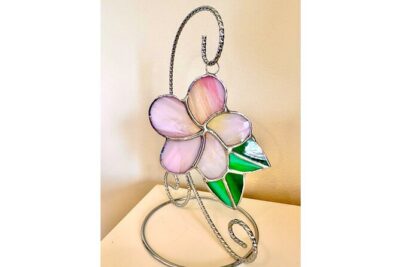 ★ 5.0Fun and Creative Stained Glass Class and WorkshopFrom $125120 reviews
 ★ 4.9Holualoa: Polynesian Culture ATV TourFrom $219106 reviews
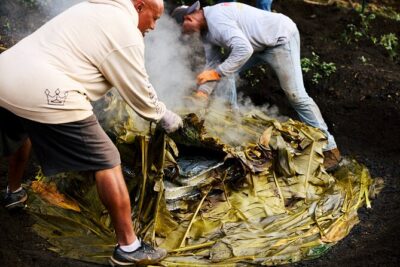 ★ 5.0Hands-On Hawaiian Imu Cooking and Cultural Dining ExperienceFrom $15095 reviews
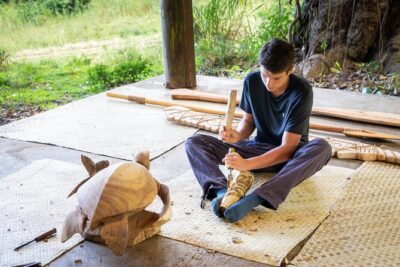 ★ 5.0Polynesian Cultural Carving Experience in KonaFrom $24282 reviews
 ★ 4.5Creative Soul Scavenger Hunt( Kona Big island Hawaii)From $3520 reviews
★ 5.0Fun and Creative Stained Glass Class and WorkshopFrom $1254 reviews
★ 4.5Creative Soul Scavenger Hunt( Kona Big island Hawaii)From $3520 reviews
★ 5.0Fun and Creative Stained Glass Class and WorkshopFrom $1254 reviews
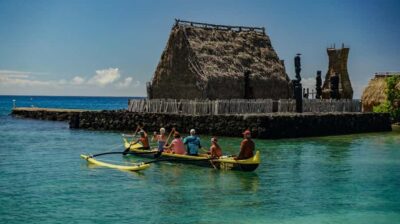 ★ 5.0Kealakekua Bay: Outrigger Canoe Ride with Cultural InsightsFrom $724 reviews
Browse the lists this tour appears in