
Reviewed · HAWAII VOLCANOES NATIONAL PARK TOURS
Private Tour: Hawaii Volcanoes National Park Eco Tour
Kīlauea steals your attention fast. This private Hawaii Volcanoes National Park eco tour turns an ordinary park visit into a guided walk-through of active geology, native plants, and Hawaiian culture, all paced for your group.
I love the up-close start at Volcano House—steam vents, sulphur banks, and rainforest heat—because you feel the volcano instead of just reading about it. I also love how the tour hits big “wow” stops like the Nahuku–Thurston Lava Tube and then reinforces the story with trail time on places tied to real eruptions.
One thing to plan for: this is mostly walking outdoors with some driving between areas, and summit viewing depends on current eruption conditions.
In This Review
- Key tour highlights
- Entering Volcanoes National Park from inside Volcano House
- Steam vents and sulphur banks: when science turns real
- Nahuku–Thurston Lava Tube: walking through a 500-year-old corridor
- Halemaʻumaʻu Trail: caldera views plus culture and biology talk
- Kīlauea Iki Trail: the “moon walk” effect
- Devastation Trail: seeing what a 1959 eruption covered
- Chain of Craters Road: rare rock formations and pit craters
- Keanakako‘i Overlook: the active eruption view (when conditions allow)
- Short culture and family-friendly stops that add meaning
- Kīlauea Visitor Center and Junior Ranger badges
- Holei Sea Arch: easy coastal walking and sea birds
- Volcano Art Center Gallery and Volcano House history
- Price and logistics: what you’re really paying for
- How this private setup changes the pacing
- Who should book this tour, and who might not
- Should you book this private Hawaii Volcanoes eco tour?
- FAQ
- How much does the Hawaii Volcanoes National Park Eco Tour cost?
- How long is the tour?
- Is the National Park entrance fee included?
- What’s included in the tour price?
- Where does the tour start?
- Is this tour private?
- Are food and drinks included?
- What language is the tour offered in?
- Can I see the summit eruption?
- What is the cancellation policy?
Key tour highlights
- Volcano House warm-up: steam vents and sulphur banks right where the heat is easiest to notice
- Nahuku–Thurston Lava Tube: a 500-year-old tunnel plus clear explanations of how lava tubes form
- Trail time that makes eruptions make sense: Kīlauea Iki and Devastation Trail connect geology to what you’re seeing
- Geochemistry on the move: sulphur banks and other stops come with plant and science context
- Active eruption viewpoints when conditions allow: Keanakako‘i Overlook can offer the best sightlines, with binoculars/scopes
- Culture stops beyond the volcano: Kīlauea Visitor Center (Junior Ranger), Holei Sea Arch, and Volcano Art Center
More ways into Hawaii Volcanoes National Park
- Big Island in a Day: Volcanoes Waterfalls Sightseeing and History★ 5.0 · 6,569 reviews
- Hilo Shore Excursion: Volcanoes National Park & Black Sand Beach★ 4.5 · 2,338 reviews
- Small Group Big Island Twilight Volcano and Stargazing Tour★ 5.0 · 1,619 reviews
- Big Island Highlights: Coffee, Volcano, Black Sands & Waterfall★ 5.0 · 1,054 reviews
Entering Volcanoes National Park from inside Volcano House
Your tour begins at 1 Crater Rim Drive on the Big Island, right at the park—inside the action instead of racing in from the edge. From here, you start near the historic Volcano House area, and the whole day has a “follow the volcano’s logic” rhythm.
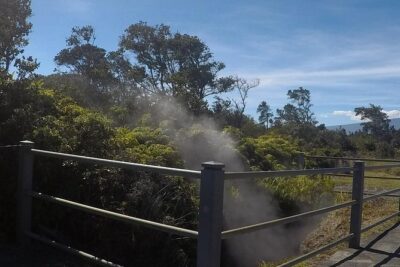
The first payoff is sensory. You walk to steam vents and sulphur banks, where you can actually feel geothermal warmth and notice the sulfur-rich smells that go with the territory. A good guide doesn’t just point—he or she explains what’s happening and why it matters for the plants and animals trying to live here.
And since it’s private, you can take your time at the spots that catch your eye—whether that’s the science or the cultural stories tied to Kīlauea.
Steam vents and sulphur banks: when science turns real
The early portion is built around feeling and seeing the volcano’s output, not just scanning from a viewpoint. You’ll walk through areas where geothermal heat rises and where volcanic gases create a tough environment.
This is where the tour earns its eco-tour label in a practical way. At the sulphur banks, your guide talks geochemistry and how native plants adapt to resist volcanic gases. You also get a safety explanation—this area is described as safe to explore because gas concentration is low.
If you’re the type who likes to understand the “why” behind the “wow,” this is your section. It turns the park from scenery into a living science lab.
Nahuku–Thurston Lava Tube: walking through a 500-year-old corridor
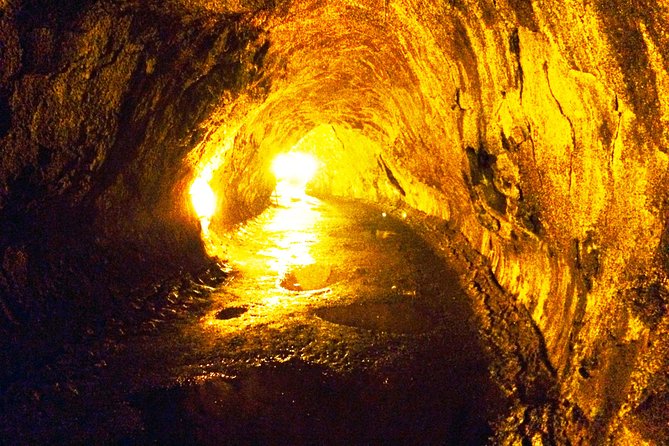
Next comes one of the most memorable stops: Nahuku–Thurston Lava Tube. You’ll walk into a 500-year-old lava tube, with a guide giving you a clear explanation of how lava tubes form and what you’ll see inside.
Even at just 15 minutes, this stop has real payoff because lava tubes are one of those features you can easily miss if you’re just moving between major overlooks. By walking in as a group and getting context, the tube stops being a dark hole and becomes a story about how lava behaves.
On the way, you’ll also get a walk through old growth native forest to reach the tube. That matters because it shows the contrast: a landscape that looks still alive, shaped by a process that is anything but calm.
Halemaʻumaʻu Trail: caldera views plus culture and biology talk
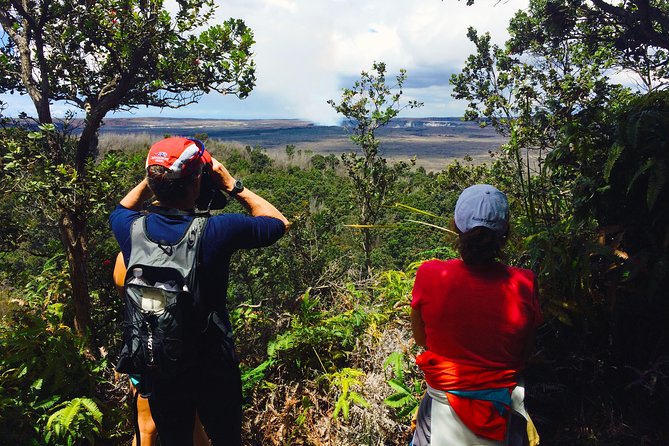
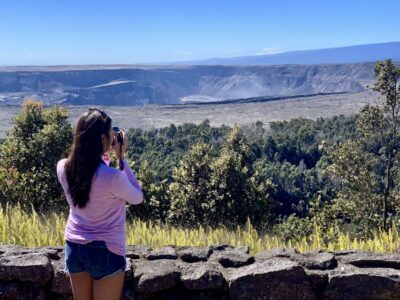
After the lava tube, the tour heads to the Halemaumau Trail area for historic trail walking and caldera views. Expect an up-close look at the summit caldera viewpoints when conditions allow, plus guided interpretation of what’s around you.
This stop is short, but it packs in different layers:
- native plants and native birds in the area
- Hawaiian culture tied to the volcano
- Hawaii-specific geology
It’s a good reminder that volcano tourism isn’t only about rocks. Here, the park is also about how people read the land—and how life tries to grow in a place defined by change.
Keep it to your own group with a private trip


Kīlauea Iki Trail: the “moon walk” effect
The Kīlauea Iki Trail is one of the park’s most popular hikes, and it’s scheduled for a focused time window (about 15 minutes). The point isn’t a long hike—it’s a guided taste of a trail that feels otherworldly.
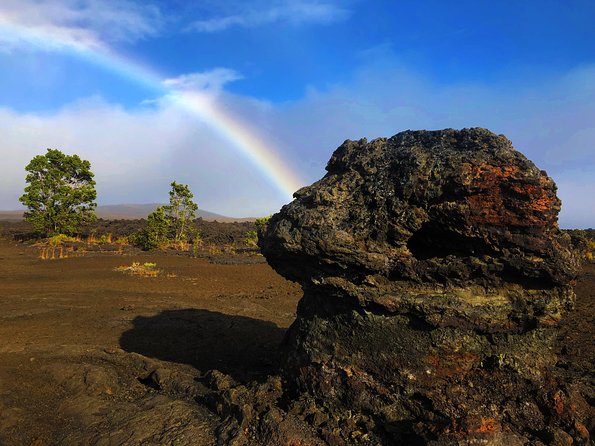
The 1959 eruption comes into focus here. Your guide talks about the eruption history, including the fact that it featured the highest lava fountaining event in recorded history. Once you connect that event to what you’re seeing on the ground, the trail stops being a line on a map.
This section is also a great moment to ask questions. The guide’s role is to turn your curiosity into answers—why the terrain looks the way it does, what lava did there, and how the ecosystem has responded.
Devastation Trail: seeing what a 1959 eruption covered
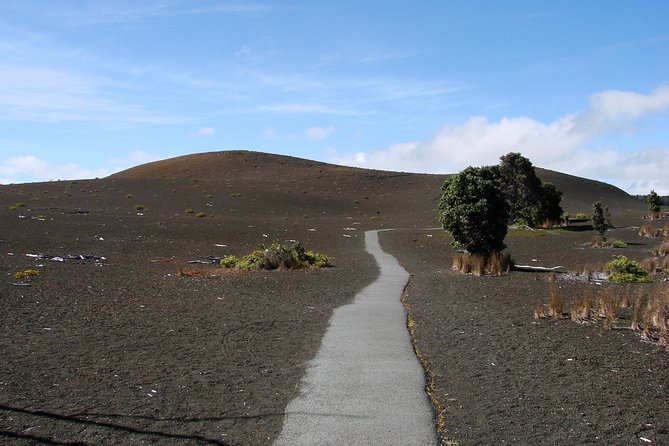
Then you move to the Devastation Trail, where the story becomes physical. This is the area where native rainforest was buried in volcanic debris during the 1959 eruption.
You’ll also hear about specific finds and features connected with lava’s aftermath, like Pele’s tears and olivine crystals. Even without a lab coat, those details help you understand what you’re walking on—volcanic material with a history, not just “rocks.”
At about 30 minutes, this stop is long enough to slow down. It’s also one of the best sections for photography, because the contrast between life, rock, and ash-like textures can be striking.
Chain of Craters Road: rare rock formations and pit craters
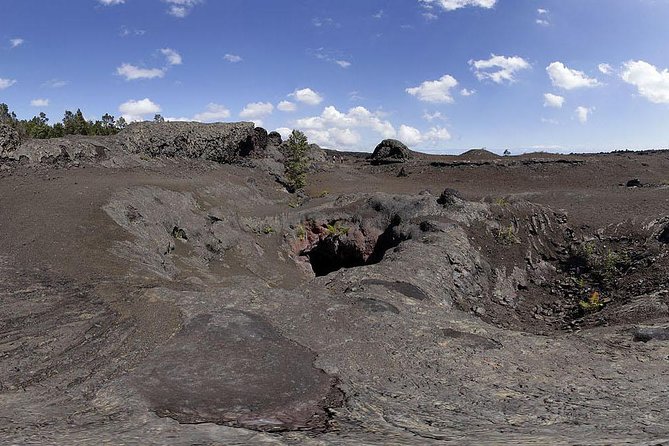
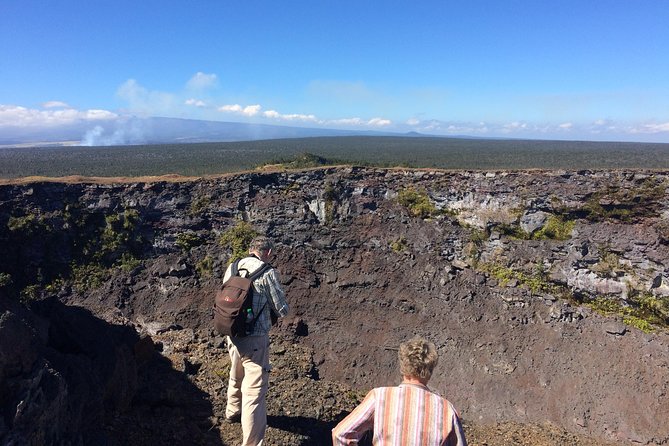
After the trail work, the tour turns to Chain of Craters Road, with guided stops along the way. Expect about 45 minutes here, plus interpretation of volcanic landscapes from the past.
Your guide will point out features like pit craters and discuss why they matter to understanding Kīlauea’s behavior. You may also hear about stops such as Lua Manu, which adds another named layer to the science.
This part of the day is valuable if you want the “bigger picture.” From road-access points and short walking bits, you can understand how one eruption connects to the next and how the park’s layout reflects that long timeline.
Keanakako‘i Overlook: the active eruption view (when conditions allow)
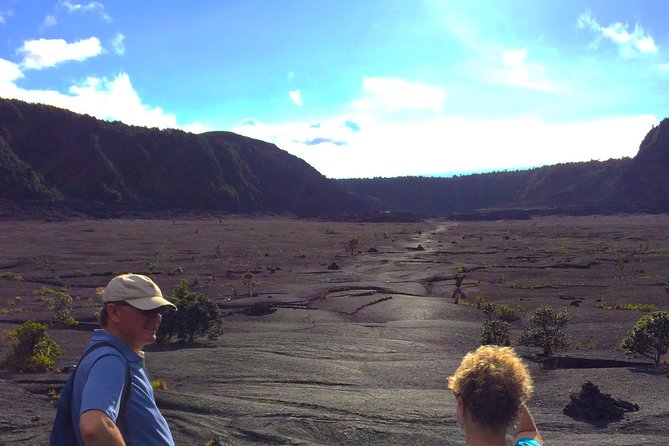
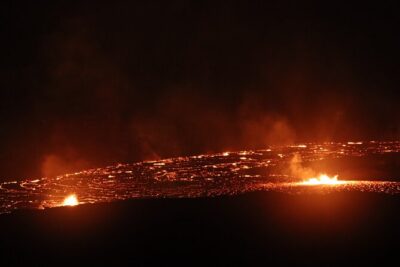
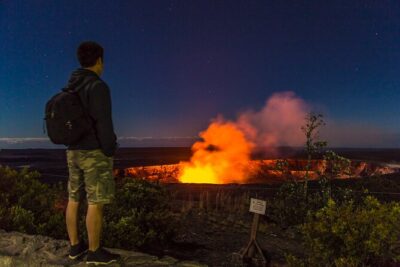
Now for the part everyone hopes for: summit viewing. The Keanakako‘i Overlook is described as the best location to see the active summit eruption when lava is visible.
This is where the tour is both exciting and realistic. Viewing depends on current eruption conditions, so your guide may adjust what you can see or how you experience the area that day.
To improve your odds, your guide brings binoculars and/or a spotting scope. That small tool upgrade can make a huge difference if you’re looking at a far-off glow or trying to catch movement.
Short culture and family-friendly stops that add meaning
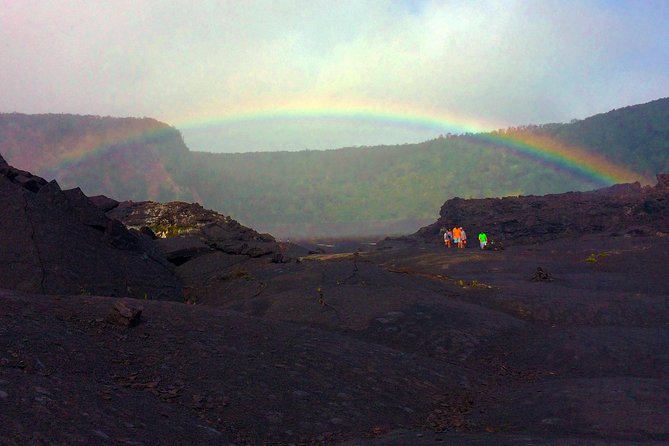
The tour doesn’t end at geology. It includes a handful of shorter stops that make the day feel less like a science field trip and more like a human visit to a living place.
Kīlauea Visitor Center and Junior Ranger badges
At the Kīlauea Visitor Center, you get a quick stop (about 5 minutes). If you have younger kids, this is also where Junior Ranger programs are picked up, and your guide helps children complete the program and receive an official Junior Ranger badge.
Even if you don’t have kids, this quick stop can be useful for context and a chance to find a book or local material tied to the volcano and Hawaiian culture.
Holei Sea Arch: easy coastal walking and sea birds
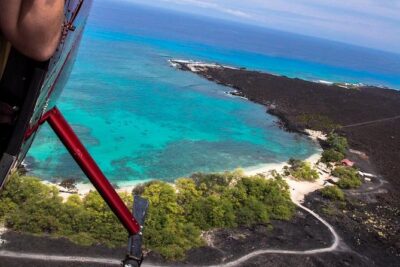
Next is Holei Sea Arch, an easy coastal walk and photo stop (about 5 minutes). Your guide talks about native sea birds here, so even a quick stop has guided meaning.
Volcano Art Center Gallery and Volcano House history
Finally, you’ll visit the Volcano Art Center Gallery, where you can see the original Volcano House Hotel, described as the oldest hotel in the state. It’s a short stop, but it ties the park to the people who have been drawn to Kīlauea for generations.
Price and logistics: what you’re really paying for
At $160 per person, this tour isn’t cheap—but it’s not priced like a luxury helicopter day either. The value comes from how much guide time you get inside the park and how often the guide explains what you’re seeing.
Key cost/packing realities:
- The National Park entrance fee is not included. Budget $30 per vehicle.
- Food and drinks are not included unless specified, so plan for snacks and water during the walking portions.
- You’re starting at a park meeting point and ending back at the same spot, so you’re not paying for hotel pickup.
Where private time really pays off is interpretation. You could hike these trails on your own, sure. But a guide can connect Kīlauea’s features to Hawaiian culture, native plant strategies, and eruption history—so your time becomes more than checkmarks.
Also, in an actively changing environment, route choices matter. Summit conditions can shift, and having a guide helps you see what’s available instead of guessing.
How this private setup changes the pacing
This is a private tour limited to your group. The data also notes a max of 25 people per booking, and in practice “private” means you’re not sharing your stops with random strangers from a bus.
That matters because the experience is built around short, specific stops:
- steam vents, sulphur banks, tube interiors
- short trail segments like Halemaumau and Kīlauea Iki
- a longer trail section on Devastation
- road time on Chain of Craters
When your group is smaller, you can ask questions without hearing someone else’s conversation. That’s a huge part of why guides get praised—people don’t just want to see the volcano; they want to understand it.
You also have a choice between morning or afternoon tour times, which helps if you’ve got rental cars, other island stops, or a flight schedule.
Who should book this tour, and who might not
This tour fits best if you want a guided science-and-culture day and you like learning while moving. It works well for mixed ages because the experience is broken into short segments, including short stops and shorter walks.
It might be less ideal if you’re trying to do a fully free-form day where you can stop every 5 minutes on your own schedule for long stretches. The route is guided for a reason: you’re getting the right mix of trails, tube time, and the best odds for summit viewing.
If you’re coming during heightened volcanic activity or if access changes due to conditions, keep expectations flexible. Summit viewing is specifically described as dependent on current eruption conditions.
Should you book this private Hawaii Volcanoes eco tour?
I think you should book this if you’re spending limited time on the Big Island and you want your Volcanoes National Park day to feel organized, meaningful, and science-forward. The private format and the guided interpretation make the $160 feel more like a time-saver and learning boost than a “just because” add-on.
Skip it if you already know you only want casual strolling with no interest in eruption history, or if your schedule can’t handle a mostly outdoor walking day where visibility may change.
If you want one practical decision rule: book it when you care about explanations as much as you care about photos—and when you want a calmer, more focused park visit than you’ll get from a larger group.
FAQ
How much does the Hawaii Volcanoes National Park Eco Tour cost?
The price is $160.00 per person.
How long is the tour?
The tour runs about 3 to 6 hours.
Is the National Park entrance fee included?
No. The National Park entrance fee is USD $30 per vehicle and is not included.
What’s included in the tour price?
It includes a professional guide, a private tour, and all taxes, fees, and handling charges.
Where does the tour start?
The start point is 1 Crater Rim Drive, Hawaii Volcanoes National Park, HI 96718, USA.
Is this tour private?
Yes. It’s a private tour/activity where only your group participates, with a maximum of 25 people per booking and a minimum of 2 people per booking.
Are food and drinks included?
No. Food and drinks are not included unless specified.
What language is the tour offered in?
The tour is offered in English.
Can I see the summit eruption?
Summit eruption viewing depends on current eruption conditions.
What is the cancellation policy?
You can cancel up to 24 hours in advance for a full refund.
More Tours in Big Island of Hawaii
- Big Island: Kona Manta Ray Snorkel Tour in Keauhou Harbor
★ 4.5 · 2,465 reviews - Hilo Shore Excursion: Volcanoes National Park & Black Sand Beach
★ 4.5 · 2,338 reviews - Small Group Big Island Twilight Volcano and Stargazing Tour
★ 5.0 · 1,619 reviews - Big Island: Mauna Kea Summit and Stars Small-Group Adventure Tour
★ 5.0 · 1,545 reviews - Big Island: Mauna Kea Summit Tour with Free Night Star Photo
★ 5.0 · 1,449 reviews - Kona Snorkel Tour: Captain Cook Reef Snorkel, Dolphin & Sea Caves
★ 4.5 · 1,411 reviews
More Tour Reviews in Big Island of Hawaii
- Big Island in a Day: Volcanoes Waterfalls Sightseeing and History
★ 5.0 · 6,569 reviews - Big Island Manta Ray Night Snorkel
★ 5.0 · 5,656 reviews - Big Island: Kona Manta Ray Snorkel Tour in Keauhou Harbor
★ 4.5 · 2,465 reviews - Hilo Shore Excursion: Volcanoes National Park & Black Sand Beach
★ 4.5 · 2,338 reviews - Big Island: Captain Cook Snorkel On A Power Catamaran With Lunch
★ 5.0 · 2,232 reviews - KONA Manta Ray Night Snorkel – FREE re-ride if no Sightings
★ 5.0 · 2,212 reviews
Deeper Into Volcanoes National Park
- Big Island in a Day: Volcanoes Waterfalls Sightseeing and History
★ 5.0 · 6,569 reviews - Hilo Shore Excursion: Volcanoes National Park & Black Sand Beach
★ 4.5 · 2,338 reviews - Small Group Big Island Twilight Volcano and Stargazing Tour
★ 5.0 · 1,619 reviews - Big Island Highlights: Coffee, Volcano, Black Sands & Waterfall
★ 5.0 · 1,054 reviews - Deluxe Volcano Experience with Restaurant Dinner
★ 5.0 · 620 reviews - Big Island: Fat Tire E-Bike Tour through Volcanoes National Park
★ 5.0 · 546 reviews
Just Added: The Newest Big Island Reviews




Hawaii Volcanoes National Park Tours, compared.
 ★ 5.0Big Island in a Day: Volcanoes Waterfalls Sightseeing and HistoryFrom $2646,569 reviews
 ★ 4.5Hilo Shore Excursion: Volcanoes National Park & Black Sand BeachFrom $1592,338 reviews
 ★ 5.0Small Group Big Island Twilight Volcano and Stargazing TourFrom $2971,619 reviews
 ★ 5.0Big Island Highlights: Coffee, Volcano, Black Sands & WaterfallFrom $2991,054 reviews
 ★ 5.0Deluxe Volcano Experience with Restaurant DinnerFrom $341620 reviews
 ★ 5.0Fat Tire E-Bike Tour through Volcanoes National ParkFrom $199546 reviews
 ★ 4.5Big Island, Hawaii: Volcanoes National Park SafariFrom $379545 reviews
 ★ 4.9Volcanoes, Waterfalls, & Coffee Farm Day-TripFrom $264414 reviews
Browse the lists this tour appears in