
Reviewed · HAWAIIAN CRAFT & CULTURE WORKSHOPS
Hawaiian Floral Crown Weaving in Hilo
A lei isn’t just decoration here. This class turns Hilo’s garden into a hands-on Hawaiian lei po’o experience. You start with a respectful ceremonial welcome, then you move to the plants, stories, and actual weaving steps that make the whole thing feel personal.
I love the clear, guided way you learn the wili method. The way it’s taught around a picnic-table setup under a pavilion makes it feel doable even if your craft skills are rusty.
One thing to keep in mind: this is mostly outdoors, and the tour notes good weather is important. So plan for bugs and conditions, because the class doesn’t include mosquito repellent.
In This Review
- Key points before you go
- Why Hawaiian Floral Crown Weaving in Hilo Feels Like More Than a Craft Class
- Onekahakaha Road and the 2:00 pm Timing That Works in Real Life
- The Ceremonial Welcome: Respect for the Aina Comes First
- Your Garden Stroll: How the Plants Become Part of the Lei Po’o
- Picking Greenery Without Turning It Into a Frenzy
- Sitting at the Pavilion: The Weaving Session That Actually Teaches
- What You’ll Walk Away With (Besides Great Photos)
- Price and Value: Does $75 Make Sense?
- What to Bring: Simple Moves That Make Class Smoother
- Who This Lei Po’o Class Is Best For
- A Quick Reality Check: Weather and Timing
- Should You Book Hawaiian Floral Crown Weaving in Hilo?
- FAQ
- Where is the class located?
- How long is Hawaiian Floral Crown Weaving in Hilo?
- What time does it start?
- How much does it cost?
- What language is the tour offered in?
- What items are included in the class?
- What is not included?
- How big is the group?
- Is there free cancellation?
- Is the tour accessible for most travelers?
Key points before you go
- Ceremonial start focused on respect for the aina and why it matters
- Garden walk + picking greenery so your lei po’o starts with fresh material
- Wili technique instruction guided step-by-step to make a lei po’o floral crown
- Small group size (max 10) for more hands-on help during weaving
- All key tools included like raffia/cordage, scissors, and a picking basket
- 2:00 pm start on Onekahakaha Road with the activity ending back there
More hands-on Hawaiian craft and culture
- Polynesian Cultural ATV Tour in Kona★ 5.0 · 627 reviews
- Fun and Creative Stained Glass Class and Workshop★ 5.0 · 120 reviews
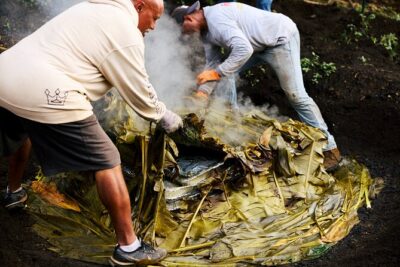
- Hands-On Hawaiian Imu Cooking and Cultural Dining Experience★ 5.0 · 95 reviews
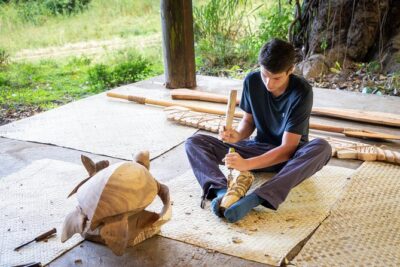
- Polynesian Cultural Carving Experience in Kona★ 5.0 · 82 reviews
Why Hawaiian Floral Crown Weaving in Hilo Feels Like More Than a Craft Class
On the Big Island, a lot of experiences tell you about Hawaii. This one also does Hawaii. You learn a traditional weaving style while you’re connected to the plants themselves, not just shown a finished product.
What I like most is that the class doesn’t rush past the meaning. You begin with a ceremonial tradition that introduces your presence and purpose on the aina (land). Then you walk through the garden and learn about plants in a story-driven way, including medicinal uses passed down through family experience.
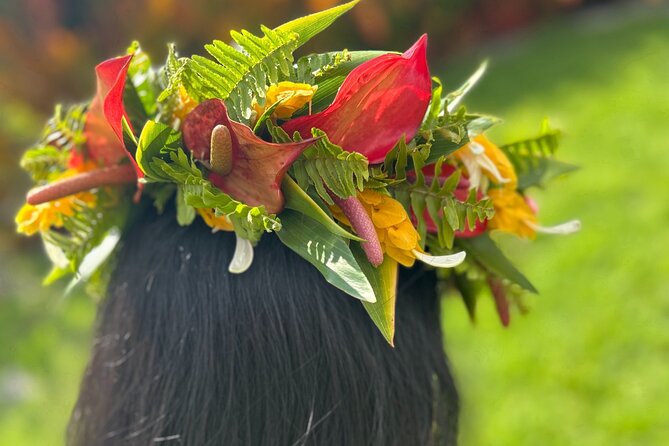
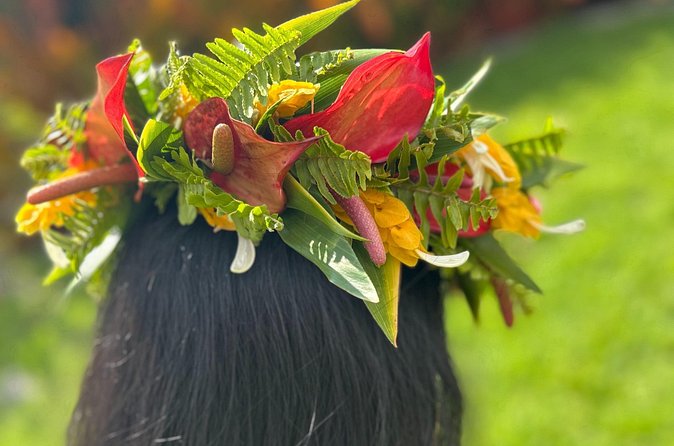
And you finish with the practical reward: a floral crown you made with your own hands. In the provided reviews, people mention wearing their lei po’o right away—one even wore it on a flight home—so it’s not just a keepsake. It’s something you can use immediately.
Onekahakaha Road and the 2:00 pm Timing That Works in Real Life
The class starts at 2:00 pm at Onekahakaha Road in Hilo, and it ends back at the meeting point. That loop matters. You’re not stuck with a complicated transit plan mid-afternoon, and you can fit this into a day that already has sightseeing.
A two-hour window is also a smart size for this kind of activity. You get enough time to pick greenery, sit down, learn the wili steps, and finish your crown without turning the experience into a full-day commitment.
The tour runs in English and is offered as a small-group session (up to 10 travelers). That size helps if you want to ask questions while you weave, instead of learning only at a distance.
The Ceremonial Welcome: Respect for the Aina Comes First
Before any picking or weaving, the guide introduces the tradition of being present and purposeful on the land. In plain terms: the class starts by grounding you in respect—so your weaving doesn’t feel like a generic souvenir activity.
This matters for two reasons. First, it sets the tone for how you handle plants and time. Second, it frames the craft as part of a living culture, not just a technique.
The guide also shares stories along the garden walk, including plants my family would medicinally use as a child. That family angle is important. It makes the information feel like something carried forward, not something recited from a script.
Your Garden Stroll: How the Plants Become Part of the Lei Po’o
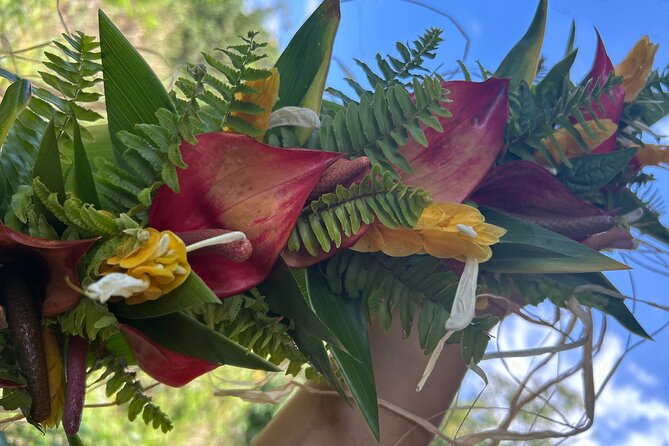
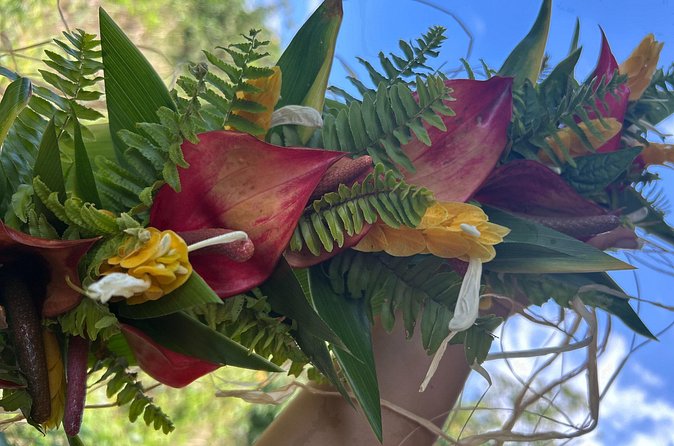
After the welcome, you stroll through the garden and get acquainted with the season’s foliage. Then you pluck fresh greenery as part of your own materials gathering.
This is where the class becomes more satisfying. You’re not starting with a pre-made kit of dried supplies. You’re starting with what the garden offers that day, which means your lei po’o can feel truly tied to your time in Hilo.
I also like how the session mixes observation with storytelling. You’re likely to notice which leaves and stems work best for weaving after you hear how they’re used and why. That kind of context turns a simple picking moment into real learning.




Picking Greenery Without Turning It Into a Frenzy
Because you’ll be picking plants, your best move is to focus on selecting greenery that will weave well, not just grabbing the prettiest pieces. The tour includes a picking basket, which signals that the gathering is part of the rhythm of the class.
You’ll have a guide guiding you, plus tools at the table afterward (including scissors). So you don’t need to stress about having the perfect cutting setup before you sit down.
One practical consideration: since it’s outdoors, bring a calm, patient approach. If the weather shifts or insects are active, your guide may adjust timing. That’s not failure—it’s just how outdoor learning works.
Sitting at the Pavilion: The Weaving Session That Actually Teaches
Once you pick your garden treasures, you sit around a picnic table under a spacious pavilion. This is a smart setup for learning: you’re seated, sheltered enough to keep things comfortable, and close enough that the guide can correct your technique as you go.
All the materials you need are ready for you. The class includes rafia/cordage, scissors, and a picking basket for the greenery stage. That’s good value because you don’t need to source supplies on your own, and you’re not arriving to a class where you must improvise.
Then the main lesson comes: learning the Hawaiian wili technique to produce a lei po’o floral crown. The guide leads you through easy-to-follow steps, so your goal isn’t just making something. Your goal is understanding the process enough to look at your own crown and think, I did that.
In the reviews, people specifically called out how much they enjoyed the instruction and how well the guide handled both kids and adults. If you’re traveling with family, that’s a strong signal this won’t feel like a lecture-only experience.
What You’ll Walk Away With (Besides Great Photos)
You’ll leave with a finished lei po’o (floral crown) that you created. That matters because it turns the class into something you can bring into the rest of your trip, not a one-time event you forget the next day.
One of the best real-world benefits is wardrobe flexibility. People mention wearing their crown to later outings, including a visit to Volcano Park. You can do the same: if you plan a scenic stop later, this is the kind of activity that pairs naturally with it.
Also, wearing it gives you a simple way to share the story. You can tell people you made your crown in Hilo’s garden and learned the wili technique. It’s a conversation starter that doesn’t require a long explanation.
Price and Value: Does $75 Make Sense?
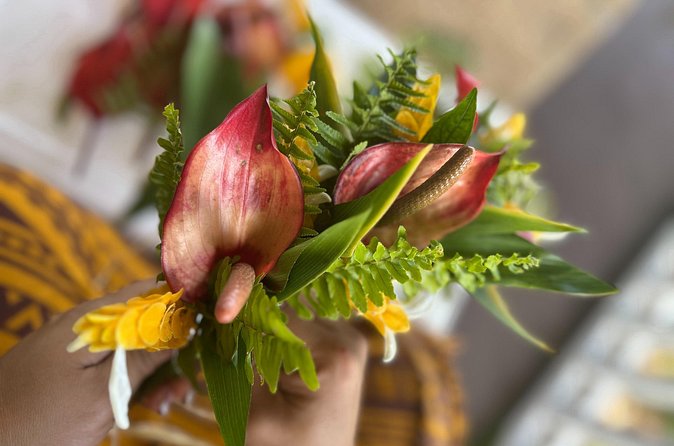
At $75 per person for about 2 hours, this class is priced similarly to other hands-on cultural workshops in Hawaii—but it has a few advantages.
You’re paying for:
- guided instruction to help you actually finish a lei po’o
- fresh greenery gathering as part of the experience
- materials provided on-site (rafia/cordage, scissors, basket)
That last part is the hidden value. If you tried to DIY this without a teacher, you’d likely spend time and money experimenting with supplies. Here, you get the structure and tools ready, plus the guide who helps you avoid common mistakes.
The small group size (max 10) also matters. It supports a more personal teaching style, which is where the time cost turns into real learning.
If you enjoy crafts, plant-focused experiences, or cultural classes where you do the work, this price feels fair.
What to Bring: Simple Moves That Make Class Smoother
The tour doesn’t include mosquito repellent, so that’s the one “must think about it” item. If you tend to attract mosquitoes, plan ahead. I’d also wear clothes you don’t mind getting a little plant-stuff on them, since you’ll be picking greenery.
Other than repellent, keep it simple:
- comfortable shoes for garden walking
- something for sun/rain awareness, since it’s outdoors
- a willingness to slow down and pay attention to plants
If you like being outdoors and learning by doing, this kind of class will feel natural. If you prefer strictly indoor activities, you might find the outdoor component a bit limiting—though the pavilion helps.
Who This Lei Po’o Class Is Best For
This is a strong fit if you:
- want a hands-on Hawaiian cultural experience in Hilo
- enjoy gardening, plants, or learning how everyday natural items are used
- like making something you can take home and also wear during your trip
- travel as a family, because the format works for both kids and adults
It may be less ideal if you’re only looking for quick photo stops or you hate any outdoor activity. But if you’re open to sitting at a table, weaving, and listening, you’ll probably enjoy the pacing.
Also, it’s listed as suitable for most travelers, and service animals are allowed, which helps make it easier to plan without extra assumptions.
A Quick Reality Check: Weather and Timing
Because the experience requires good weather, you should expect that plans could shift if conditions aren’t right. That’s normal for outdoor classes. The good part is that you’ll have a way to adjust rather than getting stuck with a wasted afternoon.
Also, because it’s scheduled for 2:00 pm, try to build your day around it. If you’re doing a lot of long-distance driving that morning, give yourself enough buffer to arrive relaxed.
Should You Book Hawaiian Floral Crown Weaving in Hilo?
If you want a cultural activity that’s respectful, hands-on, and actually ends with something you made, I’d book this. The biggest selling point is the combination of meaning first (the ceremonial welcome), nature second (garden walk and picking), and practical instruction third (wili technique to create your lei po’o).
It’s not just watching. It’s weaving at a pavilion table with tools provided, in a small group environment. And the lei po’o isn’t a forgotten craft. People are wearing theirs on later outings, so it stays useful beyond the class.
If you’re on the fence, use this rule: if you’d enjoy spending two hours learning a tactile skill tied to Hawaii’s plants, you’ll likely love it. If you prefer totally indoor, low-movement tours, consider another option.
FAQ
Where is the class located?
The class starts on Onekahakaha Road, Hilo, HI 96720, USA, and it ends back at the meeting point.
How long is Hawaiian Floral Crown Weaving in Hilo?
It lasts about 2 hours (approx.).
What time does it start?
The start time is 2:00 pm.
How much does it cost?
The price is $75.00 per person.
What language is the tour offered in?
The experience is offered in English.
What items are included in the class?
You get raffia/cordage, scissors, and a picking basket.
What is not included?
Mosquito repellent is not included.
How big is the group?
The experience has a maximum of 10 travelers.
Is there free cancellation?
Yes. You can cancel for a full refund up to 24 hours in advance, and it may be rescheduled or refunded if canceled due to poor weather.
Is the tour accessible for most travelers?
It lists that most travelers can participate, and service animals are allowed.
More Tour Reviews in Big Island of Hawaii
- Big Island in a Day: Volcanoes Waterfalls Sightseeing and History
★ 5.0 · 6,569 reviews - Big Island Manta Ray Night Snorkel
★ 5.0 · 5,656 reviews - Big Island: Kona Manta Ray Snorkel Tour in Keauhou Harbor
★ 4.5 · 2,465 reviews - Hilo Shore Excursion: Volcanoes National Park & Black Sand Beach
★ 4.5 · 2,338 reviews - Big Island: Captain Cook Snorkel On A Power Catamaran With Lunch
★ 5.0 · 2,232 reviews - KONA Manta Ray Night Snorkel – FREE re-ride if no Sightings
★ 5.0 · 2,212 reviews
Hawaiian Craft and Culture
- Polynesian Cultural ATV Tour in Kona
★ 5.0 · 627 reviews - Fun and Creative Stained Glass Class and Workshop
★ 5.0 · 120 reviews - Hands-On Hawaiian Imu Cooking and Cultural Dining Experience
★ 5.0 · 95 reviews - Polynesian Cultural Carving Experience in Kona
★ 5.0 · 82 reviews - Creative Soul Scavenger Hunt( Kona Big island Hawaii)
★ 4.5 · 20 reviews - 3-Hour Cup N Canvas Painting Party
★ 5.0 · 4 reviews
Just Added: The Newest Big Island Reviews




Hawaiian Craft & Culture Workshops, compared.
 ★ 5.0Polynesian Cultural ATV Tour in KonaFrom $187627 reviews
 ★ 5.0Fun and Creative Stained Glass Class and WorkshopFrom $125120 reviews
 ★ 4.9Holualoa: Polynesian Culture ATV TourFrom $219106 reviews
 ★ 5.0Hands-On Hawaiian Imu Cooking and Cultural Dining ExperienceFrom $15095 reviews
 ★ 5.0Polynesian Cultural Carving Experience in KonaFrom $24282 reviews
 ★ 4.9Tiki Carving WorkshopFrom $21938 reviews
 ★ 4.5Creative Soul Scavenger Hunt( Kona Big island Hawaii)From $3520 reviews
 ★ 5.0Kealakekua Bay: Outrigger Canoe Ride with Cultural InsightsFrom $724 reviews
Browse the lists this tour appears in