
Reviewed · HAWAII VOLCANOES NATIONAL PARK TOURS
Kona: Hawaii Volcanoes National Park Tour
One day, three Big Island worlds. I like the Bay View Farm stop, where you see Kona coffee grown right on the slopes of Mauna Loa, and I like the Hawaii Volcanoes National Park time around Kīlauea and Mauna Ulu. It’s the kind of tour that keeps rolling, without turning into a rushed checklist.
The trade-off is the 12 hours and some hiking/walking on uneven ground. If you have back issues or respiratory concerns, this one may not be your best match.
In This Review
- Key Highlights You’ll Actually Care About
- A 12-Hour Kona-to-Volcano Day With Real Momentum
- Bay View Farm Coffee: Seeing Kona Coffee Grow
- South Kona & Ka’u Views Through the Bus Windows
- Punalu’u Black Sand Beach: Lunch, Sea Turtles, and Coconut Shade
- Hawaii Volcanoes National Park: The Core Kīlauea Stops
- Keanakako’i Crater and Mauna Ulu: Walks With Visible History
- Guide Power: When Patience, Poles, and Jackets Change Everything
- Price and Value: Why $249 Can Make Sense Here
- What to Bring, What to Skip, and Who Should Pass
- Who This Tour Is Best For
- Should You Book This Kona Coffee and Volcano Tour?
- FAQ
- How long is the Kona: Hawaii Volcanoes National Park Tour?
- How big is the group?
- Where does pickup happen?
- Is lunch included?
- What entrance fees are covered?
- What should I wear or bring?
- Is the tour offered in English?
- Is the tour suitable for people with respiratory or back problems?
- What is the booking and cancellation flexibility?
Key Highlights You’ll Actually Care About
- Bay View Farm coffee education on a real 24-acre working farm near Kealakekua Bay
- Captain Cook overlook details from a viewpoint that ties the geography to history
- Punalu’u Black Sand Beach lunch with a good chance to spot honu (green sea turtles)
- Hawaii Volcanoes National Park essentials including the Kīlauea Visitor’s Center, Volcano Art Center, and Sulphur Banks
- A hike to Keanakako’i Crater and sinkhole terrain left behind by the 2018 eruption
More ways into Hawaii Volcanoes National Park
- Kailua-Kona: Hualalai Volcano Doors On/Off Helicopter Tour★ 4.7 · 12 reviews
- Kona: Hawaii Volcanoes National Park Tour★ 5.0 · 9 reviews
- Kailua-Kona: Kohala, Volcanoes and Waterfall Helicopter Tour★ 3.8 · 8 reviews
- From Kona: Volcano & Waterfall Tour, Small Group★ 4.5 · 8 reviews
A 12-Hour Kona-to-Volcano Day With Real Momentum
This is a full-day tour that strings together three different sides of the Big Island: Kona coffee country, the southern coast, and then the volcano world at Hawaii Volcanoes National Park. The big benefit of the small group (up to 12) is that you get a smoother rhythm than big-bus group tours, and the guide can slow down when someone needs extra time.
Pickup is convenient if you’re staying around the Kona side, with hotel pickup and drop-off tied to Pleasant Holidays and the Courtyard by Marriott King Kamehameha’s Kona Beach Hotel. The day is long enough that you’ll want to treat it like one main activity, not a grab-bag of stops you can half-attend.
Bay View Farm Coffee: Seeing Kona Coffee Grow
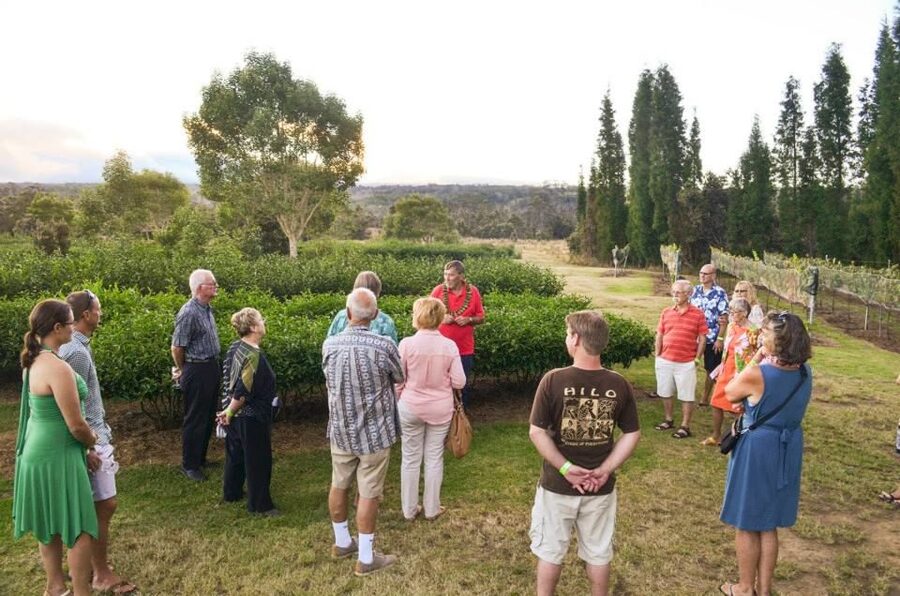
The coffee part starts in the right place: not a gift shop, not a tasting room, but a working Kona coffee farm. Bay View Farm is a 24-acre operation on the slopes of Mauna Loa, above Kealakekua Bay. That matters because you’re not just hearing coffee facts, you’re seeing the plant in its real setting—coffee trees, the way the farm is laid out, and the stages of production that all happen on-site.
You’ll learn the steps and processes involved in turning those beans into Kona coffee. Then you get a sampling of 100% Kona coffee at a scenic overlook, with views over Kealakekua Bay and a monument to Captain Cook. The tour also points out the geographic oddity tied to that story: it sits on the only sliver of British land in the United States. It’s the kind of detail you usually don’t pick up on your own, and it makes the view more than just pretty.
A practical note: the coffee farm time can be a standout even if you’re not a hardcore coffee person. You’ll leave with a clearer mental picture of why Kona coffee has its reputation and what it takes to grow it.
South Kona & Ka’u Views Through the Bus Windows
After the farm, the drive turns into a moving panorama. This route runs through the South Kona and Ka’u Districts, with views that shift between stark lava flows and Hawaiian dry forest. The tour vehicle uses huge picture windows, so you can watch the terrain change without constantly climbing in and out.
This section is also where you get a quick taste of local sweet bread culture. There’s a brief stop at Punalu’u Bake Shop, described as the southernmost bakery in America and known for time-honored Hawaiian sweetbreads since 1991. Even if you only grab something small, it’s a useful break from long driving legs—and it keeps the day from feeling like one lecture after another.
One thing to consider: because this is a scenic-drive phase, the tour is less about stretching your legs and more about soaking in the geography. If you’re hoping to stop every ten minutes for photos, this might feel more structured than free-form.
Punalu’u Black Sand Beach: Lunch, Sea Turtles, and Coconut Shade
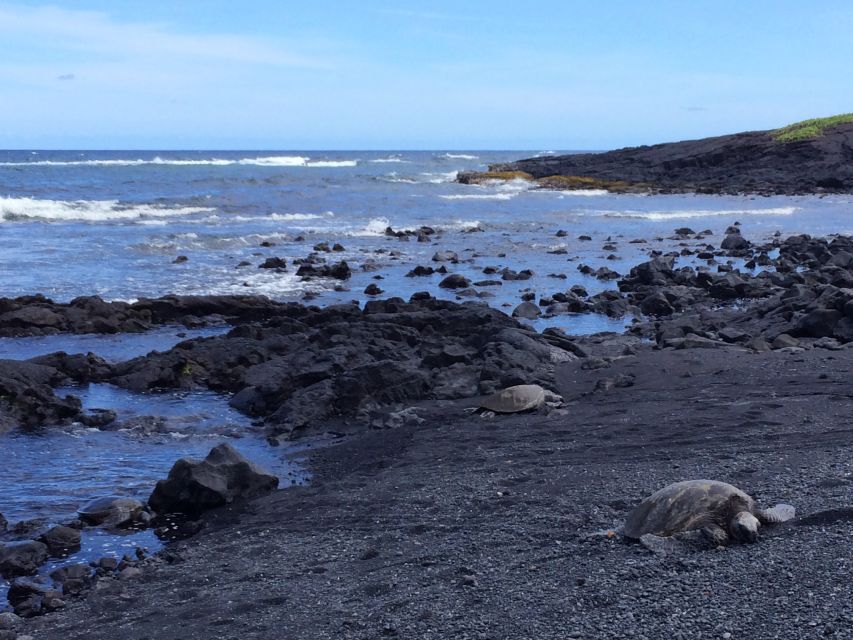
Punalu’u Black Sand Beach is where the day gets gentler. The beach is lined with swaying coconut palm trees, and the sand is dark in that unmistakable Big Island way. This is also a wildlife moment: you can look for honu (green Hawaiian sea turtles) feeding just offshore or resting on the sand.
Then comes the lunch. You’ll have a picnic-style lunch here if weather permits, which is important because black sand beach weather can be moody. The value of a beach lunch on this tour is that it actually breaks up the day—volcano mornings tend to be informational, and beach time gives you space to just watch the coastline and take photos without rushing.
What I’d advise: bring the kind of beach gear that lets you stay comfortable for a while. Closed-toe shoes are required for the tour, so you’re already set for walking on sand and paths. If the beach is windy, you’ll also feel how quickly conditions change in coastal Hawaii.



Hawaii Volcanoes National Park: The Core Kīlauea Stops
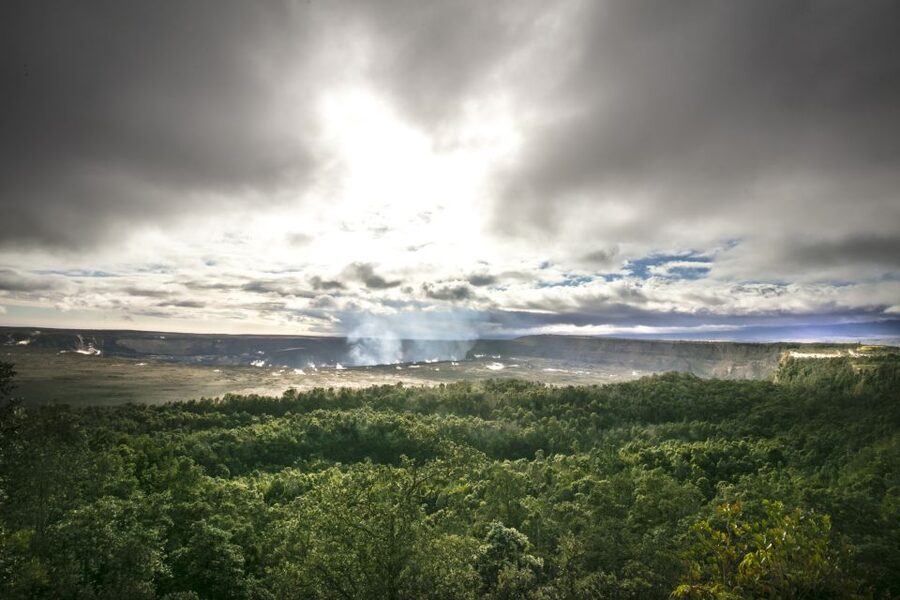
Once you reach the park, the focus shifts from scenery to scale and process—what volcanoes do over time, and what the landscape looks like when the earth is doing its thing.
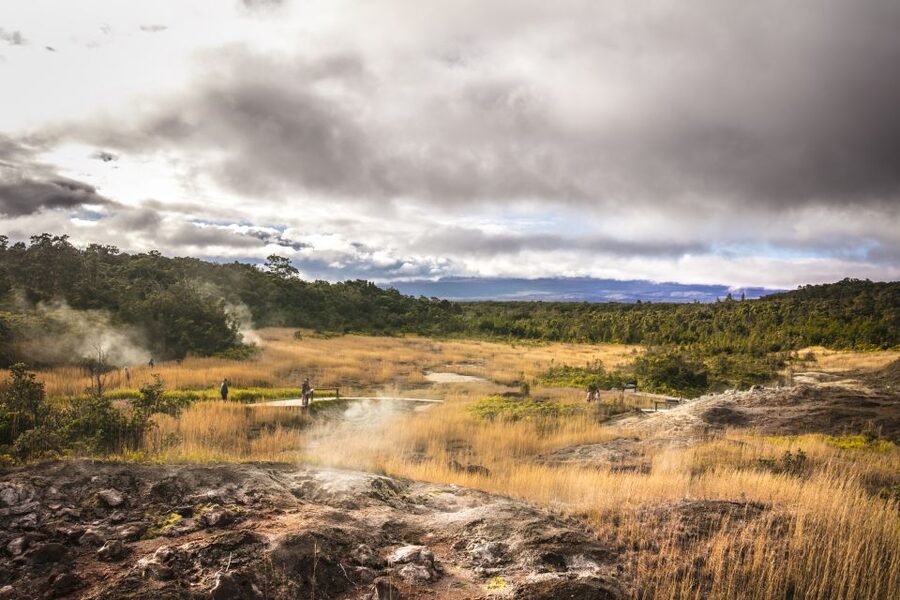
You’ll visit the Kīlauea Visitor’s Center, the Volcano Art Center, and the Sulphur Banks. The visitor center is helpful because it gives context before you start moving around. The Volcano Art Center adds a different lens: you get a sense of how people translate what they see and feel into art, not just facts.
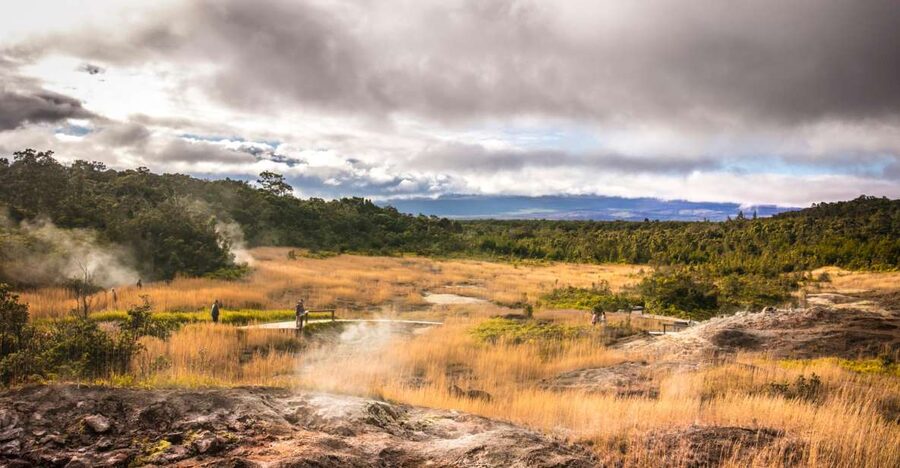
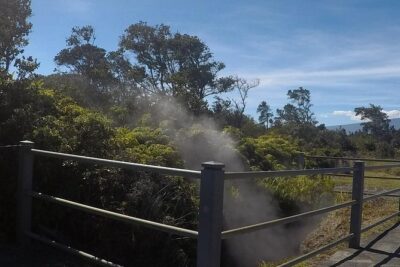
The Sulphur Banks are the moment where you feel the presence of the volcano more directly. Even without technical explanations, the area’s atmosphere and activity are a clear reminder that this isn’t a museum diorama—it’s a living volcanic environment.
From here, you’ll move into hike-and-walk territory, so you’ll want to pace yourself early. A long day at a park like this rewards steady energy more than sprinting for the next viewpoint.
Keanakako’i Crater and Mauna Ulu: Walks With Visible History
This part of the tour is where Hawaii Volcanoes National Park stops being pretty and starts getting real.
You’ll hike out to Keanakako’i Crater and step over sinkholes and cracks in the roads left behind by the historic 2018 eruption. That detail matters. It turns the landscape into evidence. You’re not just looking at volcanic terrain; you’re seeing how the ground can shift, fracture, and settle after an event—then how people route paths and visitors through it.
Next is Mauna Ulu, one of the most culturally important locations in the park. The practical takeaway for you is that this is not just a viewpoint stop. It’s a place where meaning and geography intersect, so treat it with the right tone—watch your footing, keep your voice down, and give the space the respect it deserves.
You’ll also make a break at Volcano House, a historic spot that has welcomed guests such as Mark Twain and Jack London to Kilauea since 1864. Having that break inside the park area is a smart design feature of the day. It gives your legs a reset and keeps the afternoon from turning into pure endurance.
Guide Power: When Patience, Poles, and Jackets Change Everything
The quality of a volcano tour often comes down to one thing: the guide’s ability to manage people in changing weather and uneven terrain.
On this tour, guides like Erik and Scott have been highlighted for being patient and for answering questions clearly. That sounds small, but it’s huge when you’re at a place where everyone wants to know what they’re seeing—lava fields, steam, terrain changes, and why certain areas look the way they do.
You should also plan for real park weather. Some parts can be cold and windy, and you may get help from the guide in the form of warm rain jackets and other gear. There’s also mention of hiking support like poles, which is a big comfort upgrade if you’re walking on uneven ground. If you’re the type who gets cold easily, this is the sort of tour where those extras can make the difference between enjoying the day and counting minutes.
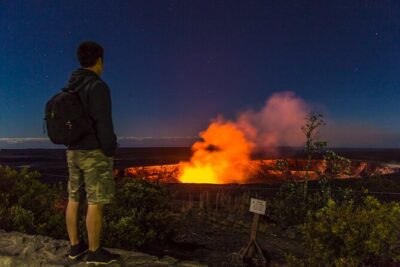
One more perk that can happen on the volcano side: some departures may include a chance to see late-day glow from lava activity when conditions line up. You’re not guaranteed nighttime views in advance, but it’s a reminder that the guide is paying attention to timing and what the environment is doing.
Price and Value: Why $249 Can Make Sense Here
At $249 per person for a 12-hour day, you’re paying for two things: transportation + a guided, entrance-inclusive park day.
The tour includes hotel pickup and drop-off, lunch, and entrance fees. That’s the real math. If you tried to piece this together solo—coffee farm visits, park admission, and a full-day driving plan—you’d spend time coordinating and money on separate logistics. Here, the structure is doing the heavy lifting.
The other value element is the small group size. With a maximum of 12 participants, you’re more likely to get hands-on help with pacing and gear needs, and you’re less likely to get treated like a line item.
Could it still feel pricey if you’re someone who plans DIY and hates guided time? Sure. But if you want a smooth day that links Kona coffee and Hawaii Volcanoes National Park without you doing the planning math, the pricing is fairly aligned with what you actually get.
What to Bring, What to Skip, and Who Should Pass
The tour is straightforward on what you should wear:
- Closed-toe shoes are required.
- Open-toed shoes are not allowed.
Beyond that, I’d plan for weather swings. Volcano areas can be chilly and damp, and coastal stops can be windy. Bring layers, and assume you’ll get wet at some point or at least feel damp air.
Not suitable for:
- People with respiratory issues
- People with back problems
That’s worth taking seriously. Even if the tour includes breaks and provided support like poles, you’re still dealing with walking/hiking and uneven surfaces around the park. If you’re unsure, this is one of those times where it’s better to ask yourself honestly what your body can handle.
Who This Tour Is Best For
This tour is a great fit if:
- You’re visiting the Big Island for the first time and want one day that covers Kona coffee country and Hawaii Volcanoes National Park
- You like guided context that helps you understand what you’re seeing
- You want a smaller group experience rather than a cattle-call bus day
- You appreciate cultural stops as much as scenic ones, especially Mauna Ulu and Volcano House
It may be less ideal if:
- You need lots of downtime between stops
- You prefer ultra-flexible, self-driven travel with no set schedule
- You can’t do the walking involved around craters and eruption-affected terrain
Should You Book This Kona Coffee and Volcano Tour?
If you want a single day that gives you Kona coffee education, Punalu’u black sand beach time, and real Kīlauea-area park highlights without spending your vacation on logistics, I think this tour is a smart pick. The best reason to book is the combination of stops plus the human factor: a guide who stays patient, keeps the pace workable, and brings the right gear when weather turns.
If you’re sensitive to walking on uneven ground or have respiratory or back limitations, skip it and look for a more gentle option. But for most visitors, this is the kind of day that leaves you with a stronger sense of the Big Island than a few random photo stops ever will.
FAQ
How long is the Kona: Hawaii Volcanoes National Park Tour?
The tour runs for 12 hours.
How big is the group?
It’s a small group limited to 12 participants.
Where does pickup happen?
Pickup is included from your accommodation at Pleasant Holidays or the Courtyard by Marriott King Kamehameha’s Kona Beach Hotel.
Is lunch included?
Yes. Lunch is included, with a picnic-style lunch at Punalu’u Black Sand Beach if weather permits.
What entrance fees are covered?
Entrance fees are included in the tour price.
What should I wear or bring?
Bring closed-toe shoes. Open-toed shoes are not allowed.
Is the tour offered in English?
Yes, the live tour guide is English-speaking.
Is the tour suitable for people with respiratory or back problems?
It’s not suitable for people with respiratory issues or people with back problems.
What is the booking and cancellation flexibility?
You can cancel up to 24 hours in advance for a full refund, and you can reserve now and pay later.
More Tours in Kailua Kona
- From Hawaii: Historical Dinner Cruise Tour to Kealakekua Bay
★ 4.8 · 198 reviews - Kona: Manta Ray Snorkel Tour, Guaranteed or Come Again Free
★ 4.6 · 78 reviews - Kona: Captain Cook Snorkel Tour
★ 4.7 · 35 reviews - Kailua Kona: Dolphin, Sea Cave and Captain Cook Snorkel Tour
★ 4.5 · 14 reviews - Kona Hi, Sunset Manta Ray Tour 10 passengers maximum
★ 5.0 · 14 reviews - Big Island: Manta Ray Snorkel Boat Tour
★ 4.4 · 12 reviews
More Tour Reviews in Kailua Kona
- Kailua-Kona: Voyagers of the Pacific Luau with Buffet Dinner
★ 4.4 · 564 reviews - Kailua-Kona: Manta Ray Watching Nighttime Boat Trip
★ 4.8 · 488 reviews - From Hawaii: Historical Dinner Cruise Tour to Kealakekua Bay
★ 4.8 · 198 reviews - Kailua-Kona: Captain Cook Reef Catamaran Day Trip with Lunch
★ 4.8 · 189 reviews - Kona: Manta Ray Snorkel Tour, Guaranteed or Come Again Free
★ 4.6 · 78 reviews - Kona: Captain Cook Snorkel Tour
★ 4.7 · 35 reviews
Deeper Into Volcanoes National Park
- Kailua-Kona: Hualalai Volcano Doors On/Off Helicopter Tour
★ 4.7 · 12 reviews - Kailua-Kona: Kohala, Volcanoes and Waterfall Helicopter Tour
★ 3.8 · 8 reviews - From Kona: Volcano & Waterfall Tour, Small Group
★ 4.5 · 8 reviews - Kona: Big Island Big Volcano Adventure
★ 5.0 · 3 reviews - From Kailua-Kona: All-Inclusive Volcanoes National Park Tour
★ 4.7 · 3 reviews
Just Added: The Newest Big Island Reviews


Hawaii Volcanoes National Park Tours, compared.
 ★ 5.0Big Island in a Day: Volcanoes Waterfalls Sightseeing and HistoryFrom $2646,569 reviews
 ★ 4.5Hilo Shore Excursion: Volcanoes National Park & Black Sand BeachFrom $1592,338 reviews
 ★ 5.0Small Group Big Island Twilight Volcano and Stargazing TourFrom $2971,619 reviews
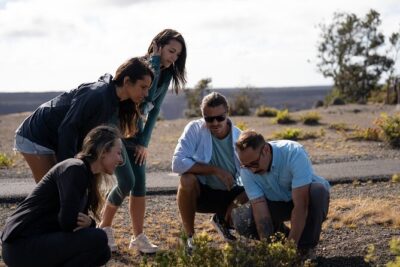 ★ 5.0Big Island Highlights: Coffee, Volcano, Black Sands & WaterfallFrom $2991,054 reviews
 ★ 5.0Deluxe Volcano Experience with Restaurant DinnerFrom $341620 reviews
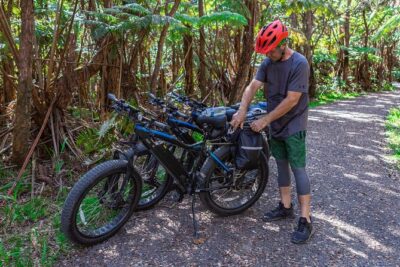 ★ 5.0Fat Tire E-Bike Tour through Volcanoes National ParkFrom $199546 reviews
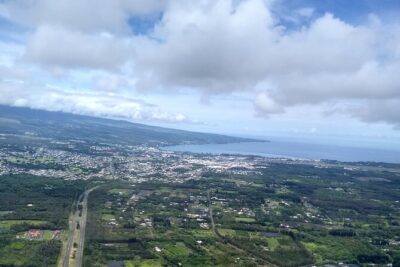 ★ 4.5Big Island, Hawaii: Volcanoes National Park SafariFrom $379545 reviews
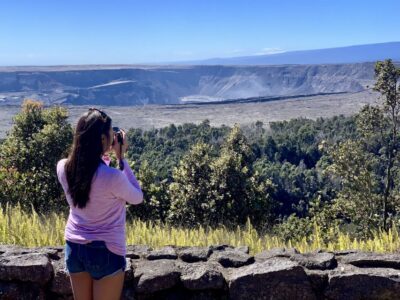 ★ 4.9Volcanoes, Waterfalls, & Coffee Farm Day-TripFrom $264414 reviews
Browse the lists this tour appears in