
Reviewed · HAWAII VOLCANOES NATIONAL PARK TOURS
Kailua-Kona: Kohala, Volcanoes and Waterfall Helicopter Tour
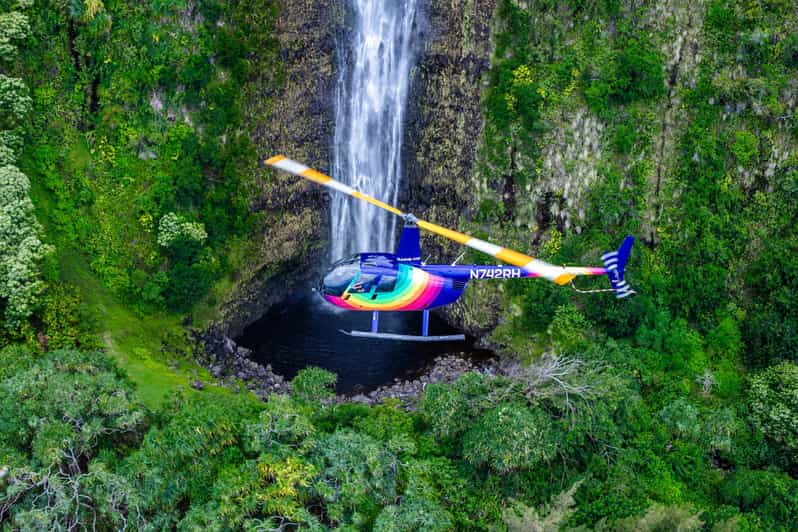
Big Island from the sky hits different.
I’m a big fan of how this Kailua-Kona helicopter tour turns huge distances into one smooth hour-and-a-half of clear views. Two things I especially like: you get a front-row feel for the raw power of Mauna Loa (the world’s largest active volcano), and you also fly over Kailua Bay’s crystal-clear water and reefs. It’s also the kind of trip where live narration matters, because a calm, well-informed guide (I’ve seen one named Jeff praised for being both knowledgeable and easy to talk to) helps you connect what you’re seeing to what it means.
One thing to think about before you book: at $895 per person, it’s a splurge, and the door-off experience comes with rules (including weight limits) and a small catch—your seat may or may not sit right next to an open door.
In This Review
- Key things you’ll remember from the flight
- What You’re Really Seeing in 90 Minutes
- Where the Day Starts: Rainbow Helicopters and the Big Island Jet Center
- Kailua Bay Lift-Off: Clear Water and Reefs Fast
- Mauna Loa: Watching the Long Mountain From the Sky
- Ka‘ūpūlehu Crater and Hualālai: Volcano Variety in One Breath
- Mauna Kea and Kohala: The White Mountain Meets Older Brother
- Kamehameha Country and the Kohala Coast Views You Can’t Recreate at Ground Level
- Waterfalls: Pololū, Waimanu, Laupāhoehoe Nui, Honopue, and Wai‘ilikahi
- Waipio Valley’s Black Sand Beach: Stark Contrast From Above
- The Return Along the Coast: Anaehoomalu, Kiholo Bay, and Makalawena Beach
- Doors On or Doors Off: Getting Your Money’s Worth With the Right Setup
- Price and Value: Is $895 for 90 Minutes Fair?
- Who This Tour Suits Best (And Who Should Skip It)
- Should You Book the Kailua-Kona Helicopter Tour?
- FAQ
- How long is the helicopter tour?
- Where do I meet the tour operator?
- Do they pick you up from your hotel?
- What’s included in the price?
- Can I choose doors on or doors off?
- Are there weight limits for door-off flights?
- Is there free cancellation?
Key things you’ll remember from the flight
- Mauna Loa, the Long Mountain: the world’s largest active volcano in full scale from above
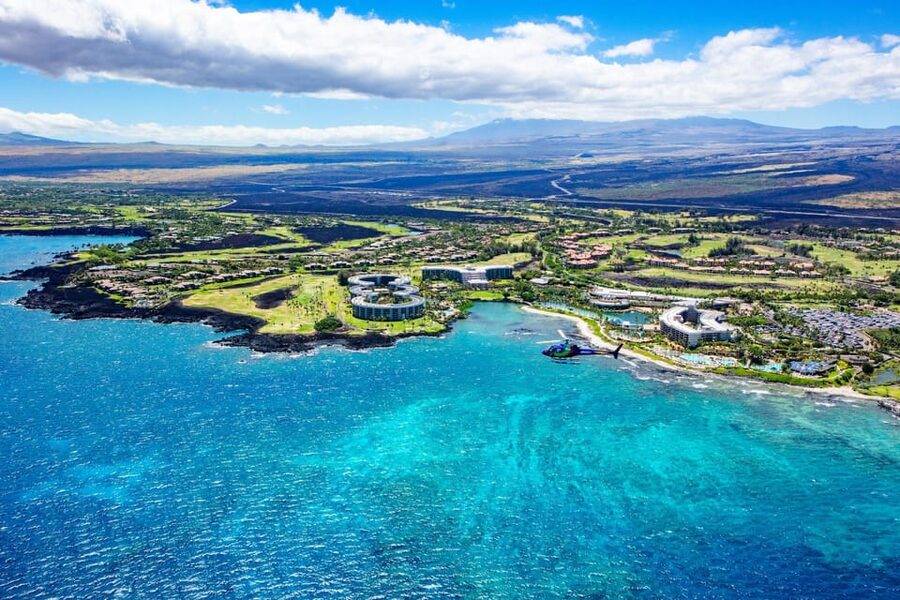
- Kailua Bay reefs: bright water and coral patterns as you lift off
- Kaupulehu Crater and Hualālai: a quick hit of multiple volcanic features in one loop
- Pu‘u Wa‘awa‘a Forest Reserve: a view over native plants and animals with rare local range
- Big Island waterfalls: Pololū, Waimanu, Laupāhoehoe Nui, and Wai‘ilikahi from the air
- Waipio Valley and the black sand coast: stark contrast you can spot fast from the sky
More ways into Hawaii Volcanoes National Park
- Kailua-Kona: Hualalai Volcano Doors On/Off Helicopter Tour★ 4.7 · 12 reviews
- Kona: Hawaii Volcanoes National Park Tour★ 5.0 · 9 reviews
- Kailua-Kona: Kohala, Volcanoes and Waterfall Helicopter Tour★ 3.8 · 8 reviews
- From Kona: Volcano & Waterfall Tour, Small Group★ 4.5 · 8 reviews
What You’re Really Seeing in 90 Minutes
This isn’t a stop-and-stroll day. It’s a tight aerial loop where the main event is what you can see from the helicopter: volcanic shapes, coastline patterns, and waterfall lines in valleys. In a single flight, you’ll get the Big Island’s three big “themes”—volcanoes, forested slopes, and dramatic water cutting through the land.
That time focus is the value. At 90 minutes, you’re not waiting on buses or ticking off one view per hour. You’re getting a lot of different scenery, strung together like chapters. It also means you’ll want to be ready physically and mentally: warm layers, sunglasses, and a closed-toe shoe plan, because you may feel cooler up there than you expect.
The narration is part of the deal too. A live English guide helps make sense of what’s otherwise just shapes and colors from a seat belt harness. When the guide’s tone is steady and clear (again, I’ve seen Jeff described that way), it turns the noise and motion into information you can actually use.
Where the Day Starts: Rainbow Helicopters and the Big Island Jet Center
Your meeting point is the Big Island Jet Center building, and you’ll park in the large lot south of the brown building. Go inside the front doors of that brown building.
Plan to arrive 1 hour before your scheduled tour. That early arrival isn’t just “nice to have.” There’s a mandatory safety briefing, and you’ll also need time to check in and get fitted with the gear—like straps and cases for cell phones (included). If you’re thinking of using your phone for photos or video, this matters more than you’d think; those cases can help you keep it secure during the bumps.
No hotel pickup is part of the standard setup. So if you’re staying in Kailua-Kona, you’ll be driving yourself or arranging your own transport to the jet center. That’s normal for helicopter tours, but it’s still one of the biggest planning points.
Kailua Bay Lift-Off: Clear Water and Reefs Fast
Kailua Bay is where the flight starts, and it’s a smart opener. From above, you see the water’s clarity and how the coral reef area breaks the surface. Even if you’ve seen snorkeling photos before, the aerial view gives you context for where the water is shallow enough for reefs to show through.
This segment also helps you settle in. Helicopters change your body’s rhythm quickly—sound, wind, vibration. Getting a bright, easy-to-read visual (water vs. shore vs. reef) while you’re still adjusting makes the rest of the tour feel smoother.
One practical tip: bring sunglasses and expect glare. In open water areas, the sun can reflect hard, and looking through windshield-style reflections won’t do you any favors.
Mauna Loa: Watching the Long Mountain From the Sky
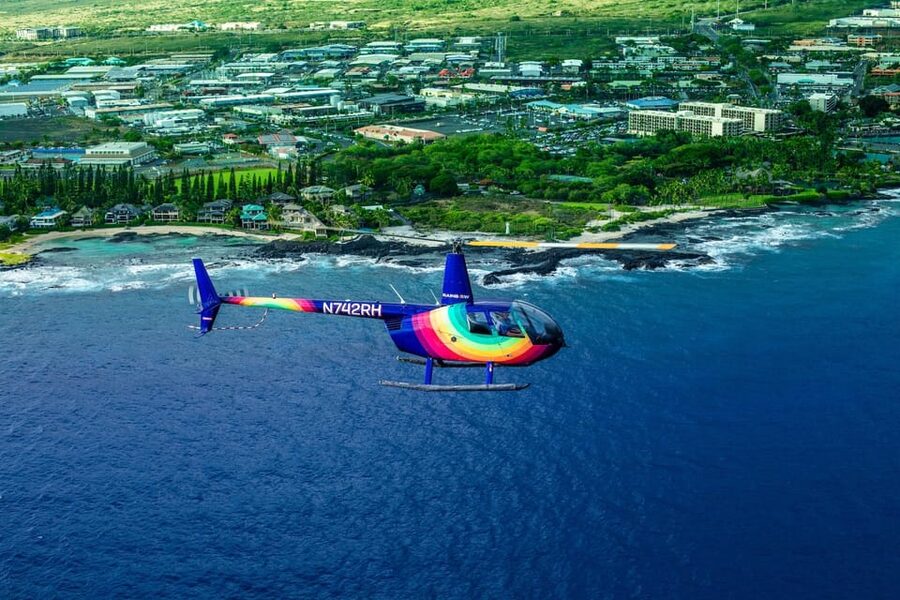
Then comes the main heavyweight: Mauna Loa, known as the “Long Mountain,” and recognized as the world’s largest active volcano. From the air, it doesn’t read like a single peak. It reads like a whole system—broad slopes, volcanic texture, and scale that’s hard to grasp from ground level.
The best thing about seeing Mauna Loa by helicopter isn’t just drama. It’s geometry. You can understand why this volcano affects weather patterns, why landforms stretch the way they do, and how neighboring volcanic systems relate to each other.
Also, this is one of the moments when narration earns its place. If your guide explains what you’re seeing in plain terms—like where the volcanic mass sits relative to the coast—you’ll leave with more than a memory card.





Ka‘ūpūlehu Crater and Hualālai: Volcano Variety in One Breath
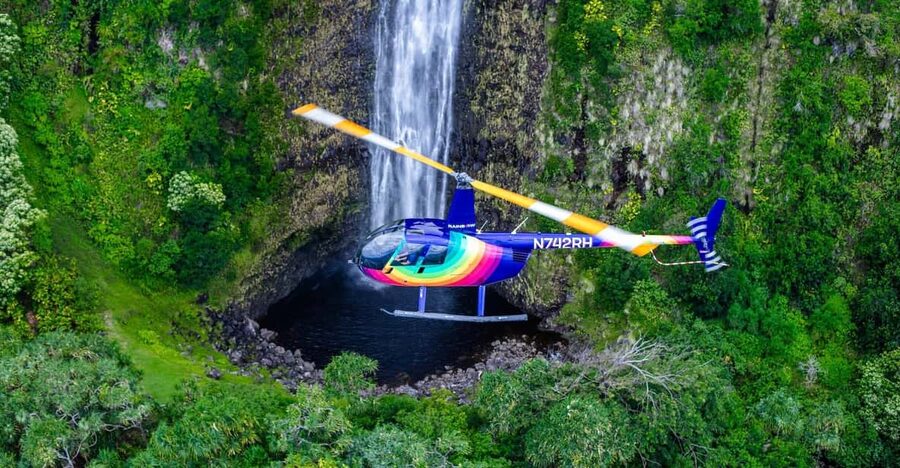
After Mauna Loa, the tour tracks to Ka‘ūpūlehu Crater and then Hualālai. This part works because it shows volcanoes as more than “one big cone.” Craters and separate volcano shapes create a patchwork of older and newer landforms, and the aerial view makes that layering clearer.
Hualālai is especially interesting to spot once you know what to look for: volcanic ridges and the way the land transitions toward lower coastal areas. From up high, you’ll often notice changes in texture—fields of rougher terrain vs. smoother slopes.
A small drawback to keep in mind: because this is an aerial pass, you’re not spending long at any one feature. If you want time for detailed spotting, you’ll need to be ready to scan, look quickly, and take photos fast as the pilot lines you up.
Mauna Kea and Kohala: The White Mountain Meets Older Brother
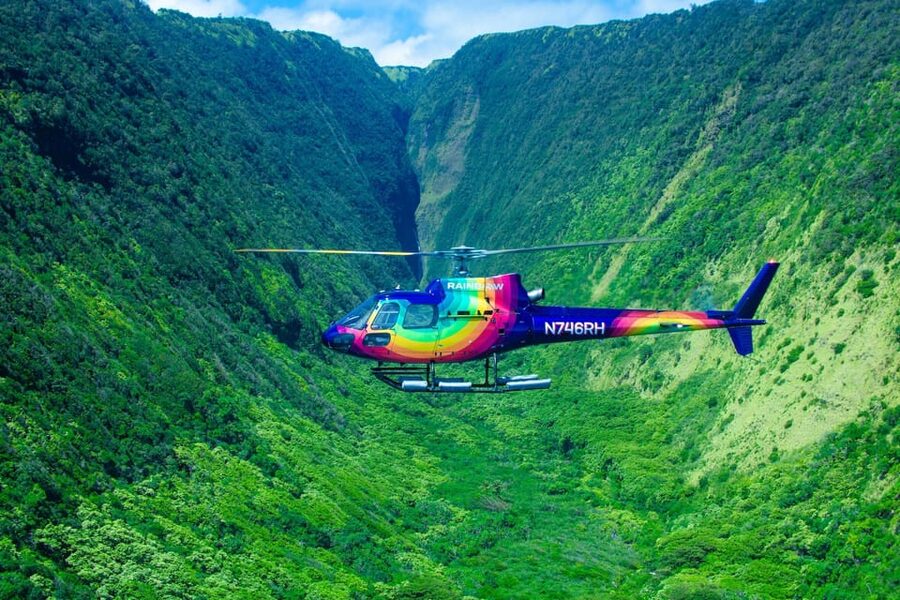
A standout contrast comes when the flight turns toward Mauna Kea, often called the “White Mountain.” You’ll see it towering above the island, and the height is part of what makes the view feel so different. Even though you’re not going to the summit, the aerial angle gives you a sense of separation—how much higher the upper slopes sit compared to the rest of the island.
Then you’ll also catch Kohala, described as Mauna Kea’s older brother, rising with a stark, rugged look. Seeing them together is valuable because it helps you understand how these volcanic giants are linked, but also how different their ages and textures can appear from above.
There’s also a nature layer here: gliding over the Pu‘u Wa‘awa‘a Forest Reserve. The guide may point out that this reserve is tied to native plants and animals found nowhere else. From a helicopter, you won’t be doing birdwatching, but you will see how dense the forested areas look compared to drier slopes. That contrast is the whole point.
Kamehameha Country and the Kohala Coast Views You Can’t Recreate at Ground Level
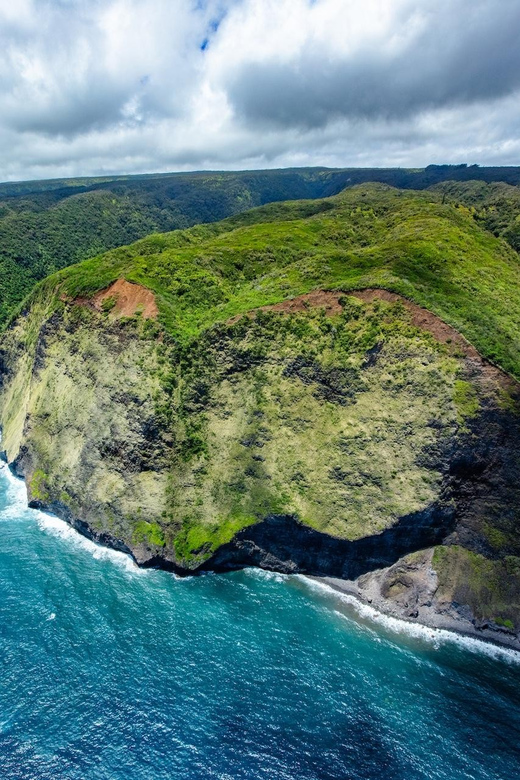
The tour includes passes over Kawaihae and the Kohala Coast, tied to the childhood home of King Kamehameha. Even though the storytelling is historical, your real experience is visual. From the air, the shoreline shape, valleys, and how the land breaks into coastal sections are clearer than from a road pull-off.
This is also where the “valley and water” theme ramps up.
When you’re flying along the Kohala Coast, you’re in a position most visitors don’t get: you can see multiple valleys and water paths in a single sweep. That’s how waterfall viewing becomes more than a photo request.
Waterfalls: Pololū, Waimanu, Laupāhoehoe Nui, Honopue, and Wai‘ilikahi
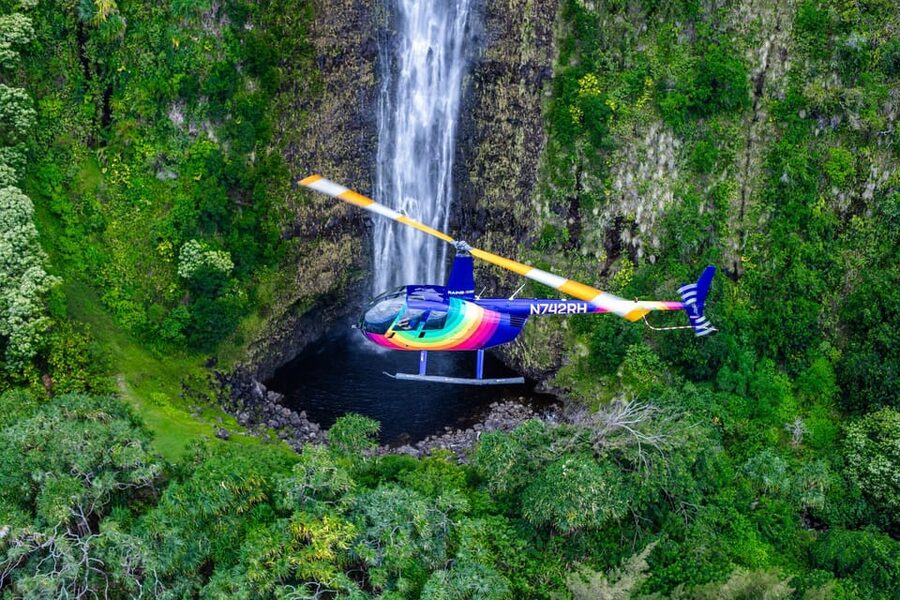
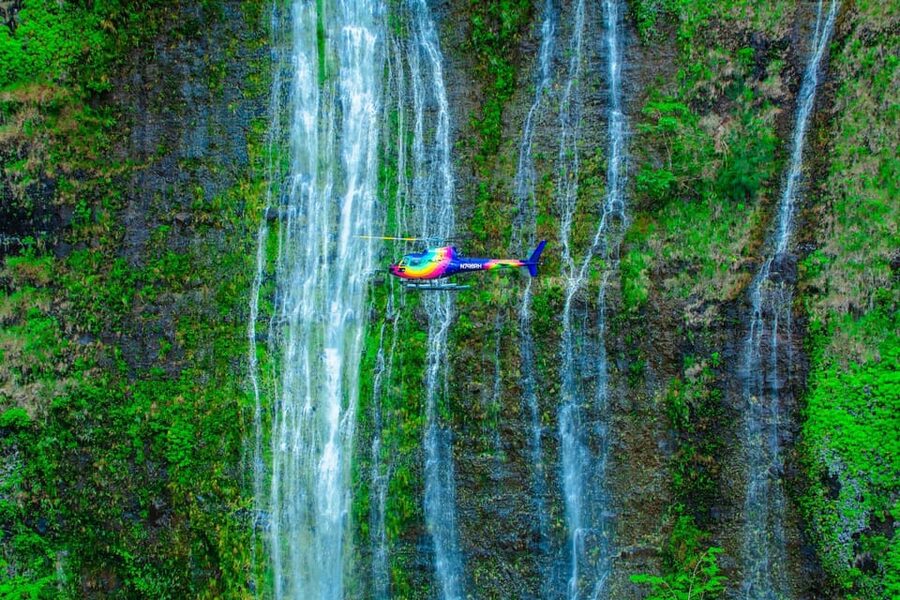
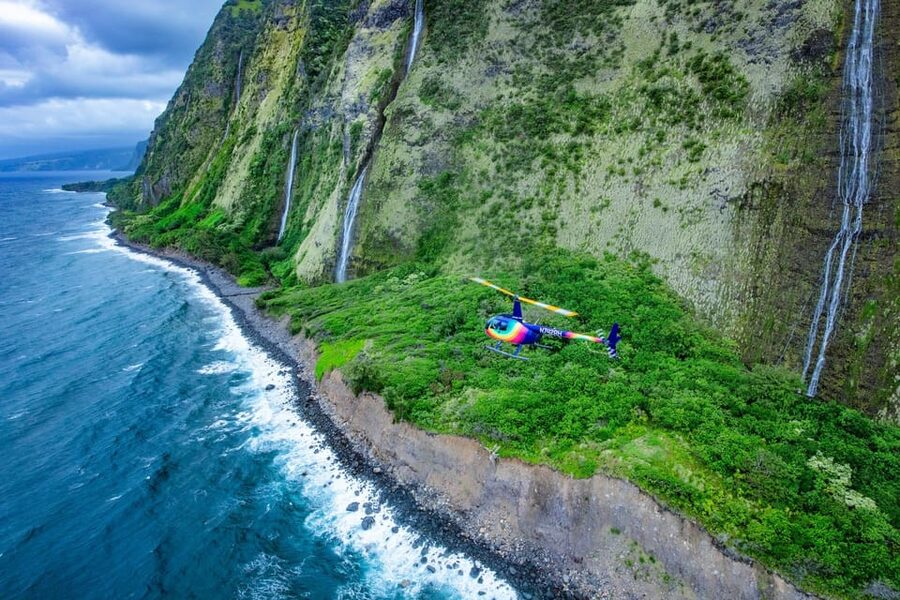
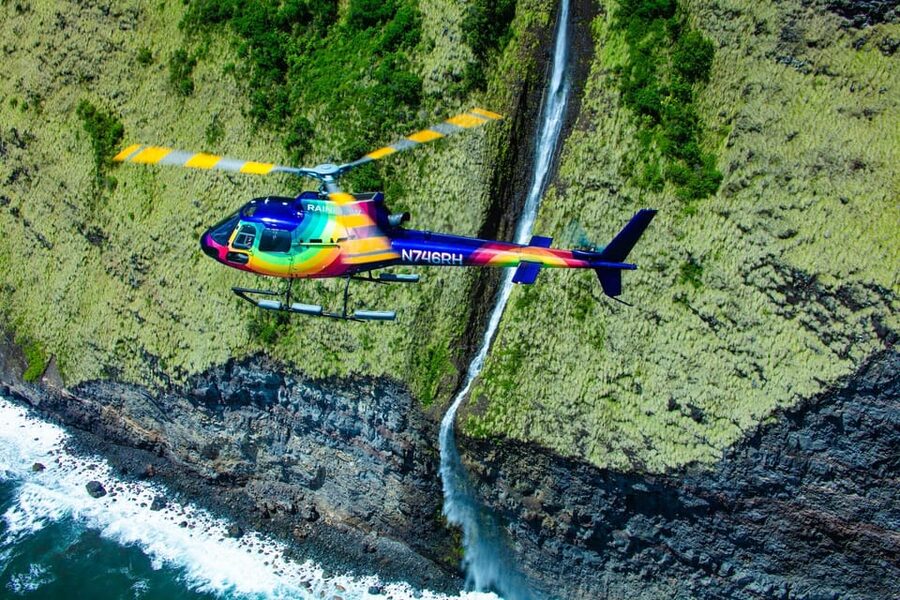
This portion is one of the most memorable: you’ll see waterfalls including Wai‘ilikahi Falls, Laupāhoehoe Nui, and passes through Waimanu, Honopue, and Pololū valleys. From above, waterfalls read like thin, bright lines where gravity forces water through steep cuts in the terrain.
What I like about aerial waterfall viewing is that you see the “plumbing” of the island. A road stop only shows you the drop. The helicopter view helps you understand where water collects, how it funnels, and what the surrounding valley walls look like.
The tradeoff is time-on-target. Since the helicopter is moving, you’ll get a limited window to frame a shot or watch the water’s path. Your best approach is to keep your camera ready but not frantic—focus on catching the flow line, not chasing a perfect angle.
Waipio Valley’s Black Sand Beach: Stark Contrast From Above
Then you’ll circle Waipio Valley and its black sand beach. This is one of those places where the aerial view instantly clicks: the dark sand stands out against surrounding tones, and the valley shape looks dramatic from above.
Even if you’ve seen Waipio photos before, this version feels different because you see the valley’s edges and how it sits in the broader terrain. It’s easier to grasp why the valley has that enclosed, intense look.
If you’re the type who likes to connect geography to culture, this is also a good moment to ask your guide to tie the landforms to settlement and travel patterns. With live narration, you can turn a pretty sight into real understanding quickly.
The Return Along the Coast: Anaehoomalu, Kiholo Bay, and Makalawena Beach
The last leg stretches along the coast, including Anaehoomalu Bay, Kiholo Bay, and Makalawena Beach, before returning toward Kailua-Kona. This part is less about geology and more about coastal character—what the water looks like in different bays and how beaches sit against cliffs or open ocean.
Here’s what you should look for:
- Color and clarity shifts from bay to bay
- Reef patterns show up as changes on the water surface
- The coastline’s shape helps you understand where waves break harder or calmer
Makalawena Beach, in particular, is a classic sight from the air because the coastline curves and the beach area reads clearly in the shoreline outline. Even without getting out and walking, you’ll likely feel like you’ve mapped a chunk of the Big Island in your head.
Doors On or Doors Off: Getting Your Money’s Worth With the Right Setup
This is where you choose your experience level.
You can do a helicopter flight doors off or on, depending on your option. If you go doors off, there’s a practical limitation: your seat may or may not be directly adjacent to an open door. So if you’re hoping for the most direct “camera-out-the-door” view, manage expectations and be ready to adjust your photo angles.
There are also strict weight rules for door-off flights, based on the helicopter model:
- For a Robinson R44, only passengers 80 lbs or more may fly door off
- For an Airbus Astar, only passengers 100 lbs or more may fly door off
- If you weigh 250 lbs or more, there’s a weight and balance fee; and for 250–275 lbs, that fee can be 50% of the seat price, while 275 lbs or higher requires an additional seat purchase after booking
So yes, door-off can be the coolest version, but it’s not a casual add-on if you’re trying to hit the maximum thrill level.
Regardless of doors, dress for wind and temperature swings. Bring warm clothing, and don’t skip closed-toe shoes. Sunglasses help, and a hair tie can make the “helicopter helmet hair” problem less of a surprise.
One more note: intoxication isn’t allowed. The operator can refuse service to passengers who appear intoxicated, and that can mean you lose the full cost. It’s not the place for a pre-flight drink.
Price and Value: Is $895 for 90 Minutes Fair?
Let’s be honest. $895 per person is steep. But the value isn’t “time per dollar” like a museum ticket. It’s “rare access per dollar.” You’re paying for:
- A 90-minute Big Island aerial circuit
- Live English narration
- Door option flexibility (if your plan fits the rules)
- Included basics that make the experience easier, like phone straps/cases and parking
Compared with most on-the-ground activities, this tour compresses geography. You see Mauna Loa, Mauna Kea, Kohala, multiple valleys, and several coastline stops in one go. It’s hard to replicate that spread in a day without spending huge effort on driving, positioning, and weather windows.
The other value driver is the guide. Based on what you’re told to expect—live guided commentary—this isn’t just you staring out a window. When your guide is calm and informative (the Jeff example is a good signal), you walk away understanding what you saw, not just having photos.
My balancing thought: if you’re price-sensitive, you might feel this is a luxury. But if you really want the Big Island’s biggest features connected in one continuous view, it can feel like a good use of a splurge day.
Who This Tour Suits Best (And Who Should Skip It)
This fits best if you:
- Want the Big Island’s big-ticket natural features in one outing
- Like guided explanations, not just “look at the view”
- Are comfortable with a moving flight for the full 90 minutes
It might not be a match if:
- You need hotel pickup (there isn’t any)
- You want the doors off but fall outside the weight requirements
- You scuba dive within 24 hours of the flight time (you may not take part)
- You’re hoping to bring alcohol onboard (intoxication isn’t allowed)
It’s also suitable for wheelchair access, and there’s a private group available option if you want more control over your day. And everyone age 24 months and older needs a full-fare seat, so plan your family math early.
Should You Book the Kailua-Kona Helicopter Tour?
If your dream Big Island day includes Mauna Loa, the waterfall valleys of the Kohala Coast, and the dramatic black sand look at Waipio, this tour is one of the most efficient ways to stitch those parts together. For people who enjoy storytelling from the sky, the live English narration is a real part of the value, and the smooth, calm delivery you might get from guides like Jeff makes it easier to enjoy the flight instead of just surviving it.
I’d say book if you’re ready for a splurge and you can follow the door-off rules and basic safety expectations. I’d pause if the price feels hard to justify, or if you want a long, slow, on-foot experience instead of an aerial hit of many places at once.
FAQ
How long is the helicopter tour?
The tour is 90 minutes (listed as a 1.5-hour helicopter tour).
Where do I meet the tour operator?
You meet at the Big Island Jet Center building. Park in the large lot south of the brown building, then go inside the front doors of the brown building.
Do they pick you up from your hotel?
No. Hotel pickup or drop-off is not included.
What’s included in the price?
Included items are the 1.5-hour helicopter tour above the Big Island, a live guided tour with commentary in English, doors off or on depending on the option you select, straps/cases for cell phones, and parking.
Can I choose doors on or doors off?
Yes. The tour offers doors on or doors off depending on the option you choose.
Are there weight limits for door-off flights?
Yes. Door-off rules depend on helicopter type: only passengers weighing 80 lbs or more can fly door off on the Robinson R44, and only passengers weighing 100 lbs or more can fly door off on the Airbus Astar. If you weigh 250 lbs or more, a weight and balance fee is required, with additional rules for guests between 250–275 lbs and 275 lbs or higher.
Is there free cancellation?
Yes. Free cancellation is available up to 2 days in advance for a full refund.
Lava and Falls From the Air
- Kailua-Kona: Hualalai Volcano Doors On/Off Helicopter Tour
★ 4.7 · 12 reviews
Falls on the Wet Side
- From Kona: Volcano & Waterfall Tour, Small Group
★ 4.5 · 8 reviews
Deeper Into Volcanoes National Park
- Kailua-Kona: Hualalai Volcano Doors On/Off Helicopter Tour
★ 4.7 · 12 reviews - Kona: Hawaii Volcanoes National Park Tour
★ 5.0 · 9 reviews - From Kona: Volcano & Waterfall Tour, Small Group
★ 4.5 · 8 reviews - Kona: Big Island Big Volcano Adventure
★ 5.0 · 3 reviews - From Kailua-Kona: All-Inclusive Volcanoes National Park Tour
★ 4.7 · 3 reviews
Just Added: The Newest Big Island Reviews



Hawaii Volcanoes National Park Tours, compared.
 ★ 5.0Big Island in a Day: Volcanoes Waterfalls Sightseeing and HistoryFrom $2646,569 reviews
 ★ 4.5Hilo Shore Excursion: Volcanoes National Park & Black Sand BeachFrom $1592,338 reviews
 ★ 5.0Small Group Big Island Twilight Volcano and Stargazing TourFrom $2971,619 reviews
 ★ 5.0Big Island Highlights: Coffee, Volcano, Black Sands & WaterfallFrom $2991,054 reviews
 ★ 5.0Deluxe Volcano Experience with Restaurant DinnerFrom $341620 reviews
 ★ 5.0Fat Tire E-Bike Tour through Volcanoes National ParkFrom $199546 reviews
 ★ 4.5Big Island, Hawaii: Volcanoes National Park SafariFrom $379545 reviews
 ★ 4.9Volcanoes, Waterfalls, & Coffee Farm Day-TripFrom $264414 reviews
Browse the lists this tour appears in