
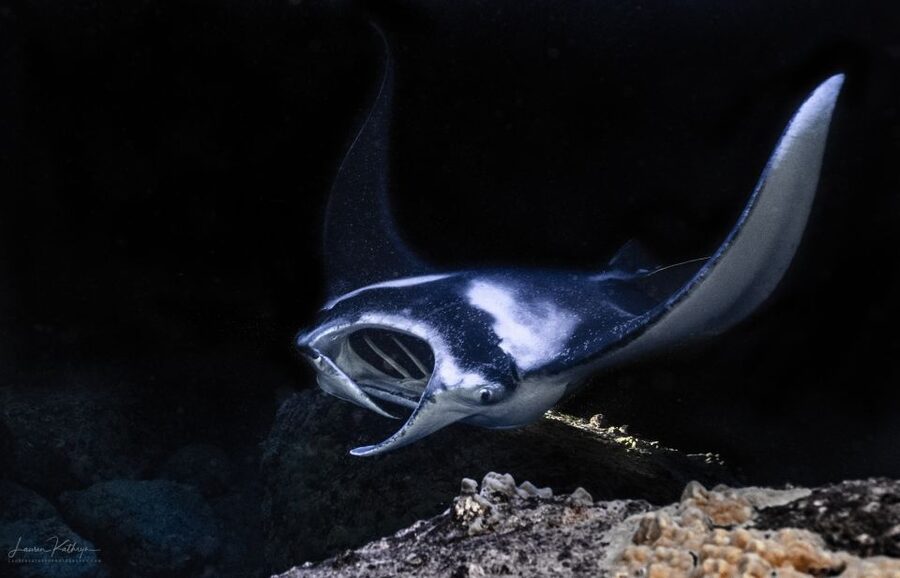
Reviewed · MANTA RAY NIGHT SNORKELS
Kailua Kona: Manta Ray Night Snorkel Tour with Guide
Manta rays at night feel unreal. This Kailua-Kona Manta Ray Night Snorkel puts you in the water when those gentle giants come close, guided and lit to make the show happen. I like that this is a family-owned operation that runs it like a craft, not a factory.
Two things I really value here: the crew’s focus on safety and calm, and the way they get you long enough in the water to actually see manta behavior, not just a quick pass. You’ll be in a smaller group, with guides who manage your pace and keep the experience smooth—so it feels special even if ocean night snorkeling is a little scary for you.
One drawback to consider: this isn’t for everyone. You need prior snorkeling experience, you must be able to climb up a side ladder to board, and it’s not recommended if you have recent surgery, mobility limits, back issues, or heart problems (and it’s not recommended for pregnant women).
In This Review
- Quick hits before you book
- Night snorkel magic in Kailua-Kona’s Honokohau area
- Price and value: what $137 buys you (and why it’s not just a ticket)
- Getting to the boat at 74 Kealakehe Pkwy (and not stressing it)
- The short ride out: why 15–25 minutes matters at night
- The snorkeling session: LED lights, plankton, and mantas above you
- In-water guidance and safety you can actually feel
- What you should bring (and what you’ll skip)
- Who this tour fits best (and who should look elsewhere)
- What the schedule feels like from start to finish
- The small-boat advantage: better attention, calmer water flow
- Expect the unexpected: how sightings can vary
- Should you book the Kailua-Kona manta ray night snorkel?
- FAQ
- How long is the manta ray night snorkel tour?
- How much time do I actually get in the water?
- What’s included in the price?
- Where do we meet, and how do we find it?
- Who can book, and who shouldn’t?
- What should I bring and what should I wear?
Quick hits before you book
- Family-run feel: small-boat energy, with a team that looks out for everyone’s comfort.
- Real snorkel time: you get at least 35 minutes in the water, led by a guide.
- LED lights do the work: the lighting pulls in plankton that brings manta rays in.
- 16-foot mantas close-up: these are big, graceful animals that often circle and feed near you.
- Safety first: CPR/lifeguard certified crew and an in-water guide helping you stay steady.
- Video and hot drinks add comfort: some groups get shared video afterward, plus hot chocolate on the boat.
Still deciding? Here is how this one stacks up against the Big Island tours people book most.
- Kailua Kona: Manta Ray Night Snorkel Tour with Guide★ 4.5 · 283 reviews
Night snorkel magic in Kailua-Kona’s Honokohau area
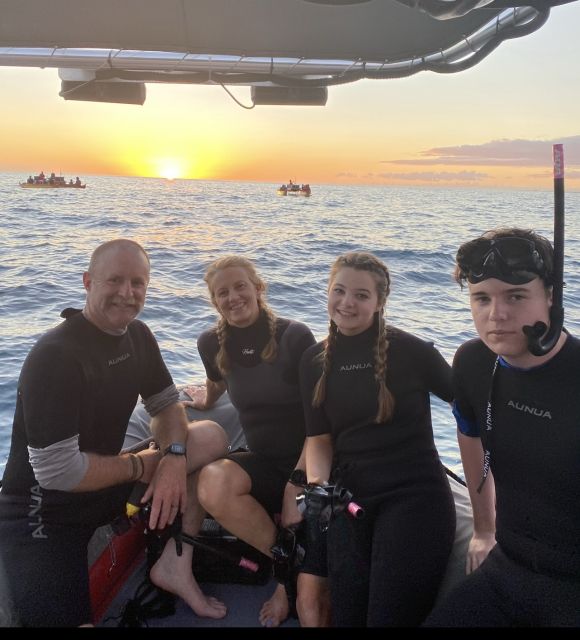
If you like animals, this is the Big Island activity that feels like nature turned the lights on for you. At night, manta rays are drawn to the feeding zone, and the whole setup is designed around one goal: get you close—without crowding or stressing the animals.
The vibe is also different from the bigger, busier style tours. The boat size and guide-to-person attention help you keep your head (and your breathing) when the ocean is dark and the water is busy with real marine life overhead.
You should still go in with your eyes open: night snorkeling has a mental component. Even with a guide system in place, you’ll be in open water at night, using a snorkel, and staying controlled so you can enjoy it.
Price and value: what $137 buys you (and why it’s not just a ticket)
At $137 per person for about 2 hours total, you’re paying for two things most people underestimate: time in the water and trained attention. Many tours end up feeling like transport plus a short experience. Here, the schedule is built around giving you a meaningful snorkeling window.
You also get equipment and thermal comfort support. Snorkel gear and shorty wetsuits are included, which helps you spend less mental energy on “will I be cold?” and more energy on “what are they doing right now?”
Is it expensive? Hawaii tours often are. But for a night manta encounter—where guide positioning, timing, and lighting matter—this price sits in the “make sense” category if you’re serious about seeing mantas up close rather than collecting a quick checkmark.
Getting to the boat at 74 Kealakehe Pkwy (and not stressing it)
You’ll start at 74-380 Kealakehe Pkwy in the Kailua-Kona area. The departure is on the north side of Honokohau small boat harbor, and the easiest way to locate the right side is to search for the operator name on Google Maps: Snorkel Big Island.
From the highway, you’ll turn toward the ocean on Kealakehe Pkwy by the Honokohau Marina and Small Boat Harbor sign. Then you’ll enter on the first right toward the north side of the harbor, follow the road around the bend, and park near Kona Sailing Club—don’t enter that club.
A real-world tip: the captain meets people by the Snorkel Big Island truck (a black Ram 2500). It may be sitting with a previous group too, so don’t overthink it—follow the operator’s on-site check-in cues and be on time. At night, 10 minutes of confusion can turn into 30 minutes of feeling rushed.
The short ride out: why 15–25 minutes matters at night
Before your snorkeling window, you’ll have a ride of about 15–25 minutes to the manta zone. That sounds short, and it is—but at night it’s also the difference between feeling relaxed and feeling like you’re already behind.
Some people mention the ride can feel rough going out, and that the out-and-back can be dark. That’s normal in open-ocean conditions, but it’s worth knowing if you get seasick. Bring that in mind, especially if you tend to feel off balance in choppy water.
When you return, you might get a quieter moment under the stars. Even if your focus is 100% on mantas, the return ride can help you decompress after the water time.
The snorkeling session: LED lights, plankton, and mantas above you
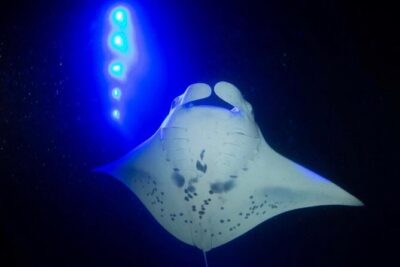
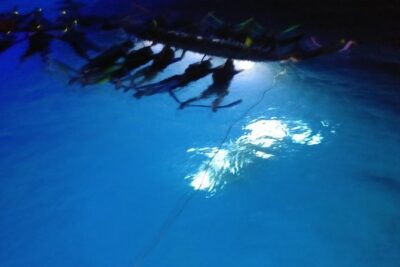
This is the main event: you’ll enter the water with an experienced water guide. The operation is designed around feeding behavior. The guides use lighting to attract plankton, which is what draws manta rays into the show zone.
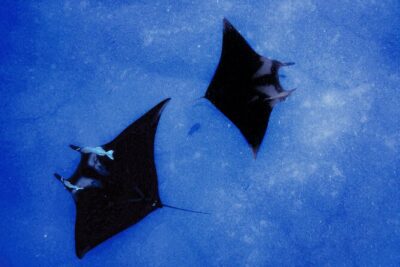
What you’re aiming for is closeness and sustained activity. The experience includes at least 35 minutes snorkeling time, and many people report mantas lingering and circling—sometimes with multiple rays visible at once. You might see anywhere from a few to several, depending on conditions and the feeding spot timing.
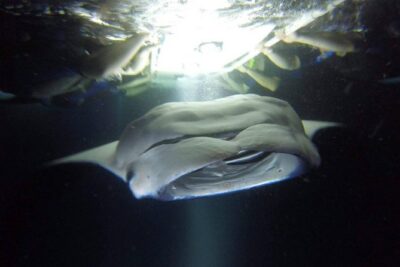
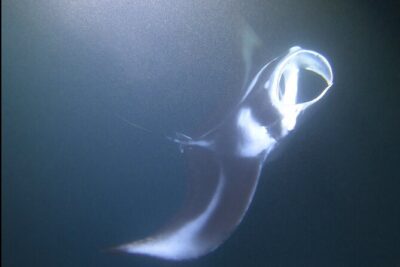
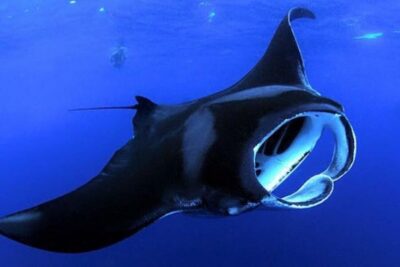
The manta rays themselves are often described as gentle giants, and the scale is hard to absorb until you’re looking up and realizing the wingspan can reach around 16 feet. They glide under the light, sometimes coming very close. The guides manage where you float and how you move so you don’t accidentally interfere with their flow.
And a key point: you shouldn’t try to touch them. These are wild animals, and the whole purpose is to observe without grabbing. You’ll get the best experience when you focus on staying calm, staying still, and letting the mantas do the work.
In-water guidance and safety you can actually feel
This tour is built around having the right people in the right places. The crew includes CPR/lifeguard certified staff, and there’s a guide in the water working with you directly.
In practice, that means you’re not left to guess what to do in the dark. The guides help you get your footing, adjust the flow of the group, and keep everyone from panicking. Multiple people specifically praise the crew’s calm, professionalism, and how safe the process feels once you’re out there.
You’ll also be required to meet basic competence criteria. This is not a first-timer-friendly “just hop in” situation. Prior snorkeling and the ability to climb a side boat ladder are part of booking—because those steps keep the experience safe.
One more small comfort detail: if you’re nervous, you’re not alone. Night water can be intimidating. The guides’ role is to keep it controlled so you can enjoy it instead of white-knuckling the moment.
What you should bring (and what you’ll skip)
What to bring is simple: swimwear. The snorkel gear and wetsuit are provided, so you don’t need to pack your own mask and fins.
If you have an underwater camera or GoPro, bring it. Several people say it’s worth it because the mantas can come so close that you’ll want something you can capture in low light. Just remember: focusing on the perfect shot is not worth losing control of your position in the water.
Also consider your mental comfort. Dark boat rides and open ocean at night can be a lot. If you’re anxious in the water, tell the crew—good guides adjust their coaching to match your needs.
Who this tour fits best (and who should look elsewhere)
This is a strong fit if you:
- Have prior snorkeling experience and feel comfortable in open water at night
- Can climb and board using a side ladder
- Want a high-probability nature encounter with trained instruction and equipment support
It’s not a fit if you have:
- Recent surgeries, or you’ve been told to avoid water activities
- Mobility or physical restrictions, including issues that affect climbing and stepping
- Back problems or heart problems
- Pregnancy (not recommended)
If you’re on the edge—like you’re not sure you’ll manage the ladder or you’re unsure about cold and stamina—be honest with yourself early. This tour expects you to handle the water independently, with a guide for safety and direction, not for basic physical support.
What the schedule feels like from start to finish
A typical arc looks like this: meet at the harbor area around 74-380 Kealakehe Pkwy, then take a short ride out (about 15 minutes, depending on the day and conditions). After that, you get your sustained snorkeling time with a guide in the water.
Then it’s back in time for the return transfer and getting you back to the starting area. Overall, you’ll be out for about 2 hours total, with the snorkel moment being the payoff rather than a quick stop.
Even without naming times precisely for every minute, the structure matters: enough time to get used to the dark water, enough time to see multiple passes and circling behavior, and enough buffer to get everyone back safely.
The small-boat advantage: better attention, calmer water flow
Many people highlight the small-group feel. Some mention group sizes around 10 to 20 total, which is a big deal at night. Less crowding means the guide can maintain spacing, and you can spend more time watching and less time threading between other people.
It also changes your comfort level. A smaller setup tends to make it easier to communicate and follow directions quickly—especially when visibility is limited and you’re moving with fins in open water.
One practical takeaway from the way this tour runs: you’ll enjoy it more if you keep your movements simple. Floating, breathing steadily, and staying with your guide’s positioning is the easiest way to get the mantas to come close without stress.
Expect the unexpected: how sightings can vary
Even with the lighting and timing, manta rays are wild animals. Your experience can range from just a few mantas to many rays swirling under the light.
Some people report multiple large mantas directly overhead for long stretches. Others describe a handful of rays with exciting closeness—often with mantas brushing close to bodies. That closeness is a big part of why people love this tour.
You should also know that other marine life can show up. Some people mention seeing sharks on the ocean floor, and a few mention dolphins on the outing. Those sightings aren’t guaranteed, but they do fit the general ecosystem vibe of the manta feeding zones.
Should you book the Kailua-Kona manta ray night snorkel?
I’d book it if you:
- Want a bucket-list animal encounter built around actual time in the water
- Are comfortable with night snorkeling and open-ocean conditions
- Value a safety-first crew and a smaller-group format
I’d think twice if:
- Climbing a side ladder feels risky or you have mobility limits
- You need a first-timer experience with extra hands for getting in and out
- You’ve got back/heart issues or recent surgery, or you’re pregnant
If you’re the right fit, this tour has a rare combination: real hands-on guidance, equipment support, and manta rays that can show up extremely close in the LED-lit feeding window. In other words, it’s the kind of tour where preparation pays off fast—and once you’re in the water, you’ll understand why people keep saying it’s unforgettable.
FAQ
How long is the manta ray night snorkel tour?
It runs for about 2 hours total, including a ride to the snorkeling area and back.
How much time do I actually get in the water?
You’ll have at least 35 minutes of snorkel time with an experienced water guide.
What’s included in the price?
The tour includes shorty wetsuits and snorkel equipment, plus safety attention from an expert crew. The crew is CPR and lifeguard certified.
Where do we meet, and how do we find it?
You depart from the north side of Honokohau small boat harbor at 74-380 Kealakehe Pkwy. Look for the Snorkel Big Island truck (black Ram 2500) near the harbor area, and you should see the captain there.
Who can book, and who shouldn’t?
You must have prior swimming and snorkeling experience and be able to independently climb a side boat ladder. It’s not recommended for people with back problems, heart problems, non-swimmers, recent surgeries, or pregnant women.
What should I bring and what should I wear?
Bring swimwear. The wetsuit and snorkel gear are provided.
More Tours in Captain Cook Hawaii
- Hawaii: Hala Tree Coffee Farm Tour and Tasting
★ 5.0 · 4 reviews
More Tour Reviews in Captain Cook Hawaii
- Hawaii: Hala Tree Coffee Farm Tour and Tasting
★ 5.0 · 4 reviews
Just Added: The Newest Big Island Reviews
Manta Ray Night Snorkels, compared.
 ★ 5.0Big Island Manta Ray Night SnorkelFrom $845,656 reviews
 ★ 4.5Kona Manta Ray Snorkel Tour in Keauhou HarborFrom $252,465 reviews
 ★ 5.0KONA Manta Ray Night Snorkel – FREE re-ride if no SightingsFrom $492,212 reviews
 ★ 5.0Manta Ray Night Snorkel at Kona, Big IslandFrom $441,758 reviews
 ★ 4.5Glow of the Deep: Night Snorkeling with Manta RaysFrom $801,254 reviews
 ★ 4.8Kailua Kona: Night Manta Ray Adventure on the Big IslandFrom $1211,199 reviews
 ★ 5.0Manta Magic: Small-Group Manta Ray Night Snorkel in Kailua KonaFrom $1451,141 reviews
 ★ 5.0Sunset and Manta Ray Snorkel AdventureFrom $154843 reviews
Browse the lists this tour appears in