
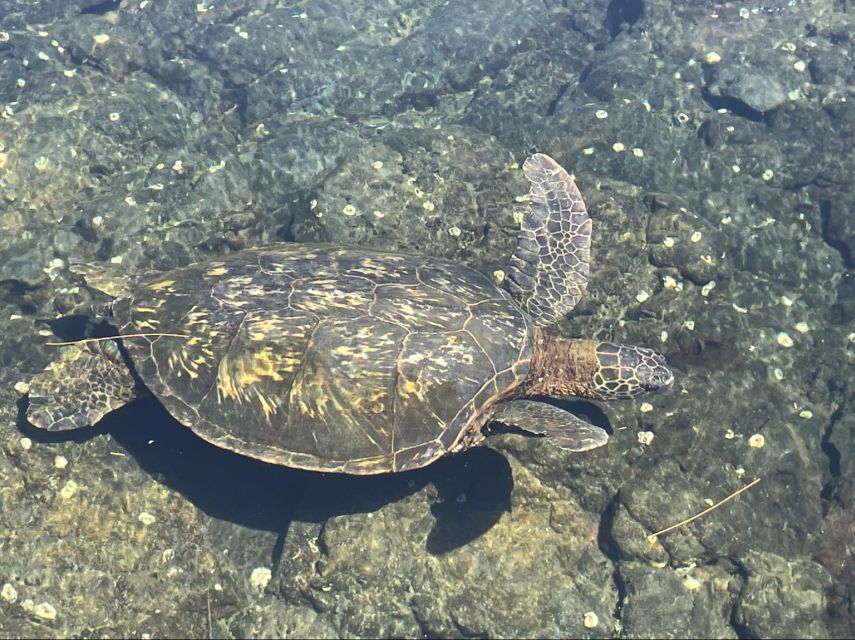
Reviewed · PUNALU'U BLACK & GREEN SAND BEACHES
Hilo: Sea Turtle Lagoon and Black Sand Beach Snorkel
Sea turtles are close here. This 3-hour guided snorkel along Hilo’s volcanic coastline pairs two snorkel stops with an up-close look at coral reefs and sea life, led by a small crew. I like the coaching angle here—so even if you’re new, you’ll learn mask fit, how to clear your snorkel, and how to move safely. The main drawback to weigh is that this isn’t for everyone: you should be able to swim in open water unassisted.
Hilo snorkeling can feel hit-or-miss if you don’t know where to go, but this setup focuses on areas known for marine life, including green sea turtles and octopus, plus reef fish and corals. You’ll also get narrated guidance about what you’re seeing and how Hawaii’s volcanic shoreline connects to the living ecosystem around you. Come prepared with rain gear and the right basics, because the ocean doesn’t care if your day is sunny or cloudy.
In This Review
- Key things that make this snorkel tour work
- Hilo’s sea turtle lagoon and black sand: why the setting matters
- Getting started at 1717 Kamehameha Ave (and what the first 20 minutes feel like)
- Stop 1 in the lagoon: brackish water wildlife and the chance to see turtles
- Stop 2 along Hilo’s coastline reef: coral views, fish variety, and wild surprises
- Your guide and small-group size: where the real value shows up
- Gear, snacks, and what to pack so your day stays comfortable
- Price and value: is $150 per person fair for a 3-hour snorkel?
- Who should book, and who should skip (so you don’t end up uncomfortable)
- My take: should you book this sea turtle lagoon snorkel?
Key things that make this snorkel tour work
- Two snorkel stops with time in both lagoon-style and reef-style water for variety
- Small group limits (max 8) so your guide can actually watch you and answer questions
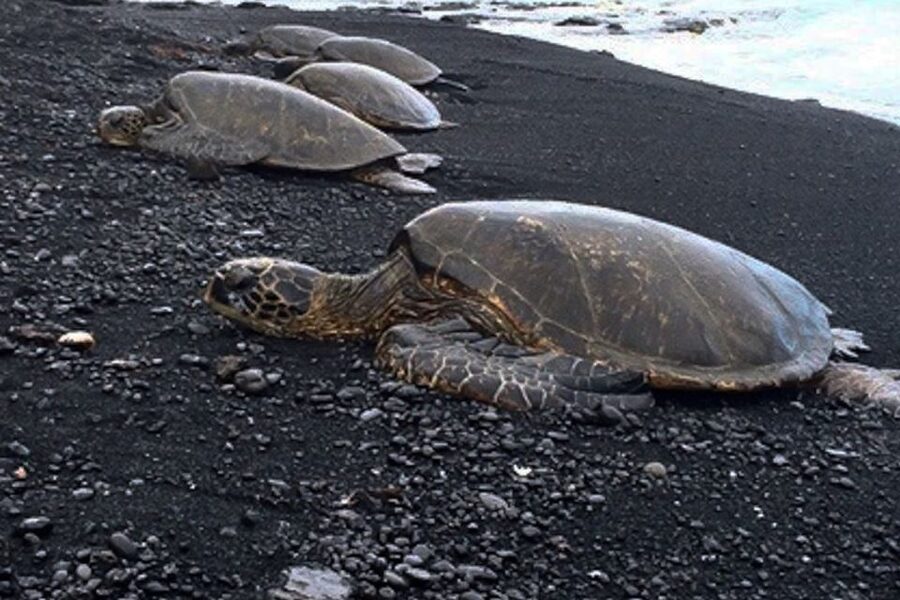
- Marine life you can realistically hope for: green sea turtles, octopus, eagle rays, eels, corals, and tropical reef fish
- Gear and comfort items included: snorkel gear plus water, juice, and local snacks
- Hands-on help for non-experts (age 8+) with safety instruction step by step
- A local, coast-focused experience meeting at 1717 Kamehameha Ave in Hilo
More time on the black and green sand
- Big Island: Coffee, Black Sand, Volcano and Waterfall Tour★ 4.9 · 57 reviews
Hilo’s sea turtle lagoon and black sand: why the setting matters
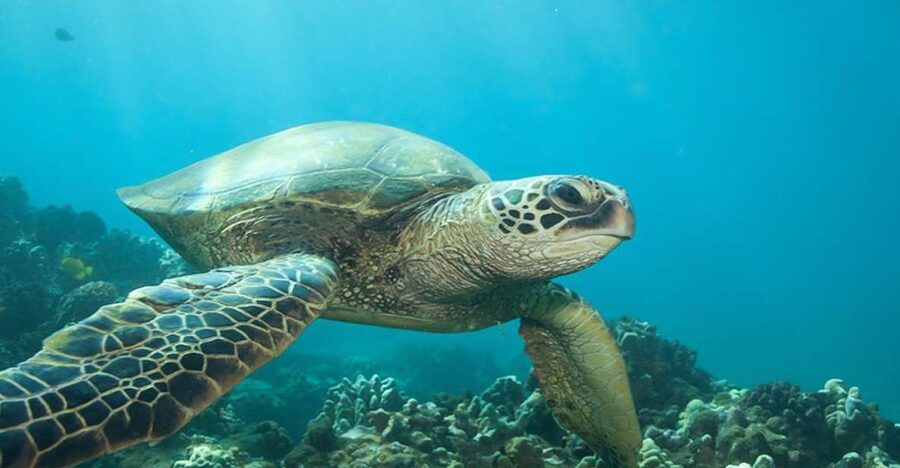
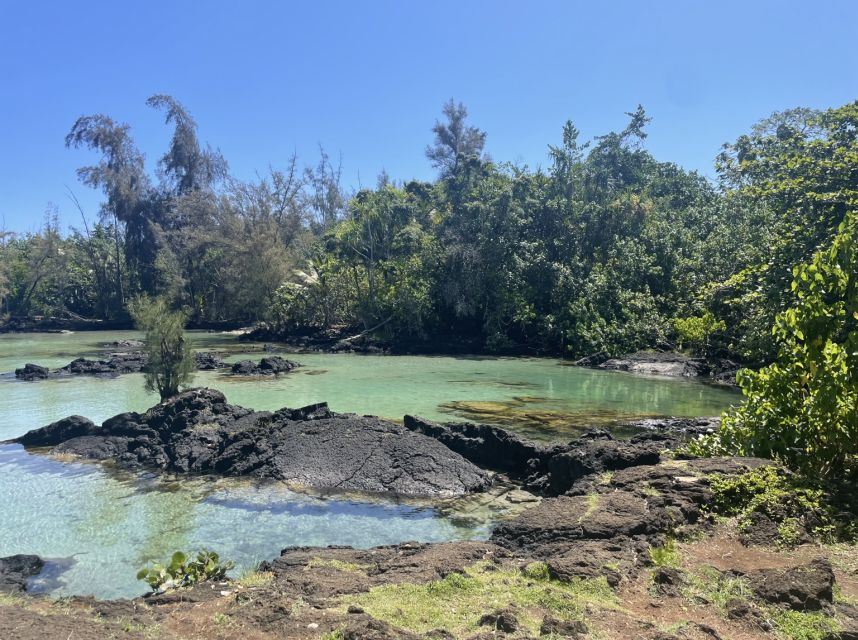
What makes this tour stand out is not just the animals—it’s the place you’re snorkeling. Hilo’s coastline is volcanic, and that matters because it helps form the kind of bays and lagoon areas where sea life gathers. In calmer, semi-protected water, you’re more likely to see turtles and other slow-moving animals close by, and you’re also able to focus on learning snorkeling basics without feeling rushed.
You’re also not stuck only looking at “pretty water.” This is a reef-and-coast tour, meaning you’ll get the coral-and-fish side too, plus the kind of underwater structure that gives wildlife cover. In practical terms: if turtles don’t show up on cue, you still have corals and lots of reef fish to keep things interesting.
And yes—turtles are a big reason people book. But remember: wild animals don’t run on your schedule. The value here is that even when turtle sightings vary, the tour is built around steady, guided ocean time in the right habitat.
Getting started at 1717 Kamehameha Ave (and what the first 20 minutes feel like)
You meet at 1717 Kamehameha Ave in Hilo, and since hotel pickup isn’t included, you’ll want to plan to arrive early enough to find the check-in point without sprinting in your sandals.
Once you’re checked in, the tour’s early rhythm is pretty straightforward: you’ll get snorkel gear, listen to safety basics, and get coached on how to use your mask and snorkel comfortably. If you’re a first-timer, this matters more than people expect. A lot of snorkeling “stress” is really gear friction—mask fog, a snorkel that doesn’t fit right, or nervous pacing in the water. A trained guide helps you get past that fast.
I also like that the tour is built for newcomers and children age 8 and up. That usually means the guide style is practical and patient, not just a quick lecture and then good luck.
Stop 1 in the lagoon: brackish water wildlife and the chance to see turtles
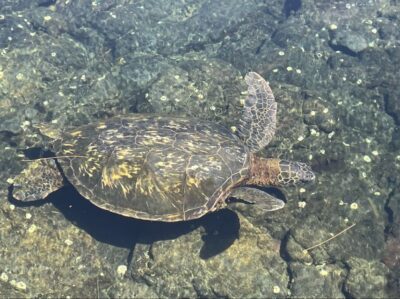
The first snorkel stop is built around lagoon-style conditions and abundant marine life. This is where the tour’s turtle reputation comes from. The lagoon and brackish-water bays are the kind of environment where sea turtles can forage and where you can often spot them close to the surface without fighting strong currents.
This stop also helps you settle in. You’ll be able to get your body used to floating, breathing, and moving with purpose. That’s a big deal if you’re the type who tends to hold their breath or panic a bit when the water gets colder or darker. The guide will be there the whole time, so you’re not stuck figuring things out alone.
What you might see here (based on what the tour highlights) includes:
- green sea turtles
- octopus
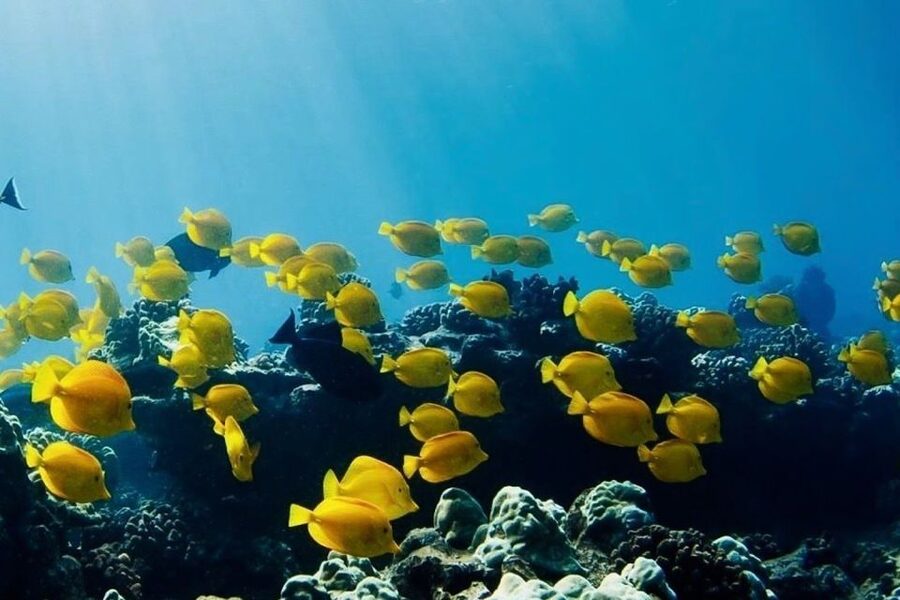
- tropical reef fish
- eels and other reef dwellers
- corals and underwater life that makes the lagoon feel alive
Even on days when the water looks gray from shore, once you’re in the protected area you’re still often able to see plenty of fish and color. Rain or clouds don’t automatically ruin the experience here—they just mean you should dress for it.
Stop 2 along Hilo’s coastline reef: coral views, fish variety, and wild surprises
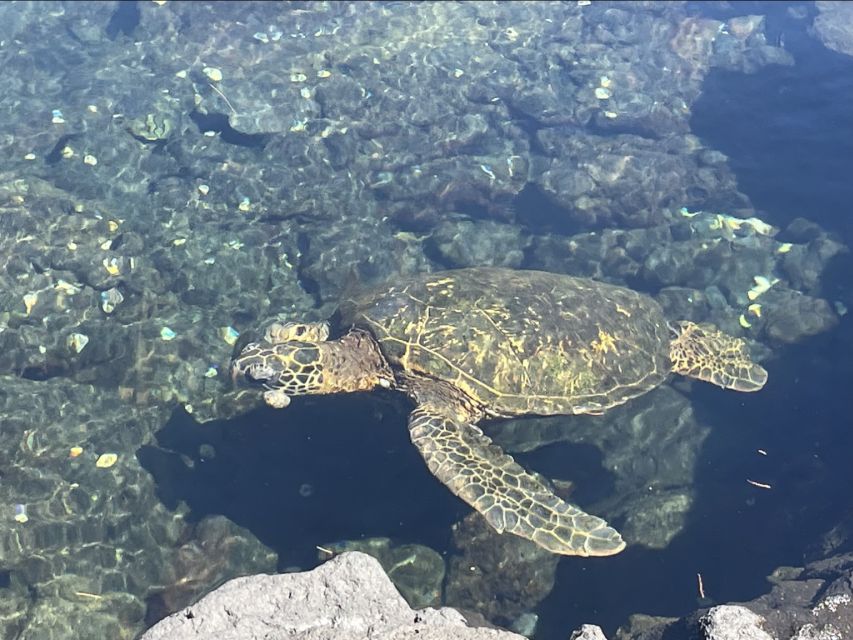
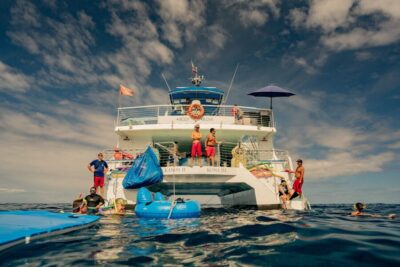
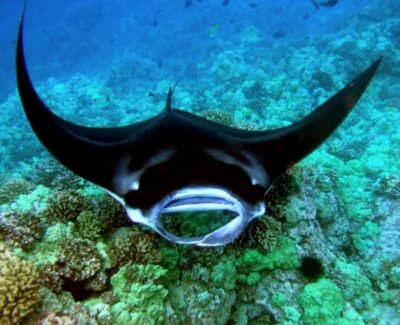
Your second snorkel stop shifts from the lagoon-style feel to a more coastline-and-reef experience. This is where you tend to get the “wow” factor from coral structure and the movement of reef fish. It’s also a good chance for broader wildlife spotting—things like eagle rays can be easier to spot when you’re scanning open water edges and reef lines.
The tour is narrated, too, so you’re not only watching animals—you’re learning what you’re seeing. You’ll hear about the lush surroundings and about how the volcanic coastline shaped the marine environment you’re floating over. That kind of context turns a “fun swim” into something you can actually remember and talk about afterward.
One practical note: the tour includes two snorkel stops, but it’s not a guarantee of seeing every animal every time. That’s just how snorkeling works. The advantage is that the guide doesn’t rely on one species. Even if turtle sightings don’t line up, coral and fish can carry the day.
If your dream moment is a close turtle encounter, the lagoon stop is your best bet. If your dream moment is a whole underwater ecosystem—corals, reef fish, and other visitors—this reef stop gives you more variety.
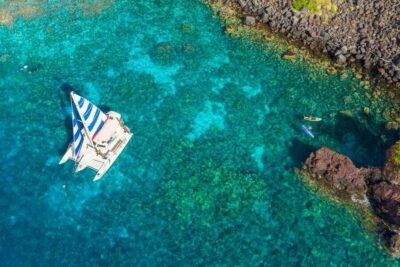
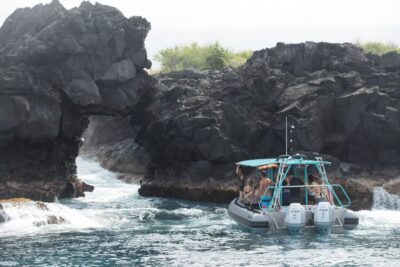
More masks-on stops along the Kona reef
Your guide and small-group size: where the real value shows up
This is a small-group tour, limited to up to 8 participants (and in practice, it often feels even less crowded). That matters because snorkeling isn’t like walking around. The ocean has one speed: the one you can manage while breathing and staying oriented.
In a bigger group, you lose time and you lose attention. Here, a guide can watch your buoyancy, point out what’s worth looking at, and keep everyone moving calmly so you’re not zig-zagging across each other’s swim space.
Guide quality is a huge theme in the feedback for this operator. Names that come up often include Emma, Isaiah (also seen as Isaiaha), and guides like Dustin, Carl, Adam, Morgan, Julia, Dylan, Chris, and Leah. The common thread is how patient they are with first-timers and how clearly they explain what to do before you get in the water. If you’re nervous, this is the kind of tour where you can ask questions and actually get answers.
There’s also a safety mindset in how people describe the experience. Guides help you get in and out, coach you to avoid danger, and keep the group together. For example, one guest with mobility issues noted that the guide assisted with getting into the surf so they could still see the sights. That’s a good sign that the team thinks beyond just “equipment rental.”
Gear, snacks, and what to pack so your day stays comfortable
Snorkeling gear is included, along with water, juice, and local snacks. That’s a quiet win. It means you’re not scrambling for something small but essential mid-adventure, especially if you’re traveling and don’t want to carry extra items.
Still, you should pack smart. The tour info lists sunglasses, swimwear, sunscreen, and rain gear—and I’d add two more practical items based on common comfort lessons from snorkeling:
- Bring a towel so you can dry off fast after the water time
- Consider water shoes if you’re sensitive underfoot, especially with volcanic coastline surfaces
Also plan for the sun even if it’s cloudy. Hilo conditions can change, and you don’t want to end up with a mask brim full of sunscreen or sunburn on the parts that never see shade.
What I appreciate is that the tour includes refreshments between the two snorkel stops. You’re not just jumping straight from water to water. That break helps you reset your breath, warm up a bit, and enjoy the snacks instead of spending the whole 3 hours thinking about when the next break will be.
Price and value: is $150 per person fair for a 3-hour snorkel?
At $150 per person for about 3 hours, this sits in the mid-to-higher range. So the question isn’t just cost—it’s what’s bundled and what risk you’re accepting.
Here’s what you do get in the price:
- guided snorkeling (including instruction and narration)
- snorkeling gear
- water, juice, and local snacks
- an ocean stewardship fee included in the total
What you don’t get:
- hotel pickup and drop-off
So you’re paying for the human part: a guide who helps you snorkel safely, finds wildlife in productive areas, and turns “seeing fish” into understanding what you’re seeing. You’re also paying for the small-group format. That’s harder to replicate on your own without local expertise.
The fair warning is also simple: if you book purely for turtles and your sightings happen to be fewer that day, the feeling of value can dip. Snorkeling in the wild is never a zoo guarantee. But if you love corals, fish variety, and getting time in calm, guided water where the odds are better, the price can feel justified quickly.
In other words: this tour is worth it when you want a guided, hands-on ocean experience—not when you only want one specific animal on command.
Who should book, and who should skip (so you don’t end up uncomfortable)
This tour is designed for people who can handle basic open-water snorkeling. The “not suitable” list is important, and I agree with it. Avoid it if you:
- are a non-swimmer
- have back problems (as listed)
- are pregnant
- are under 8 years old
For kids, the setup is welcoming starting around age 8, and multiple guests describe the guides as patient with children. If you have a family, this is one of those activities where the guide’s attention is what keeps it fun instead of stressful.
For adults, it’s especially a good pick if you’re beginner-to-intermediate. You’ll get step-by-step help, and the guide stays with you so you can focus on relaxing and looking around instead of constantly managing stress.
Also, keep in mind you should be able to swim in open ocean unassisted. If you’re comfortable floating but not confident in open conditions, you’ll want to rethink or ask questions before booking.
My take: should you book this sea turtle lagoon snorkel?
If you want a guided snorkeling experience on Hilo’s coast—with a small group, included gear, and a real focus on sea life—then yes, I think you should book. The biggest strengths are the guided learning, the chance to see turtles in the right habitat, and the fact that you’re not limited to one type of wildlife. Even when turtles aren’t the star of the show, coral and reef fish can still make your time underwater feel like the real deal.
Skip it if open-water comfort isn’t there yet, if you have restrictions listed for health reasons, or if you need hotel pickup because you don’t want to manage getting to the meeting point.
If you book, do two things: bring rain gear and a towel, and arrive early so check-in doesn’t turn into a hassle. Then you can spend the whole 3 hours looking at what Hawaii puts in front of you.
More Snorkeling Off the Kona Coast
- From Keauhou Bay: Snorkel Cruise to Captain Cook’s Monument
★ 4.8 · 242 reviews - From Hawaii: Eco-Friendly Snorkeling Experience with BBQ
★ 4.8 · 151 reviews - Manta Ray Snorkel in Kailua-Kona with Hot Cocoa
★ 4.8 · 115 reviews - Big Island: Snorkel with Manta Rays – Manta Guarantee
★ 4.9 · 114 reviews - Big Island: Captain Cook Sightseeing & Snorkel Expedition
★ 4.9 · 105 reviews - Big Island: South Kona Snorkeling and Coastline Exploration
★ 5.0 · 94 reviews
More Tour Reviews in Island Of Hawaii
- Kailua Kona: Night Manta Ray Adventure on the Big Island
★ 4.8 · 1,199 reviews - Big Island: Night Swim with Manta Ray with Hot Chocolate
★ 4.9 · 420 reviews - Kailua-Kona: Whale Watching Cruise on the Big Island
★ 4.7 · 273 reviews - From Keauhou Bay: Snorkel Cruise to Captain Cook’s Monument
★ 4.8 · 242 reviews - Big Island, Hawaii: Volcano and Stargazing Tour with Dinner
★ 4.8 · 179 reviews - From Kona: Big Island Underwater Submarine Adventure
★ 4.6 · 162 reviews
Black and Green Sand Days
- Big Island: Coffee, Black Sand, Volcano and Waterfall Tour
★ 4.9 · 57 reviews
Just Added: The Newest Big Island Reviews



Punalu'u Black & Green Sand Beaches, compared.
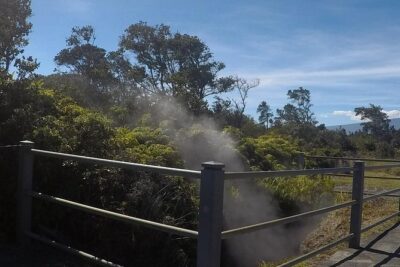 ★ 4.5Hilo Shore Excursion: Volcanoes National Park & Black Sand BeachFrom $1592,338 reviews
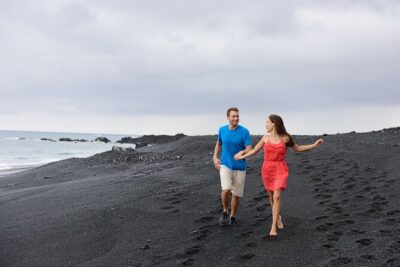 ★ 4.5Hilo Shore Excursion: Volcano Safari Lava Caves & Black SandFrom $154363 reviews
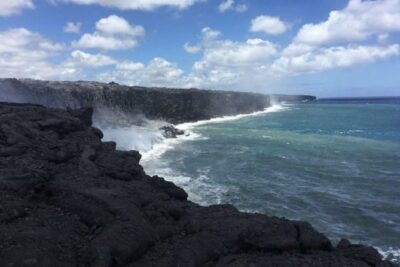 ★ 5.0Hawaii Big Island Circle Small Group Tour: Waterfalls – Hilo – Volcano – Black Sand BeachFrom $20893 reviews
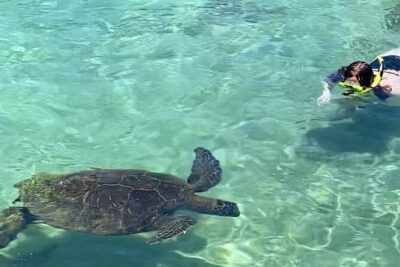 ★ 4.5Beach Snorkel – Sea Turtle and Black Sand LagoonFrom $15362 reviews
 ★ 4.9Coffee, Black Sand, Volcano and Waterfall TourFrom $29257 reviews
 ★ 4.9Volcano, Black Sand Beach, Waterfall, with LunchFrom $18944 reviews
 ★ 5.0Big Island Waterfalls, Blacksand Beaches, Lava Tubes & VolcanoesFrom $18624 reviews
 ★ 5.0Punalu’u Black Sand Beach Tour – Volcanoes National Park & HiloFrom $17917 reviews
Browse the lists this tour appears in