
Reviewed · HAWAII VOLCANOES NATIONAL PARK TOURS
Big Island: Evening Volcano Explorer from Hilo
Volcano glow is a moving target. This evening Kilauea experience pairs lava-coast walking with up-close views of the active caldera, so you get geology with a sense of theater. You’ll head from Hilo to Kalapana, walk on a lava-forged beach, then spend the evening inside Hawaii Volcanoes National Park with stops made for seeing what’s changing.
I especially like the small group size (limited to 13), because it keeps the pacing human and the guide’s attention focused. I also love that you get a National Park Service certified guide telling the why behind the rocks—lava flows, volcano history, and the plants and animals along the way.
One thing to plan around: night visibility isn’t guaranteed. Even if you hope for glowing lava, conditions and timing can affect what you can actually see, so the best mindset is to come for the full Kilauea story, not just one perfect moment.
In This Review
- Key Things That Make This Evening Volcano Explorer Worth It
- From Hilo Evening Start to Real Kilauea: The Big Idea
- Hilo’s Waterfront Drive and Kalapana: Setting the Stage
- Lava-Flow Walking to the New Black Sand Beach
- Star of the Sea Painted Church: When a Community Fights Back
- Hawaii Volcanoes National Park: Visitor Center to Kilauea Iki
- Steam Vents, Sulfur Banks, and the Smell-Not-Too-Real Experience
- Volcano House Views and the 2018 Eruption Footprints
- Guide Energy, Small Group Pacing, and a More Personal Story
- Price and Value: What $169 Buys You on Big Island
- Who This Tour Suits (and Who Should Rethink It)
- What to Bring (Closed-Toe Means Exactly That)
- Final Call: Should You Book the Evening Volcano Explorer?
- FAQ
- How long is the Big Island Evening Volcano Explorer from Hilo?
- How much does the tour cost?
- What’s included in the price?
- Where do I meet the tour?
- How big is the group?
- What language is the tour guide?
- What should I bring and wear?
- Are open-toed shoes allowed?
- Is cancellation possible if plans change?
- FAQ
- Who is this tour not suitable for?
Key Things That Make This Evening Volcano Explorer Worth It
- Black sand beach hike over real lava: you’re not just looking at a postcard; you’re walking across a lava flow to a new shoreline.
- Steam vents and sulfur banks up close: you’ll pass active features that help explain how Kilauea breathes.
- Hilo to Kalapana to the park in one smooth arc: the driving route matters because it links the geology to the local community.
- Stargazing-adjacent timing: you’ll tour in the evening, when the light changes your view of Kilauea Caldera.
- Small group guidance (max 13): fewer people means more time for questions and route adjustments.
More ways into Hawaii Volcanoes National Park
- Big Island, Hawaii: Volcano and Stargazing Tour with Dinner★ 4.8 · 179 reviews
- Big Island: Volcano, Chocolate & Waterfall Adventure★ 4.7 · 78 reviews
- Kilauea: Volcanoes National Park Guided Hike★ 4.8 · 61 reviews
- Big Island: Coffee, Black Sand, Volcano and Waterfall Tour★ 4.9 · 57 reviews
From Hilo Evening Start to Real Kilauea: The Big Idea
An evening volcano tour has a different feel than a straight daytime drive. The light softens, the steam can look more dramatic, and the park feels more like a living system than a museum. That’s what makes this tour work: you’re moving through the story of Kilauea—lava, coast, plants, and historic eruption impacts—while the day is turning.
You’ll start in Hilo, then head toward Kalapana, and by the time you reach Hawaii Volcanoes National Park you’re already “reading” the island in the right order. Instead of random stops, the route builds context so each viewpoint lands harder.
Two other practical pluses: the tour includes all entrance fees and dinner, and it’s capped at 13 people. That combination keeps the day from turning into a scavenger hunt for tickets and snacks.
Hilo’s Waterfront Drive and Kalapana: Setting the Stage
You’ll begin at the Grand Naniloa DoubleTree Hotel area (meeting point), and then you’ll drive through Hilo town along the historic waterfront. Even if you’re not a “history person,” this part matters. It shows you the human side of Hawaii Island—where people live next to the same forces that create and reshape the land.
Next comes the drive to Kalapana, the old fishing village area. This is where the tour starts to connect place to process. Kalapana isn’t just scenery; it’s a community shaped by lava flows and the ongoing challenge of living with an active volcano.
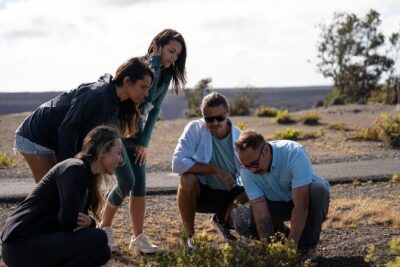
This is also when your guide starts the storytelling. A National Park Service certified guide talks volcanology and geology in plain language, then ties it to what you’re passing: lava flow patterns, flora and fauna you may spot along the way, and the bigger history of Kilauea.
Practical note: expect some time in the van. This is not a quick walk-only experience, so comfort matters. Wear closed-toe shoes (more on that later) and dress in layers for evening air.
Lava-Flow Walking to the New Black Sand Beach
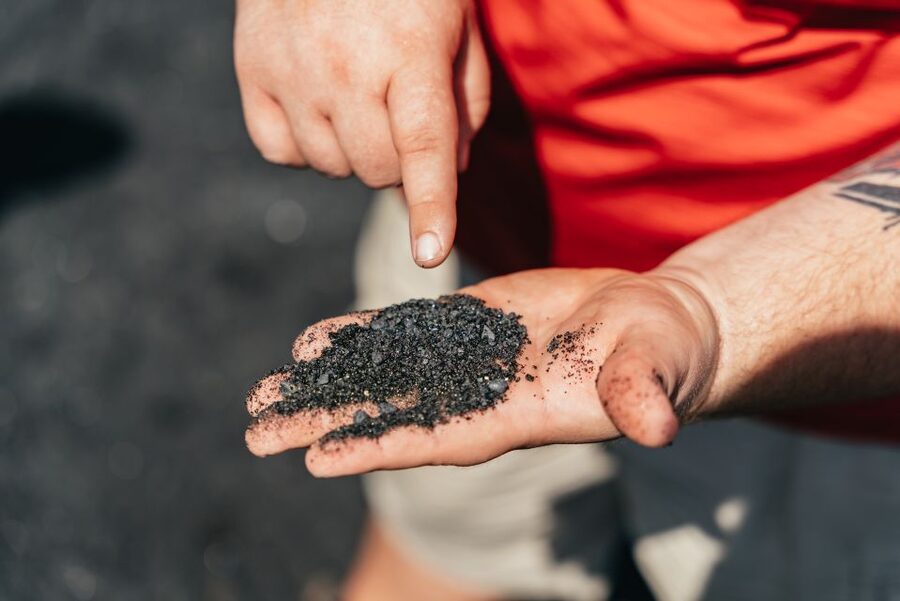
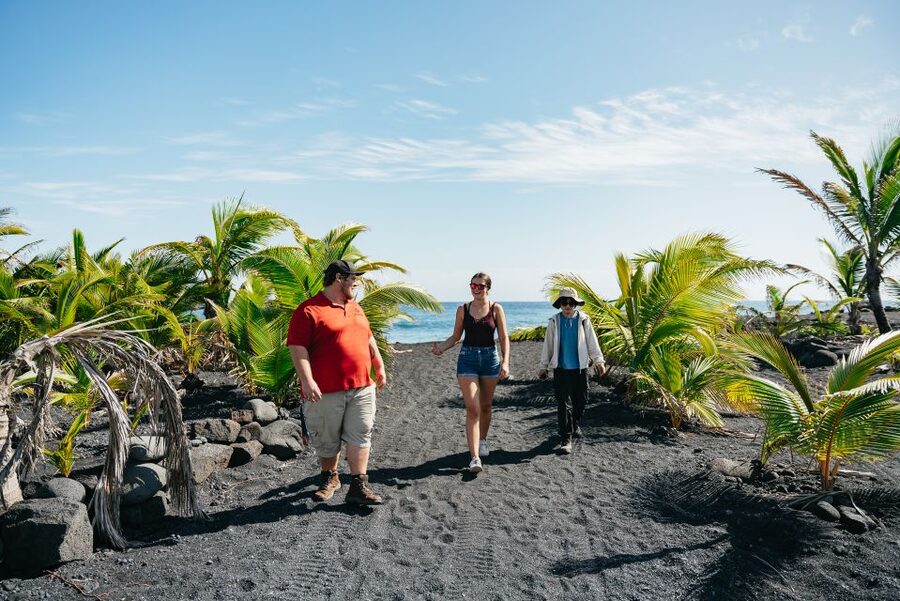
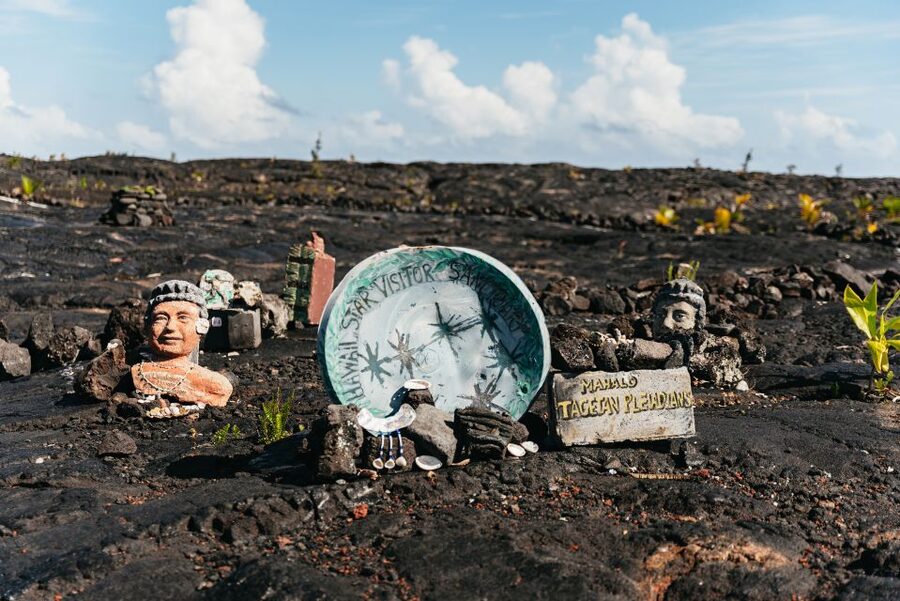
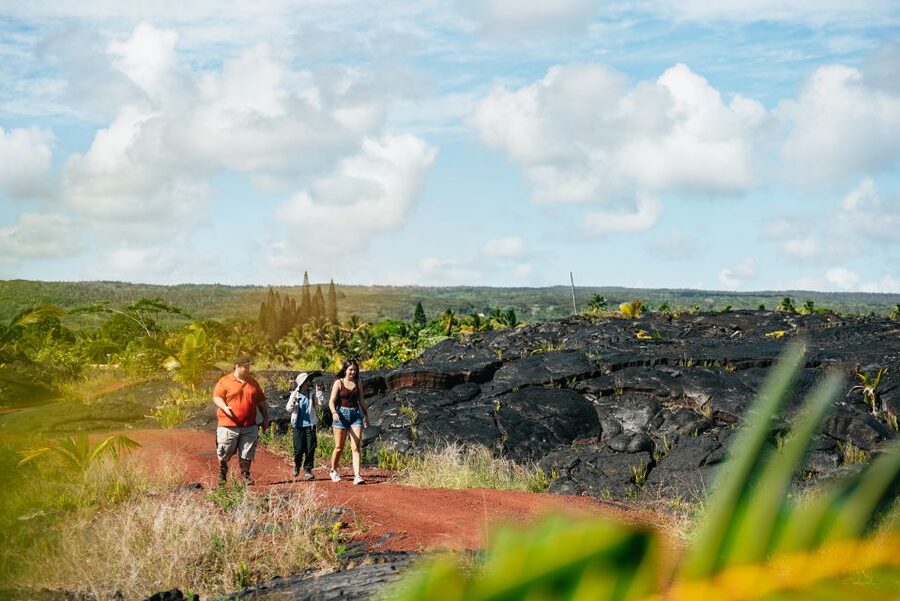
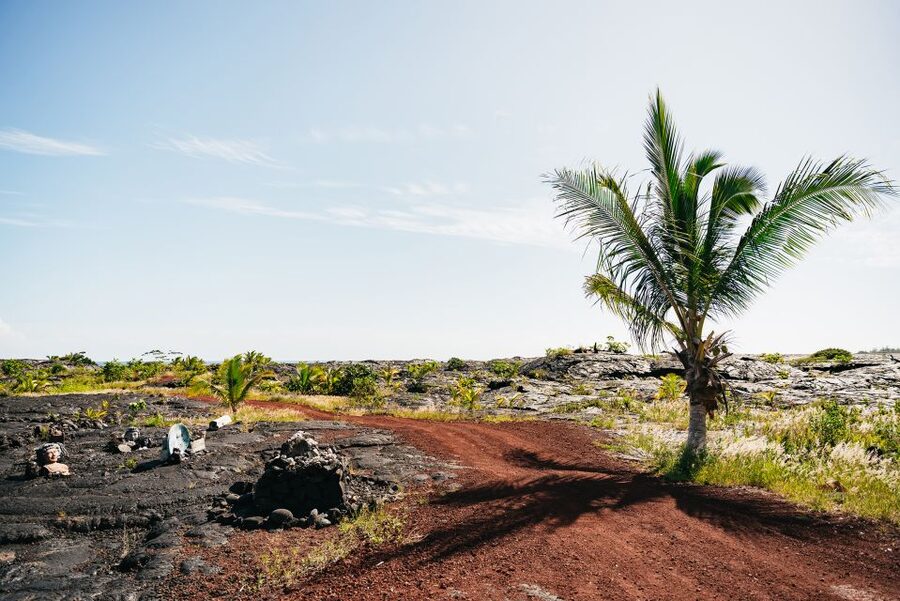
The tour’s signature moment is the walk to the black sand beach—formed by lava and reshaped by Kilauea’s activity. You’ll hike out across the lava flow to reach the shoreline. That’s the key phrase here: hike out across the lava.
This isn’t a paved stroll. Lava terrain can be uneven, and traction matters. The reward is huge: black sand beaches on Big Island aren’t decorative. They’re the outcome of basalt doing its job—breaking down and building a new coastal surface.
You’ll also get the kind of explanation that makes you look differently at the ground beneath your feet. The guide will connect what you see—lava textures, coastal change, and how new habitat begins—with what it means for the volcano’s ongoing behavior.
If you’re hoping for dramatic glowing lava at dusk, keep expectations flexible. One review note you might see hints of activity even if it’s not obvious at the exact moment. The bigger win is the full picture: you’re there for the change, not just a single light show.
Star of the Sea Painted Church: When a Community Fights Back
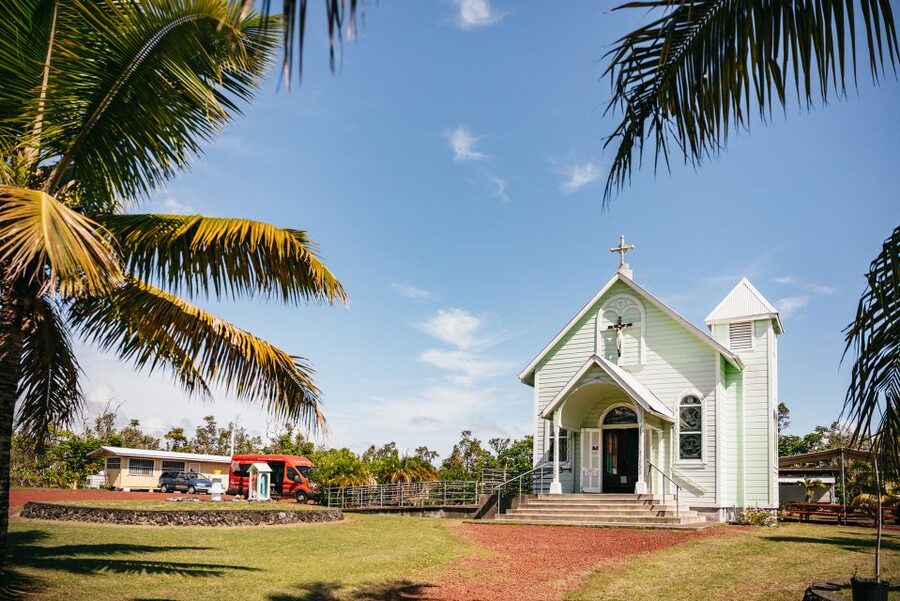
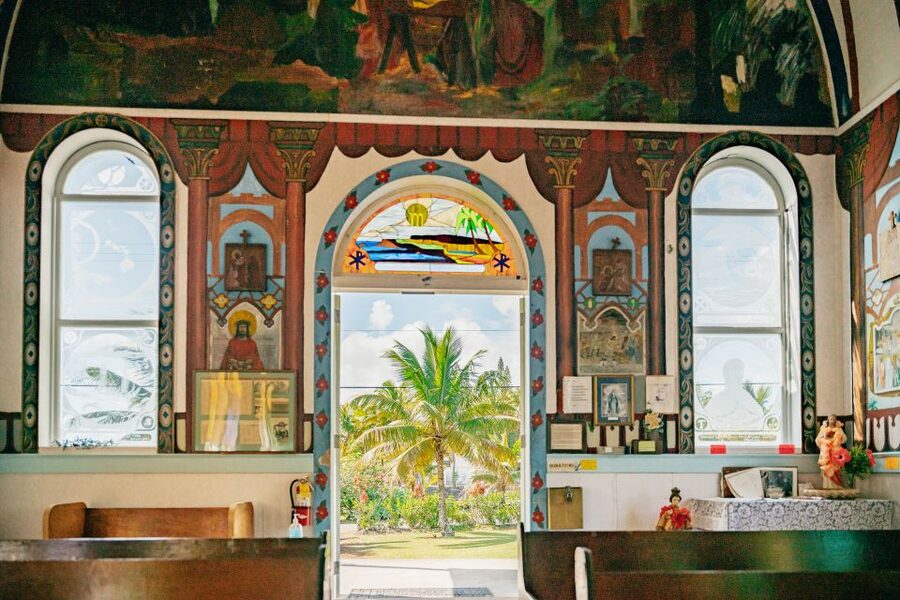
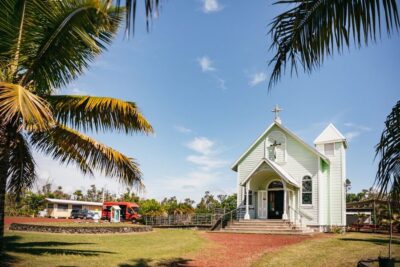
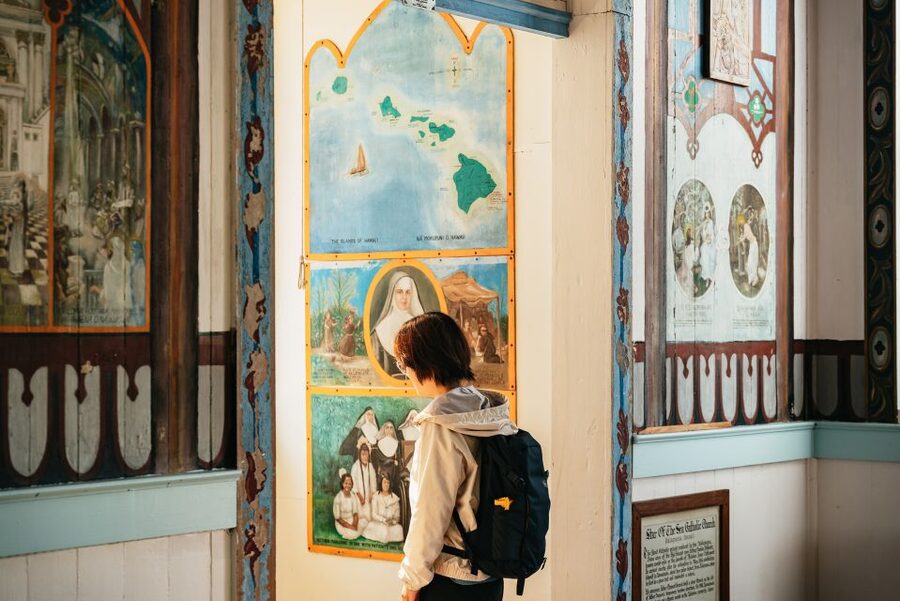
On your route, you’ll stop at the Star of the Sea Painted Church. It was moved twice to save it from advancing lava flows in 1990. That detail is important because it turns the volcano from a distant force into a daily neighbor.
This is a decommissioned church now listed on the National Register of Historic Places. You’re not just visiting a building. You’re seeing how people protect what they value while the landscape keeps moving under their feet.
It also adds emotional balance to the tour. Volcanoes are impressive, but they’re also unsettling. A stop like this reminds you that geology has a human timeline, too.
Give yourself a few minutes to slow down here. Even if you’re more into science than sentiment, this stop is one of the best “why it matters” moments on the entire outing.
More Big Island tours we have been out and rated


Hawaii Volcanoes National Park: Visitor Center to Kilauea Iki
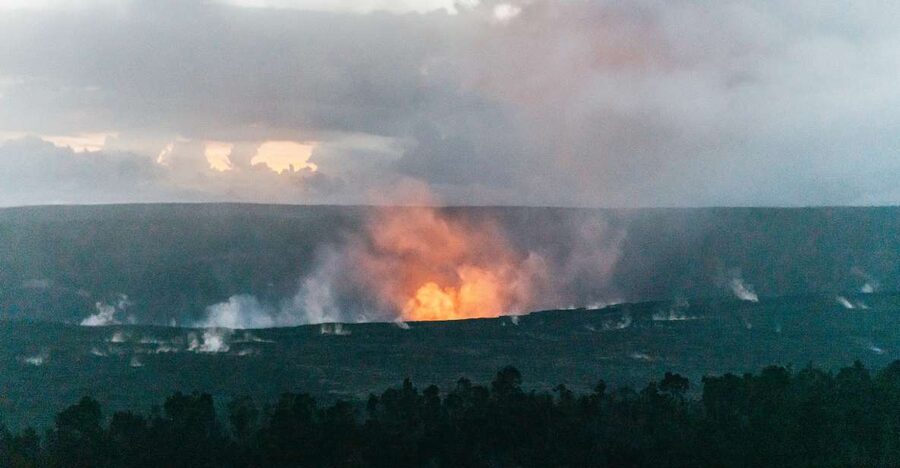
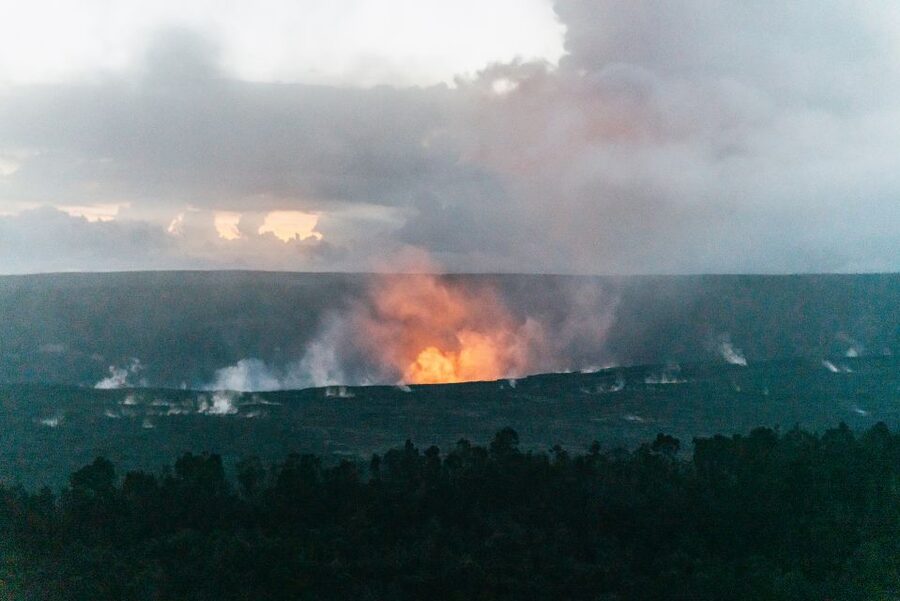
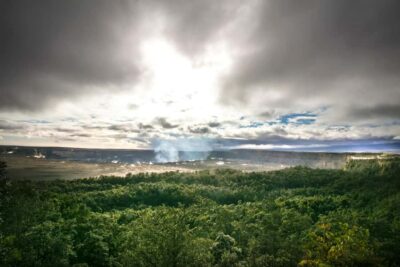
Once you’re inside the park, your evening shifts from coastal geology to caldera viewing and active-zone interpretation. You’ll start with stops like the Kilauea Visitor’s Center and then head to viewpoints such as the Kilauea Iki Crater Overlook.
These spots are valuable because they help you understand scale. Up close, lava can look chaotic and random. From overlooks, it starts to show structure—how flows moved, where eruptions carved out spaces, and how the park’s terrain maps onto volcano behavior.
You’ll also visit areas like Steaming Bluffs. That name gives away the theme: you’re watching the ground release heat and gases. It’s one thing to read about volcanic activity. It’s another to walk past features that actively signal what’s happening below.
Your guide’s narration is the glue here. In a good tour, you don’t just get a list of locations. You get a running explanation that ties the views together so they make sense when you look back later.
Steam Vents, Sulfur Banks, and the Smell-Not-Too-Real Experience
Walking past current steam vents and sulfur banks is one of those “science that you can feel” moments. The ground is literally doing something. That sensory layer—steam rising, smells possibly in the air, the general power of heat—helps you understand why Kilauea is constantly changing.
This is also a good time to watch your footing. Steam vents and sulfur zones can be slick or uneven depending on conditions. The tour rules are simple: closed-toe shoes only. Don’t treat that like a suggestion.
A helpful tip based on how these tours are run: if you have questions about what you’re seeing, ask your guide at the vents area. It’s easier to get clear answers when the evidence is right there.
Volcano House Views and the 2018 Eruption Footprints
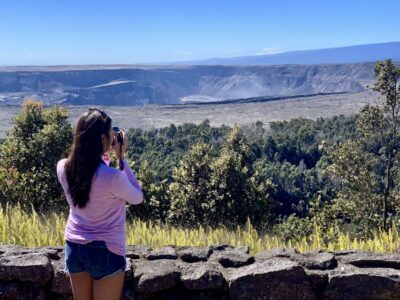
One of the best viewpoints on Big Island is the Volcano House area, and this tour uses it. You’ll stop there for incredible views of Kilauea Caldera. Even when the volcano isn’t putting on a dramatic show for the camera, the caldera view gives you context for everything else you’ve seen.
Then you’ll move to one of the more “watch your step” parts of the tour: a hike to cracks and sinkholes in paved roads left behind by the historic eruption of 2018. This is hands-on understanding of how fast the landscape can change—and how long the impact can remain visible.
This stop is especially meaningful for first-time visitors because it connects the abstract term eruption to a real, physical reminder you can point at. The ground wasn’t only reshaped once; it kept reacting afterward.
If you have back problems or trouble with uneven walking, this is the portion where you’ll want to think hardest about whether the tour fits you.
Guide Energy, Small Group Pacing, and a More Personal Story
The guide experience is a major reason people rate this tour so highly. One review specifically praised a guide named Tory for being sweet, extremely knowledgeable about Hawaiian culture, agriculture, and volcanology, and for knowing exactly where to take the group to see Kilauea activity while it was erupting.
Even without assuming every tour has the same guide, the pattern matters: a strong guide manages timing and routes so you spend less time guessing and more time seeing.
Small group size (max 13) plays a role here. It’s easier to slow down when a person asks a question. It’s also easier to shift the group when the best view changes. In a larger crowd, that flexibility disappears.
You’ll also get dinner included, and some reviews mention that water and snacking are offered frequently. That matters on an 8-hour tour. Volcano days take more out of you than you expect—standing, walking, and shifting light can be tiring even when you’re having fun.
Price and Value: What $169 Buys You on Big Island
At $169 per person for an 8-hour tour, the cost isn’t low. But the value is in what’s bundled. You’re paying for:
- A live guide (English) who handles route decisions and narration
- All entrance fees for the sites included
- Dinner
- A small group format that keeps the experience from feeling rushed
If you tried to piece this together on your own—transport, entry fees, and a guide for the geology—you’d likely spend more time coordinating and more money overall. Here, you get a guided line through multiple highlights: black sand beach, steam vents, sulfur banks, caldera viewpoints, and the 2018 eruption impacts.
The best way to judge value is this: you’re buying understanding, not just transportation. The guide’s explanations turn scattered scenery into a coherent volcano lesson you can actually remember.
Who This Tour Suits (and Who Should Rethink It)
This is a strong choice if you want a guided, structured evening around Kilauea’s active landscapes. It’s also a good fit if you like mixing beach scenery with park viewpoints, instead of doing only one type of environment.
It may be tougher for people who:
- have heart problems
- have respiratory issues
- have back problems
That’s not about drama. It’s about heat, walking on uneven terrain, and spending time in an active volcanic area. Also, plan for steam and sulfur areas where breathing comfort matters.
If you’re generally healthy and steady on your feet, you’ll likely enjoy the variety: lava-coast hiking, viewpoints over the caldera, and close-up geothermal features.
What to Bring (Closed-Toe Means Exactly That)
Bring closed-toe shoes. That’s the big non-negotiable. Open-toed shoes aren’t allowed, and in lava and uneven park terrain, you’ll thank yourself for sturdier footwear.
Beyond that, dress for an evening that can feel different from midday. Layers help. If you’re the kind of person who runs cold, pack a light extra layer even on a warm Hawaii day.
Also, be ready to walk. The black sand beach part includes hiking across a lava flow, and there’s a hike to cracks and sinkholes in the park.
Final Call: Should You Book the Evening Volcano Explorer?
I think you should book this tour if you want a guided evening that connects Hawaii’s geology to real places you can walk through: Kalapana’s black sand, steam vents and sulfur banks, and Kilauea Caldera viewpoints with the 2018 eruption impacts as a closing chapter.
Skip it if you’re worried about uneven walking, heat and activity around active volcanic areas, or if respiratory or heart conditions could make the outing uncomfortable. Also, don’t count on seeing glowing lava at dusk as a guarantee. The tour is still worth it because it teaches you what you’re seeing and why it’s happening.
If your priority is a coherent, narrated evening across multiple volcano “zones,” this is the kind of tour that gives you real satisfaction beyond a few photos.
FAQ
How long is the Big Island Evening Volcano Explorer from Hilo?
It lasts 8 hours.
How much does the tour cost?
The price is $169 per person.
What’s included in the price?
Entrance fees and dinner are included.
Where do I meet the tour?
The meeting point is the Grand Naniloa DoubleTree Hotel area and also the KapohoKine Adventures store at 93 Banyan Dr, Hilo, HI 96720.
How big is the group?
It’s a small group limited to 13 participants.
What language is the tour guide?
The live tour guide speaks English.
What should I bring and wear?
You should bring closed-toe shoes.
Are open-toed shoes allowed?
No. Open-toed shoes are not allowed.
Is cancellation possible if plans change?
Yes. You can cancel up to 24 hours in advance for a full refund.
FAQ
Who is this tour not suitable for?
It’s not suitable for people with heart problems, respiratory issues, or back problems.
More Evening Experiences in Island Of Hawaii
- Kailua Kona: Night Manta Ray Adventure on the Big Island
★ 4.8 · 1,199 reviews - Big Island: Night Swim with Manta Ray with Hot Chocolate
★ 4.9 · 420 reviews - Waikoloa: Catamaran Sunset Sail with Cocktails
★ 4.8 · 68 reviews - Kona: Catamaran Sunset Sail with Cocktails and Snacks
★ 5.0 · 8 reviews - Big Island: Evening Volcano Explorer From Kona or Kohala
★ 5.0 · 5 reviews
More Tour Reviews in Island Of Hawaii
- Kailua Kona: Night Manta Ray Adventure on the Big Island
★ 4.8 · 1,199 reviews - Big Island: Night Swim with Manta Ray with Hot Chocolate
★ 4.9 · 420 reviews - Kailua-Kona: Whale Watching Cruise on the Big Island
★ 4.7 · 273 reviews - From Keauhou Bay: Snorkel Cruise to Captain Cook’s Monument
★ 4.8 · 242 reviews - Big Island, Hawaii: Volcano and Stargazing Tour with Dinner
★ 4.8 · 179 reviews - From Kona: Big Island Underwater Submarine Adventure
★ 4.6 · 162 reviews
Deeper Into Volcanoes National Park
- Big Island, Hawaii: Volcano and Stargazing Tour with Dinner
★ 4.8 · 179 reviews - Big Island: Volcano, Chocolate & Waterfall Adventure
★ 4.7 · 78 reviews - Kilauea: Volcanoes National Park Guided Hike
★ 4.8 · 61 reviews - Big Island: Coffee, Black Sand, Volcano and Waterfall Tour
★ 4.9 · 57 reviews - Hawaii: Big Island Volcanoes Day Tour with Dinner and Pickup
★ 4.5 · 34 reviews - Big Island: Hawai’i Volcanoes National Park Guided Hike
★ 4.9 · 30 reviews
Just Added: The Newest Big Island Reviews



Hawaii Volcanoes National Park Tours, compared.
 ★ 5.0Big Island in a Day: Volcanoes Waterfalls Sightseeing and HistoryFrom $2646,569 reviews
 ★ 4.5Hilo Shore Excursion: Volcanoes National Park & Black Sand BeachFrom $1592,338 reviews
 ★ 5.0Small Group Big Island Twilight Volcano and Stargazing TourFrom $2971,619 reviews
 ★ 5.0Big Island Highlights: Coffee, Volcano, Black Sands & WaterfallFrom $2991,054 reviews
 ★ 5.0Deluxe Volcano Experience with Restaurant DinnerFrom $341620 reviews
 ★ 5.0Fat Tire E-Bike Tour through Volcanoes National ParkFrom $199546 reviews
 ★ 4.5Big Island, Hawaii: Volcanoes National Park SafariFrom $379545 reviews
 ★ 4.9Volcanoes, Waterfalls, & Coffee Farm Day-TripFrom $264414 reviews
Browse the lists this tour appears in