
Reviewed · MANTA RAY NIGHT SNORKELS
Snorkel with Manta Rays Guaranteed
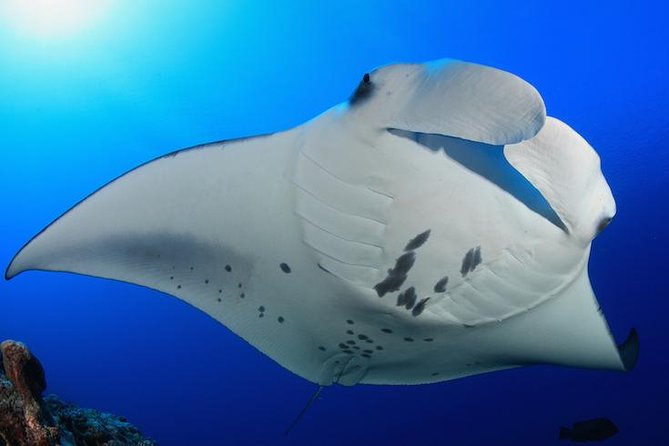
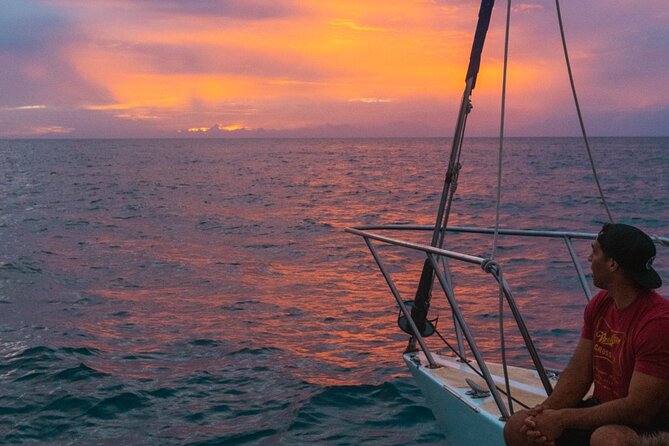
A lit raft and a manta ray ballet sound made-up. But this night snorkel near Kona is real, and it’s set up so you can watch huge manta rays feed right under your level. You start with a sunset sail aboard the trimaran Hokulani, then you float above the plankton feeding zone using a manta floatation device with lights that pull everything into view.
What I like most is how the whole thing is engineered for comfort and safety. You get wetsuits, masks, and snorkels included, plus staff guidance that helps first-timers feel steady in the dark water. And once you’re in, you’re not doing a long swim workout—you’re staying buoyant while mantas cruise past at face-to-face distance.
One thing to consider: this isn’t for people who want to actively swim alongside mantas. You mostly hold on to the float platforms for the viewing time, and that can wear out shoulders, especially if you’re already tense in choppy surf.
In This Review
- Key things to know before you go
- Sunset sail to Manta Ray Village: the calm before the manta show
- Getting suited up: gear, rules, and what the staff actually cares about
- The manta floatation device: how the light brings plankton to you
- What the water time feels like when the mantas show up
- How rough water can change your experience (and what to do)
- Price and value: what $141.57 buys you here
- Who this tour is best for (and who should rethink it)
- Small logistics that can make or break your start
- Should you book this manta ray snorkel?
- FAQ
- Where does the tour start and end?
- How long is the experience?
- What snorkeling gear is included?
- Are drinks and snacks included?
- Are full face masks allowed?
- What physical fitness level do I need?
- How large is the group?
- Is the tour offered in English?
- What happens if the ocean weather is bad?
- Can I get a full refund if I change my mind?
Key things to know before you go
- Sunset sail on Hokulani: drinks and snacks onboard, with an evening pace that helps you relax before the water time.
- Lit manta flotation device: the light attracts plankton, which draws manta rays to your viewing area.
- Snorkel time is ~45 minutes: you get a solid window to watch, not a rushed “in and out” stop.
- Short ride to the snorkel spot: multiple reports say it’s very quick to reach the action, helpful if you get seasick.
- You hold on the whole time: great for safety and low effort, but plan on some arm/shoulder fatigue.
- Smallish max group (49): the tour is capped to keep the experience controlled and staff interaction feasible.
Another night out over the Kona mantas
- Big Island Manta Ray Night Snorkel★ 5.0 · 5,656 reviews
- Big Island: Kona Manta Ray Snorkel Tour in Keauhou Harbor★ 4.5 · 2,465 reviews
- KONA Manta Ray Night Snorkel – FREE re-ride if no Sightings★ 5.0 · 2,212 reviews
- Manta Ray Night Snorkel at Kona, Big Island★ 5.0 · 1,758 reviews
Sunset sail to Manta Ray Village: the calm before the manta show
The tour starts at Keauhou Bay in the Kona area, and the first wow factor is the timing. You’re on a sunset cruise on the Hokulani trimaran, which means you’re heading out as the light fades, not after dark already. That helps you mentally switch gears from land-tour mode to ocean-mode mode.
Onboard, you can expect drinks and snacks, plus the boat setup feels built for people who want a smoother ride. One reason this tour gets such strong feedback is that it tends to feel organized and not like chaos in the dark. Also, the boat is described as clean, roomy, and even having a bathroom—small detail, big comfort when you’re doing an evening activity.
If you tend to get seasick, this part matters. A couple of reviews highlight that the snorkel ride to the spot is short, so you’re not stuck on the water for a long time in the dark. Still, evening ocean conditions can vary, and you should treat choppy water as possible any night.
What I’d do to set yourself up: layer up. Evening air can get cool fast, even if the water is warm enough for a wetsuit.
Getting suited up: gear, rules, and what the staff actually cares about
Once you reach the World Famous Manta Ray Village area, staff handle the “please don’t panic” moment with a safety briefing and clear instructions. This is where you learn the core behavior rules for manta rays and for you.
Here’s what the gear includes:
- Wetsuits, masks, and snorkels provided
- Fins not needed (and you don’t have to wear them)
- Filtered water, plus soda/pop and varied juices onboard
Two key safety points show up again and again in real-world feedback. First, staff emphasize not touching the manta rays. Second, they structure the float platform so large snorkel fins don’t accidentally hit the animals. Even if you’ve snorkeled before, pay attention—this operation is different because the manta rays are so close to you.
One practical rule you should know: full face masks aren’t allowed on the tours due to safety concerns. Bring or rent standard snorkel gear only if you already know you’ll be able to use it safely with their setup.
Also, staff help you in and out of the water. If you’re a first-time night snorkeler, the guidance matters more than you’d think. You’re in water with low visibility, so getting your footing and buoyancy dialed in quickly makes the whole experience calmer.
The manta floatation device: how the light brings plankton to you
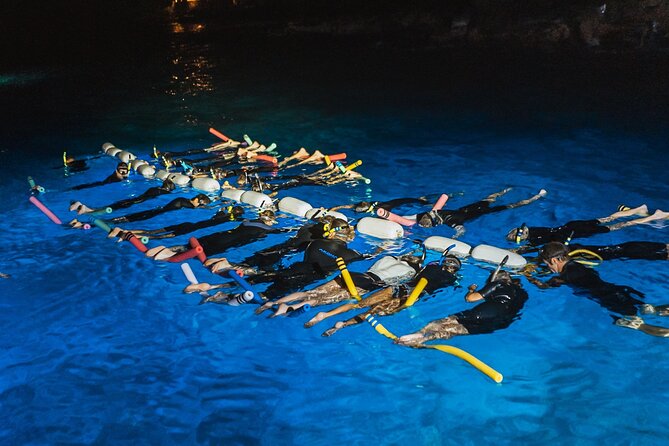
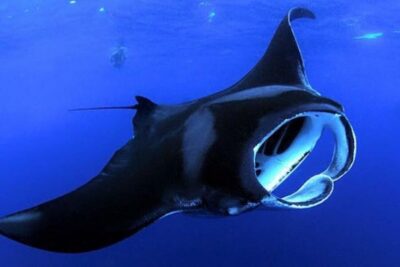
This tour’s main trick is scientific, but explained in plain language. The manta rays are attracted because the water is lit up in the viewing zone. Plankton rises at night and comes toward the light source attached to the float. Manta rays feed on that plankton, and suddenly the ocean giant show arrives right where you’re positioned.
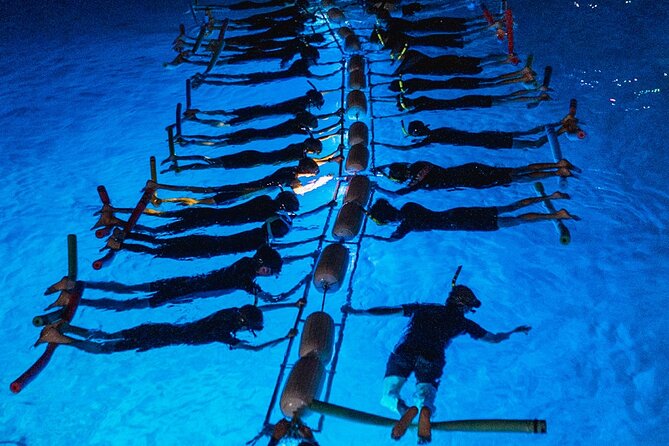
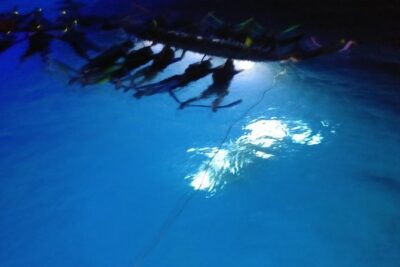
Your job in the water is not to chase. Your job is to stay steady. The staff guides you onto the manta floatation device, and you float above the rays as they feed below. Snorkel time is about 45 minutes, which is long enough to actually see patterns—like when rays circle, when they pass right under you, and when they slow down for feeding.
There’s also a specific tradeoff built in. You generally hold onto the platforms the whole time. That makes the experience approachable—there’s minimal swimming required—but it can be tiring if you squeeze too hard or if you have shoulder issues. If you tend to clench your grip when you’re nervous, this is worth noting. A few people called out that the holding can feel like an upper-body workout.
Another smart move: plan your expectations. You’ll be face-to-face with mantas. But you’re not meant to “swim with them” like you’re in a shark-cage movie. You’re observing them from a controlled position designed to protect the animals and keep everyone safe.
What the water time feels like when the mantas show up
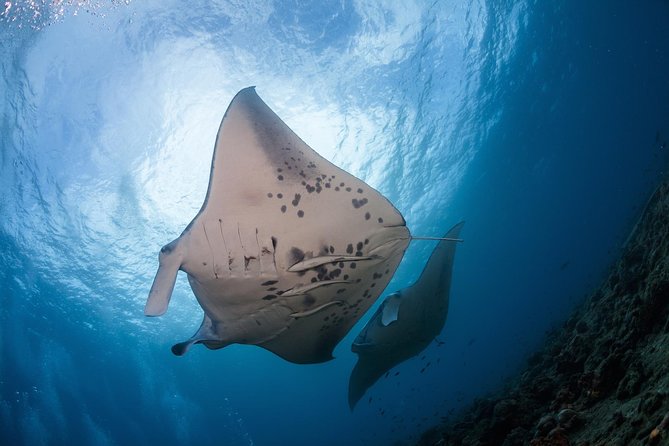
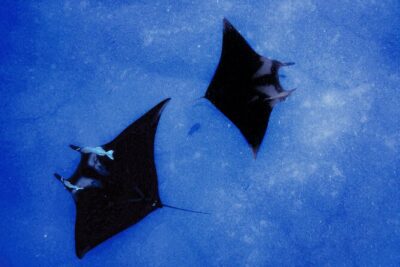
The first moments can feel unreal. Several reviews describe how quickly mantas appear after getting into position—sometimes within the first ten minutes—and how close they can get. People talk about distance in inches, and that tracks with what the setup is meant to do.
When manta rays arrive, you’ll likely see them:
- glide underneath you
- circle through the lit area
- sometimes pass very near your snorkel mask zone
- feed by moving through the plankton-rich water
You also get real-time reassurance from staff in the water. Not everyone is comfortable in ocean darkness, and the staff’s role is to keep you steady and help you adjust quickly.
One standout detail: you can ask to get out at any time. That’s a comfort feature if you’re not feeling great, if you need a break, or if the water conditions are more intense than expected. And for people who feel a bit nauseous, the boat may offer ginger ale and chews, plus other drinks.
Also, keep your tone calm in your breathing. Night snorkel success is mostly relaxation. If you panic or flail, you’ll work harder and feel worse. If you stay loose, the float does the heavy lifting.
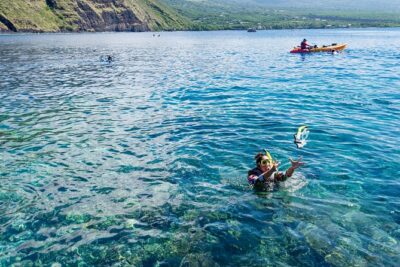
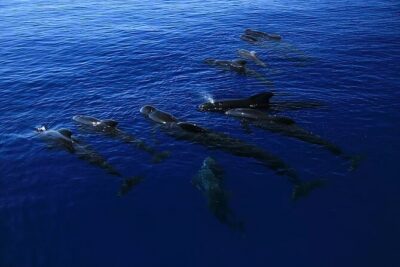
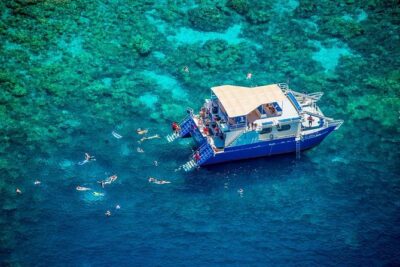
More masks-on stops along the Kona reef
How rough water can change your experience (and what to do)
Even with the best setup, ocean conditions matter. A few reviews mention choppy or swelly nights, including winter vs summer comparisons from staff. In summer, they sometimes see rougher water than typical, and in winter it can be rougher still.
If it’s bumpy:
- boat ride comfort can matter for sea sickness
- your grip on the float may tighten, which leads to shoulder fatigue
- entering and holding position can feel more effort than you planned
Practical tips if you’re sensitive:
- If you tend toward motion sickness, consider what helps you on boats before you even leave shore.
- Bring a layer for the deck; getting cold makes you feel more nauseous.
- In the water, focus on slow breathing and a relaxed grip.
For families, choppy water can be manageable with the right support. Multiple reviews include kids doing the snorkel successfully, but a few notes point out that younger children may struggle with the holding requirement. If you’re bringing kids, think about whether they can follow instructions and stay calm without constantly moving around.
Price and value: what $141.57 buys you here
At $141.57 per person, you’re paying for a very specific experience: guaranteed proximity viewing through a controlled plankton feeding setup, led by staff, on a purpose-built vessel for night snorkeling.
You’re not paying for a huge “wilderness” drive or a multi-stop day. You’re paying for:
- the sunset sail experience on the Hokulani
- equipment provided (wetsuit, mask, snorkel)
- a designed float system with lights
- expert safety briefing and staff support
- about 45 minutes of actual time in the water
That value feels strongest if you want a close-up mantle-ray encounter without extra gear hunting or figuring out the logistics yourself. And the reviews back up that the experience can exceed expectations in mantas counted. Some nights are calm and manta-heavy, with reports like 5 or 8 mantas at once. Staff also mention expectations like 1–3 mantas as a typical average, so when you get more, it feels like a bonus—not a disappointment.
If you mainly want to swim freely in the ocean, you might feel the cost doesn’t match your desired activity. But if you want safe, close viewing with less swimming effort, it’s a fair trade.
Who this tour is best for (and who should rethink it)
This tour is a great match if you:
- want a night snorkel that’s structured and guided
- want a close manta encounter without long, technical snorkeling
- like the idea of floating and observing rather than chasing
- bring kids who can handle instructions and calm expectations
It may not be the best match if you:
- strongly prefer active swimming for the whole experience
- hate holding still and could have shoulder pain
- expect perfect flat water every time (it’s the ocean; it can get choppy)
Also, if you’re booking and you’ve never been near manta rays before, keep your “touching” expectations in check. The rule is don’t touch, and the experience is built around that.
Small logistics that can make or break your start
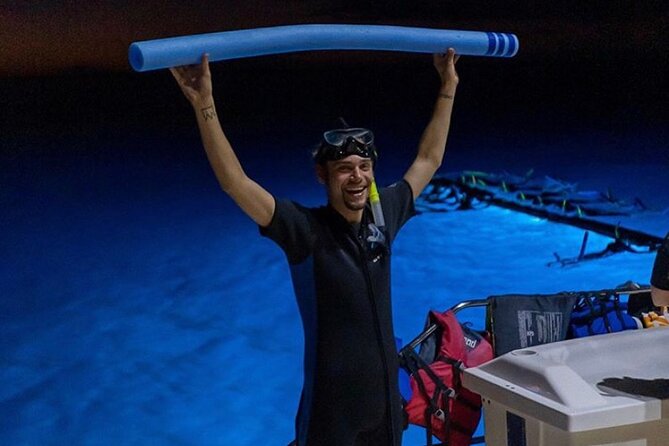
Here are a few details that matter more than they sound:
Meeting point clarity: the actual meet-up spot is around the building on the right, not at the boat ramp. If you show up early, you’ll get oriented faster.
Third-party booking confusion: one review noted that booking info from an external app was messy (company name not obvious, links not going exactly where pickup was). If you’re booking through a platform, double-check the meeting details and look for the clearest phone or contact path before you leave your hotel.
What to wear: even though you’ll get a wetsuit, plan for cool deck air during the sail and after the snorkel. A warm layer helps.
Should you book this manta ray snorkel?
I think you should book if you want the most direct path to close-up manta rays with a safety-first setup and real support in the water. The combo of sunset sail, provided gear, and a lit float system makes this feel less like “stand around and hope” and more like an experience that’s designed to deliver.
Hold off only if you know you hate holding positions for long periods, want to swim freely alongside animals, or are very unsure about night snorkeling in choppy water. For most people, though, the tradeoffs are worth it—the mantas are the whole point, and when they show up close, it’s unforgettable.
FAQ
Where does the tour start and end?
The tour starts at Keauhou Bay, Kahaluu-Keauhou, HI 96740, USA, and it ends back at the meeting point.
How long is the experience?
The duration is about 1 hour 30 minutes. Snorkel time is approximately 45 minutes.
What snorkeling gear is included?
Wetsuits, masks, and snorkels are provided. Fins are not needed.
Are drinks and snacks included?
Yes. Drinks and snacks are offered onboard, and filtered water plus soda/pop and varied juices are included.
Are full face masks allowed?
No. Due to safety concerns, full face masks are not allowed on these tours.
What physical fitness level do I need?
You should have a moderate physical fitness level.
How large is the group?
The tour/activity has a maximum of 49 travelers.
Is the tour offered in English?
Yes, it is offered in English.
What happens if the ocean weather is bad?
This experience requires good weather. If it’s canceled due to poor weather, you’ll be offered a different date or a full refund.
Can I get a full refund if I change my mind?
Yes. Free cancellation is available up to 24 hours in advance for a full refund. If you cancel less than 24 hours before the start time, the amount paid is not refunded.
More Snorkeling Off the Kona Coast
- Big Island Manta Ray Night Snorkel
★ 5.0 · 5,656 reviews - Big Island: Kona Manta Ray Snorkel Tour in Keauhou Harbor
★ 4.5 · 2,465 reviews - Big Island: Captain Cook Snorkel On A Power Catamaran With Lunch
★ 5.0 · 2,232 reviews - KONA Manta Ray Night Snorkel – FREE re-ride if no Sightings
★ 5.0 · 2,212 reviews - Manta Ray Night Snorkel at Kona, Big Island
★ 5.0 · 1,758 reviews - Kona Snorkel Tour: Captain Cook Reef Snorkel, Dolphin & Sea Caves
★ 4.5 · 1,411 reviews
More Tour Reviews in Big Island of Hawaii
- Big Island in a Day: Volcanoes Waterfalls Sightseeing and History
★ 5.0 · 6,569 reviews - Big Island Manta Ray Night Snorkel
★ 5.0 · 5,656 reviews - Big Island: Kona Manta Ray Snorkel Tour in Keauhou Harbor
★ 4.5 · 2,465 reviews - Hilo Shore Excursion: Volcanoes National Park & Black Sand Beach
★ 4.5 · 2,338 reviews - Big Island: Captain Cook Snorkel On A Power Catamaran With Lunch
★ 5.0 · 2,232 reviews - KONA Manta Ray Night Snorkel – FREE re-ride if no Sightings
★ 5.0 · 2,212 reviews
More Nights With the Kona Mantas
- Big Island Manta Ray Night Snorkel
★ 5.0 · 5,656 reviews - Big Island: Kona Manta Ray Snorkel Tour in Keauhou Harbor
★ 4.5 · 2,465 reviews - KONA Manta Ray Night Snorkel – FREE re-ride if no Sightings
★ 5.0 · 2,212 reviews - Manta Ray Night Snorkel at Kona, Big Island
★ 5.0 · 1,758 reviews - Glow of the Deep: Night Snorkeling with Manta Rays
★ 4.5 · 1,254 reviews - Manta Magic: Small-Group Manta Ray Night Snorkel in Kailua Kona
★ 5.0 · 1,141 reviews
Just Added: The Newest Big Island Reviews

Manta Ray Night Snorkels, compared.
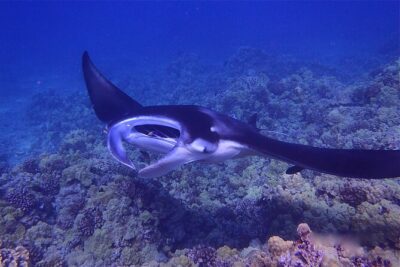 ★ 5.0Big Island Manta Ray Night SnorkelFrom $845,656 reviews
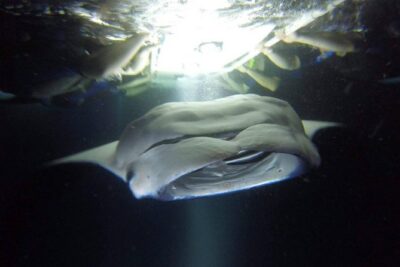 ★ 4.5Kona Manta Ray Snorkel Tour in Keauhou HarborFrom $252,465 reviews
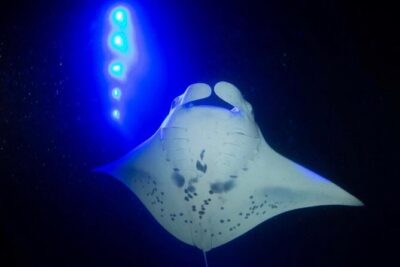 ★ 5.0KONA Manta Ray Night Snorkel – FREE re-ride if no SightingsFrom $492,212 reviews
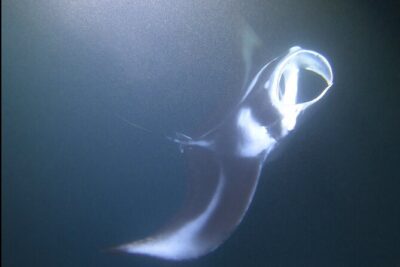 ★ 5.0Manta Ray Night Snorkel at Kona, Big IslandFrom $441,758 reviews
 ★ 4.5Glow of the Deep: Night Snorkeling with Manta RaysFrom $801,254 reviews
 ★ 4.8Kailua Kona: Night Manta Ray Adventure on the Big IslandFrom $1211,199 reviews
 ★ 5.0Manta Magic: Small-Group Manta Ray Night Snorkel in Kailua KonaFrom $1451,141 reviews
 ★ 5.0Sunset and Manta Ray Snorkel AdventureFrom $154843 reviews
Browse the lists this tour appears in