
Reviewed · HAWAII VOLCANOES NATIONAL PARK TOURS
Kohala Coast Volcano Waterfalls-90 Min Heli Tour-Doors Off or On
This helicopter route stacks some of the Big Island’s biggest hitters into a single, time-efficient flight over the Kona side. You’ll see Kailua Bay’s clear water, major volcano names like Mauna Loa and Mauna Kea, and a waterfall stretch along the Kohala Coast.
What I like most is the sheer variety packed into 1 hour 30 minutes, from volcanic craters and forest reserve air time to the dramatic cliff-and-waterfall chain. Another win: the flight style is “safety first, then fun,” and you can choose doors-on or doors-off for different levels of wind and exposure.
One watch-out: the whole experience depends on good weather, and clouds can reduce visibility—meaning you might not get the specific volcano views you paid for.
In This Review
- Key things to know before you fly
- Volcano, waterfalls, and ocean time—how this tour is built
- Starting over Kailua Bay and the Kona shoreline
- Mauna Loa and Ka‘ūpūlehu Crater: geology first, then scale
- Hualālai to Mauna Kea: from rugged slopes to high-altitude views
- Pu‘u Wa‘awa‘a Forest Reserve and the Kawaihae Coast break
- Kohala Coast waterfalls and Kohala volcano: the turning point
- Pololū Valley, Honopue Valley cliffs, and Waimanu’s green depth
- Waipi‘o Valley, Kiholo Bay, and Makalawena: finish with contrast
- Doors-off vs doors-on: what changes (and how to prepare)
- Staff, safety, and the “smooth flight” factor
- Price and value: is $895 “worth it”?
- Should you book the Kohala Coast volcano and waterfalls heli tour?
- FAQ
- How long is the Kohala Coast Volcano Waterfalls helicopter tour?
- Where do I meet for the tour?
- What is the cost per person?
- Does the tour fly doors off or doors on?
- What should I wear for a doors-off experience?
- Are service animals allowed?
- Are there weight rules for flying?
- What’s included in the price?
- Is weather a factor?
- How many people are on the tour?
Key things to know before you fly
- Doors-off is for wind lovers: plan for cool air and real exposure outside the aircraft.
- A giant sights circuit: Mauna Loa, Hualālai, Mauna Kea, Kohala volcano, and multiple valleys in one loop.
- Waterfall spotting is a highlight: Laupāhoehoe Nui and Wai’ilikahi Falls are built into the route.
- Remote coast + ocean wildlife areas: Kiholo Bay is on the itinerary for turquoise water and viewing chances.
- Small-group feel: the tour caps at 15 passengers.
- Weight rules affect bookings: your weight can trigger a weight-and-balance fee or extra seat purchase.
More ways into Hawaii Volcanoes National Park
- Big Island in a Day: Volcanoes Waterfalls Sightseeing and History★ 5.0 · 6,569 reviews
- Hilo Shore Excursion: Volcanoes National Park & Black Sand Beach★ 4.5 · 2,338 reviews
- Small Group Big Island Twilight Volcano and Stargazing Tour★ 5.0 · 1,619 reviews
- Big Island Highlights: Coffee, Volcano, Black Sands & Waterfall★ 5.0 · 1,054 reviews
Volcano, waterfalls, and ocean time—how this tour is built
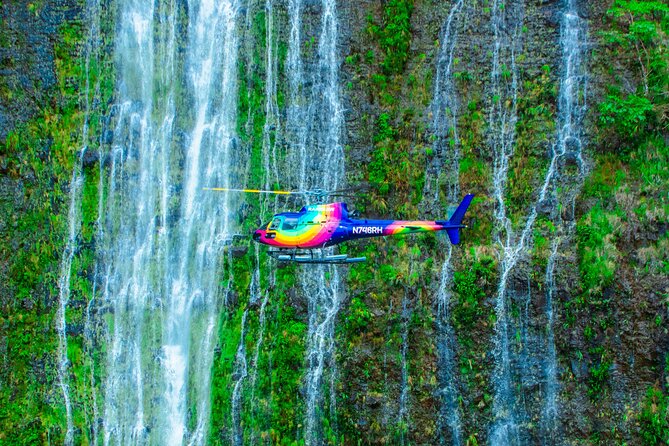
This is a “you get airborne, then you start collecting Big Island scenery” kind of tour. It’s priced at $895 per person, lasts about 90 minutes, and runs on a set route that’s designed to move you across several distinct regions quickly.
Instead of long drives and waiting for viewpoints, you’re mostly in the air, looking down on volcano slopes, crater edges, valleys, and coastal bays. That matters here because the Big Island’s best-known features are spread out. From Kailua-Kona, you’d need a lot of time on the ground to stitch together the same variety.
The other value point: you’re not just doing one theme. You get ocean (bays and beaches), geology (craters and multiple volcanoes), and green-and-water (valleys and waterfalls) in one outing. If you like seeing how the island changes every few miles, this routing makes a lot of sense.
Starting over Kailua Bay and the Kona shoreline
Your flight begins by soaring over Kailua Bay, where the water visibility is often part of the payoff. This early segment is a nice setup because it gives you a clean, bright sense of place before you move inland toward heavier geology.
Next, you head toward the Big Island’s volcanic spine. This shift is more than scenic. It’s where the tour’s “wow per minute” approach really works—helicopter altitude and direction let you watch coastlines, then quickly transition to the volcanic interior without the usual stop-and-start travel time.
If you want a smooth first impression, this beginning stretch is it: you get water, then you get the island’s core story.
Mauna Loa and Ka‘ūpūlehu Crater: geology first, then scale
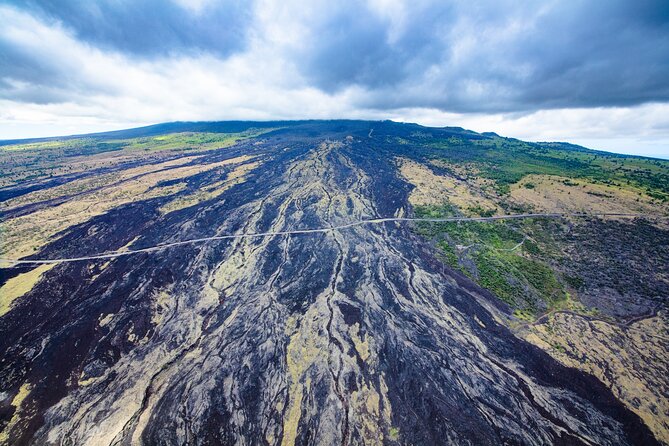
As you climb into volcanic territory, Mauna Loa comes into view. Even from above, it’s hard not to react to how dominant it looks. It’s not just a volcano name on a map—it reads like a massive landform when you can see its shape across distances.
After that, you fly over the Ka‘Ūpūlehu Crater area. This is the kind of aerial view that turns “a crater” from a word into an actual shape—edges, bends, and how the terrain breaks up. It’s also where the tour’s routing starts to feel like more than just sightseeing: it’s a guided look at how different parts of the island formed and how they connect.
If you’re the type who enjoys learning what you’re seeing, pay attention during the briefing and narration you’ll get onboard.
Hualālai to Mauna Kea: from rugged slopes to high-altitude views
The flight continues around Hualālai, then moves toward the sacred Mauna Kea area at about 13,796 feet. Mauna Kea’s altitude isn’t just trivia—it changes the look of the land. You tend to see more contrast in what’s above versus below, and the island’s scale becomes obvious in a new way.
A practical note: weather can affect what you clearly see in this section. If clouds sit low, they may soften views of the higher points. That’s a real risk on any helicopter tour of volcanic peaks, and it’s the drawback most likely to disappoint people who booked for a specific volcano angle.
Still, when visibility cooperates, this stretch is one of the reasons people choose this kind of flight over slower options.
More falls and swimming holes on the wet side
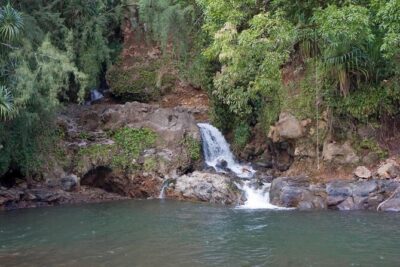

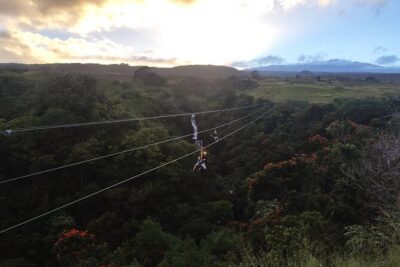
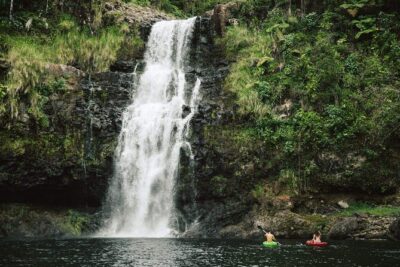

Pu‘u Wa‘awa‘a Forest Reserve and the Kawaihae Coast break
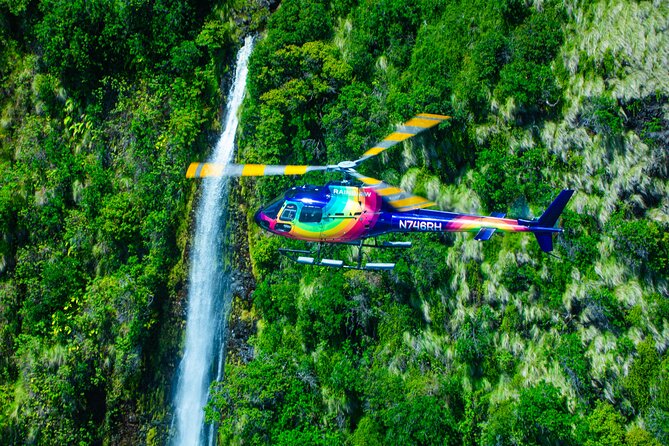
After the high country, the route shifts to Pu‘u Wa‘awa‘a Forest Reserve, a spot known as a safe haven for many types of flora and fauna. From the air, forest reserves tend to read as texture—different shades and patterns that hint at density and elevation changes.
Then you head back toward the coast along Kawaihae Coast, where you’ll cruise over shoreline areas dotted with beaches and cultural sites. This part is a good “breather” for your eyes. It’s easier to process visually than crater edges and steep volcanic terrain, and it helps your brain connect island regions into a single story.
If you’re deciding whether this tour is worth the money, this is where the value clicks: you’re not just stacking landmarks, you’re getting real variety in what your eyes are doing for 90 minutes.
Kohala Coast waterfalls and Kohala volcano: the turning point
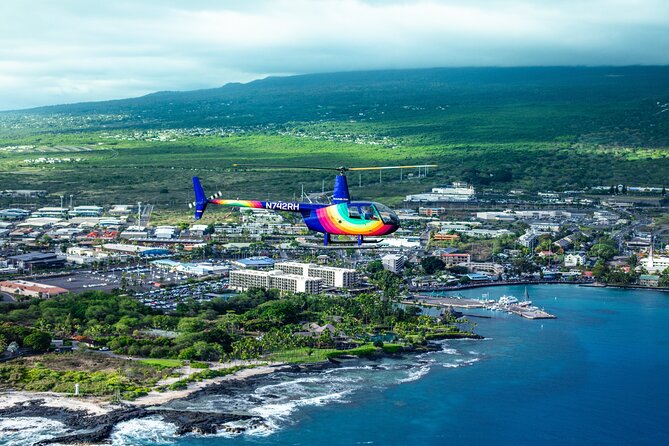
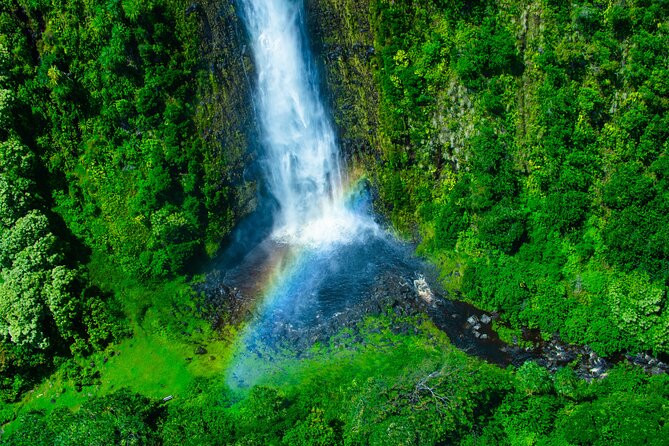
This is the section many people remember. After you see the extinct Kohala volcano, you move into lush scenery on the Kohala Coast, where the flight route passes over waterfalls and green valleys.
Two named highlights in this chain are Laupāhoehoe Nui Falls and Wai’ilikahi Falls. Aerial views don’t always show details like you’d see from a trail, but they often show what matters most: the fall’s position in the terrain, how steep the surrounding slopes are, and how many drops or channels the water can form.
Drawback to keep in mind: waterfalls depend on lighting and cloud cover. If you’re flying in conditions where contrast is low, they can look less dramatic. Still, compared to many ground options, you’re more likely to get a clear overhead perspective quickly.
Pololū Valley, Honopue Valley cliffs, and Waimanu’s green depth
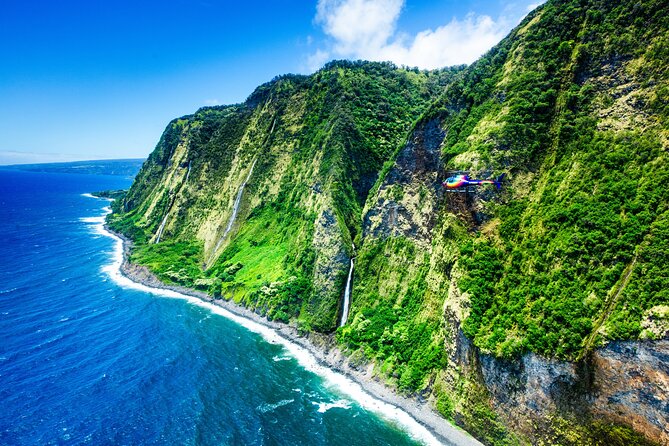
Next comes Pololū Valley and its dramatic cliffs, along with mention of Black Sand Beach. From above, the cliffs and coastline layout often look more shocking than you’d expect, especially when the terrain pinches toward the ocean.
Then you pass toward Honopue Valley for cliff views from a unique aerial angle. Even if you’ve never heard the name before, aerial cliff angles tend to make people realize how rugged the island really is.
After that, the route continues to Laupāhoehoe Nui and Wai’ilikahi areas (again, this waterfall focus is intentional), then pushes into Waimanu Valley, known for lush greenery and spectacular waterfalls.
If you’re someone who likes scenery that feels remote and less “tour-bus shaped,” this is your moment. It’s the green-and-water stretch where the island stops looking like a set of famous points and starts looking like one connected system.
Waipi‘o Valley, Kiholo Bay, and Makalawena: finish with contrast
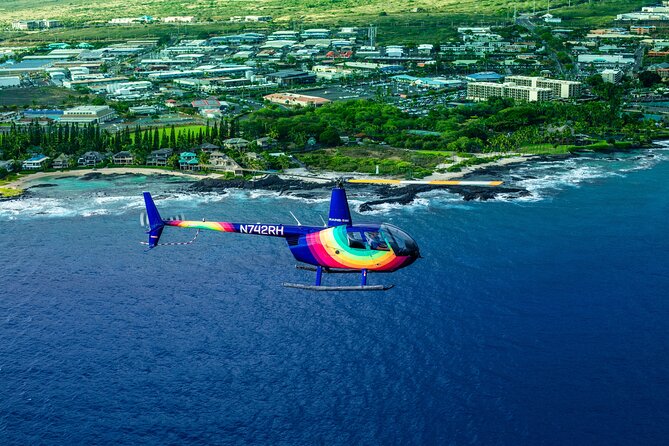
You return toward the Kona side and fly past Waipi‘o Valley, sometimes called the Valley of the Kings. Steep cliffs, taro fields, and multiple waterfalls are part of what you’re looking for from above—again, not just the name, but the way the land is carved.
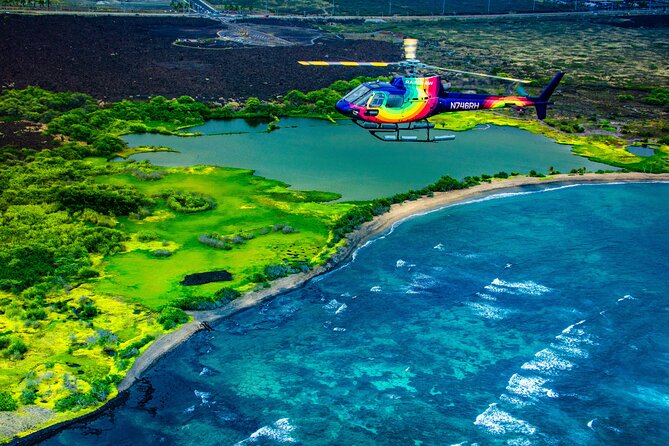
Then the itinerary includes A Bay (Anaehoomalu Bay) and Kiholo Bay. Kiholo is known for turquoise water and for wildlife viewing chances. That makes the end portion feel more ocean-forward again—less volcanic and waterfall-heavy, more coastal.
Finally, you end with views of Makalawena Beach, recognized for its white sands and clear water. It’s a strong way to cap the flight: after all the geology and valleys, you close with the kind of coastal scene most people came to Hawaii for in the first place.
Doors-off vs doors-on: what changes (and how to prepare)
The biggest difference is exposure. With doors-off, you’re getting more wind and more sensation of height. That can be amazing, but it’s not subtle. One of the standout impressions from people who loved the tour is that it’s great if you like wind and open-air flying.
If you choose doors-on, you still get the aerial sightseeing, just with less direct exposure. Either way, dress matters.
For doors-off, plan for:
- jackets or sweatshirts
- closed-toe shoes
- hair ties
- long pants recommended
Also, for each passenger weighing 250 pounds or more, the operator uses weight-and-balance rules. For 250–275 lbs, a weight and balance fee applies (50% of the seat price). For 275 lbs or higher, an additional seat purchase may be required. Total passenger weight rules also apply.
One more seating reality: when you book doors-off, your seat may or may not be directly adjacent to an open door. So don’t assume front-row = door visibility.
Staff, safety, and the “smooth flight” factor
Rainbow Helicopters runs this as a small operation with a safety-first approach. The operator emphasizes that safety of flight is the primary concern, and it can refuse service to passengers who appear intoxicated, including full charges if someone is refused.
From a guest-experience standpoint, people often remember the human touch: pilots and staff who keep things clear and calm. In particular, the name Josh comes up in connection with enthusiasm and smooth piloting, and Wilson is mentioned for meeting passengers and handling the pre-flight experience with charm and humor.
Even if you’ve flown before, take the briefing seriously. Small instructions like where to position yourself for comfort can make a noticeable difference—especially in a doors-off setup.
Price and value: is $895 “worth it”?
At $895 per person, this isn’t a budget whim. You’re paying for two things: time aloft and access to remote features without long drives.
Here’s where the value can make sense:
- You want multiple major sights in one shot: volcanoes, crater areas, valleys, waterfalls, and multiple bays.
- Your trip window is short and you don’t want to spend it commuting around the island.
- You specifically want the aerial perspective, where Pololū cliffs, Waipi‘o steep sides, and waterfall positions read immediately.
Here’s when it might feel steep:
- Weather reduces visibility, and you don’t get the exact volcano look you planned around.
- You’re expecting the waterfalls to feel like a hike viewpoint. From the air, you’ll see them and understand the terrain, but it won’t replace being on the ground.
Cancellation is structured as free up to 24 hours before the experience start time if plans change, and if it’s canceled due to poor weather, you’re offered a different date or a full refund. The practical takeaway: still book only if you’re comfortable with the weather gamble.
Should you book the Kohala Coast volcano and waterfalls heli tour?
I think this is a smart booking if you want the Big Island’s “greatest hits” in a single, efficient experience—and you’re okay with the fact that weather controls visibility.
Book it if:
- you’re excited by open-air flying and can handle wind (especially for doors-off)
- you want volcano names like Mauna Loa and Mauna Kea paired with waterfalls and coastal bays
- you like learning what you’re seeing while you’re airborne
Skip it or consider alternatives if:
- you’re traveling on a single tight day with no flexibility and clouds would ruin your mood
- you dislike heights or wind exposure, even if you choose doors-on
If you can be flexible and you want maximum “I can’t believe we’re seeing that from above” per minute, this tour fits the bill.
FAQ
How long is the Kohala Coast Volcano Waterfalls helicopter tour?
It’s approximately 1 hour 30 minutes.
Where do I meet for the tour?
The meeting point is 73-4370 Paoo St, Kailua-Kona, HI 96740, USA. The tour ends back at the meeting point.
What is the cost per person?
The price listed is $895.00 per person.
Does the tour fly doors off or doors on?
It offers both options: doors-off or doors-on.
What should I wear for a doors-off experience?
For doors-off, bring jackets or sweatshirts, wear closed-toe shoes, use hair ties, and long pants are recommended.
Are service animals allowed?
Yes, service animals are allowed.
Are there weight rules for flying?
Yes. Total passenger weight rules apply, and there are weight-and-balance requirements if you weigh 250 pounds or more, including possible added fees or an additional seat purchase depending on your weight.
What’s included in the price?
Included items are parking fees and a phone strap.
Is weather a factor?
Yes. The experience requires good weather. If it’s canceled due to poor weather, you’ll be offered a different date or a full refund.
How many people are on the tour?
Maximum group size is 15 travelers.
Lava and Falls From the Air
- Private Kona Coast Helicopter Tour: All Window Seats
★ 5.0 · 139 reviews - Big Island Spectacular Helicopter Tour
★ 5.0 · 116 reviews - Big Island: Discover Hilo Helicopter Tour
★ 4.5 · 110 reviews - Flight of Aloha Flying Ride Pass
★ 5.0 · 86 reviews - Kohala Waterfalls & Valleys Helicopter Tour
★ 5.0 · 36 reviews - Exclusive Landing with Spectacular Big Island Helicopter Tour
★ 5.0 · 34 reviews
Falls on the Wet Side
- Big Island in a Day: Volcanoes Waterfalls Sightseeing and History
★ 5.0 · 6,569 reviews - Big Island Zipline Tour Near Akaka Falls (250-ft Waterfall!)
★ 5.0 · 1,077 reviews - Big Island: 9-Line Waterfall Zipline Experience
★ 5.0 · 1,057 reviews - Big Island Highlights: Coffee, Volcano, Black Sands & Waterfall
★ 5.0 · 1,054 reviews - Big Island: 8-Zipline & Suspension Bridge Waterfall Adventure
★ 5.0 · 914 reviews - Big Island Waterfalls Tour with Swimming and Botanical Garden
★ 5.0 · 513 reviews
Deeper Into Volcanoes National Park
- Big Island in a Day: Volcanoes Waterfalls Sightseeing and History
★ 5.0 · 6,569 reviews - Hilo Shore Excursion: Volcanoes National Park & Black Sand Beach
★ 4.5 · 2,338 reviews - Small Group Big Island Twilight Volcano and Stargazing Tour
★ 5.0 · 1,619 reviews - Big Island Highlights: Coffee, Volcano, Black Sands & Waterfall
★ 5.0 · 1,054 reviews - Deluxe Volcano Experience with Restaurant Dinner
★ 5.0 · 620 reviews - Big Island: Fat Tire E-Bike Tour through Volcanoes National Park
★ 5.0 · 546 reviews
Just Added: The Newest Big Island Reviews



Hawaii Volcanoes National Park Tours, compared.
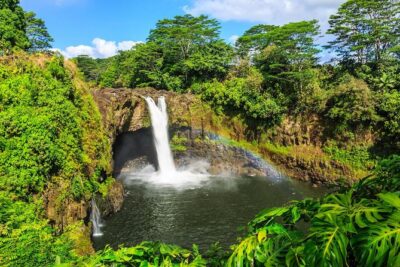 ★ 5.0Big Island in a Day: Volcanoes Waterfalls Sightseeing and HistoryFrom $2646,569 reviews
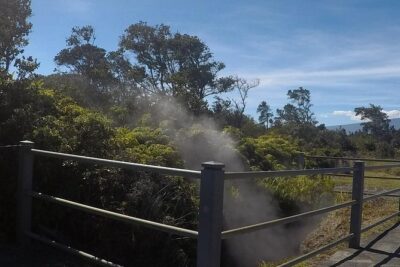 ★ 4.5Hilo Shore Excursion: Volcanoes National Park & Black Sand BeachFrom $1592,338 reviews
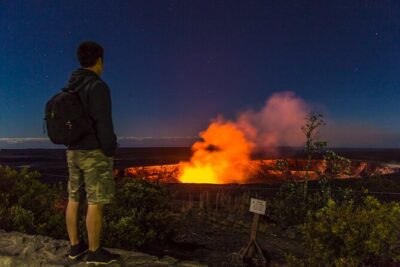 ★ 5.0Small Group Big Island Twilight Volcano and Stargazing TourFrom $2971,619 reviews
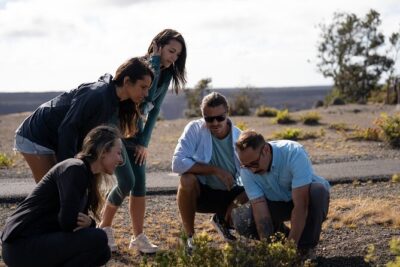 ★ 5.0Big Island Highlights: Coffee, Volcano, Black Sands & WaterfallFrom $2991,054 reviews
 ★ 5.0Deluxe Volcano Experience with Restaurant DinnerFrom $341620 reviews
 ★ 5.0Fat Tire E-Bike Tour through Volcanoes National ParkFrom $199546 reviews
 ★ 4.5Big Island, Hawaii: Volcanoes National Park SafariFrom $379545 reviews
 ★ 4.9Volcanoes, Waterfalls, & Coffee Farm Day-TripFrom $264414 reviews
Browse the lists this tour appears in