
Reviewed · KONA SCUBA DIVING TRIPS
Introductory Beach Scuba Dive
A calm way to start scuba basics. I like the heated indoor pool for early confidence and the small group setup (max 4) with PADI-certified instructors. You get real skill-building, not just gear handoffs.
One thing to consider: the ocean portion has firm go/no-go rules. You must meet the swim and health requirements, and you’ll only proceed if you pass the classroom and pool portions.
In This Review
- Key things to know before you go
- Heated Pool First: Building Confidence in Hilo
- Dry-Land Skills: Breathing, Buoyancy, and Safety Checks
- Equipment, Snacks, and the Small-Group Advantage
- From Indoor Practice to Hilo Bay Reef Time
- What You Might See Underwater Near Hilo’s Reefs
- Coaching From PADI Instructors: Akara and Mark’s Approach
- 9:00 AM Logistics From 1717 Kamehameha Ave
- Health Rules, English Requirements, and the Altitude Safety Limit
- Should You Book This Hilo Intro Course?
Key things to know before you go
- Heated indoor pool first so you learn breathing and control before open water
- 45-ish minutes of skills on land to cover safety, breathing, and emergencies
- Max 4 travelers means more direct coaching time
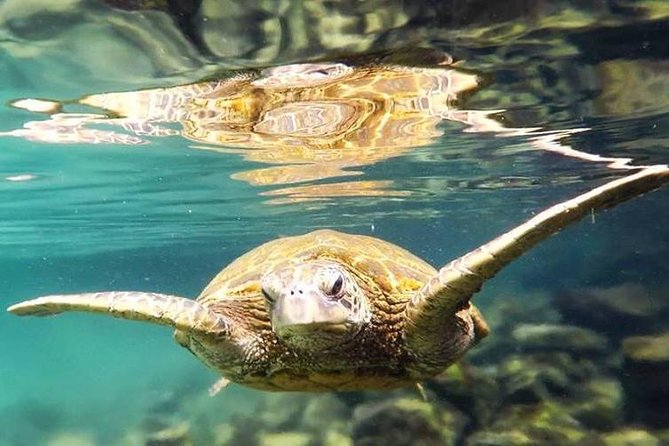
- Reef time near Hilo Bay with chances to see coral and Hawaiian green sea turtles
- Full equipment + snacks + local juice included for a smoother morning
Drop in on another Kona dive site
- One Tank Manta Night Dive and Snorkel★ 5.0 · 56 reviews
- Two Tank Morning Reef Dive and Snorkel★ 5.0 · 54 reviews
- 2-Tank Daytime Scuba Dive Boat Trip★ 5.0 · 26 reviews
- 2 Tank Shore Dive at Sea Turtle Cove★ 4.5 · 19 reviews
Heated Pool First: Building Confidence in Hilo
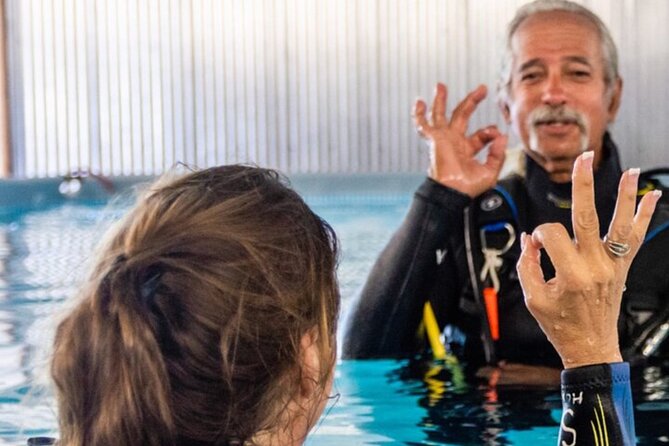
This course is built for first-timers, and the order matters. You start with a heated indoor pool session, which is a huge help when you’re still learning how scuba gear feels on your body. The air and water are controlled, so you can focus on breathing, hand signals, and staying comfortable.
I also like that the pool practice is not an afterthought. You’re given time to get used to the equipment before anyone asks you to handle open water on top of it. That’s the practical path for people who want to see fish and coral without feeling rushed.
The main drawback is also simple: if you’re uncomfortable in the pool or can’t demonstrate the basics, you won’t move on to the ocean portion. That’s not punishment. It’s the safety system doing its job.
Dry-Land Skills: Breathing, Buoyancy, and Safety Checks
Before you hit the water, you’ll have a classroom session (about 45 minutes) on dry land. This is where you learn the key mechanics of how scuba breathing works underwater, plus emergency safety procedures you’ll be expected to understand and follow.
This part is valuable because it gives you a script for what to do if things feel off. You’ll learn how to think through problems, not just memorize steps. That helps you relax once the gear goes on and you start focusing on breathing rhythm instead of panic.
Also pay attention to language: instruction is offered in English, and you need to be able to understand detailed directions. If you’re not fully comfortable with English instruction, this is one area where you might struggle even if you’re physically ready.
Equipment, Snacks, and the Small-Group Advantage
The morning is set up so you don’t have to be a gear expert. Scuba equipment is included, and you get snacks plus local juice during the experience. That matters more than it sounds—when you’re learning a new physical routine, low blood sugar can turn learning into frustration fast.
The max group size of 4 travelers is another real value point. In bigger groups, instructors often spend time managing logistics. Here, you’re more likely to get clear, direct coaching when you need it.
One practical note from the rules: you’ll be expected to carry 50 lbs of equipment on your back unassisted. This doesn’t mean you need to be a fitness model, but it does mean you should be ready for some real physical work before you even get wet.
From Indoor Practice to Hilo Bay Reef Time
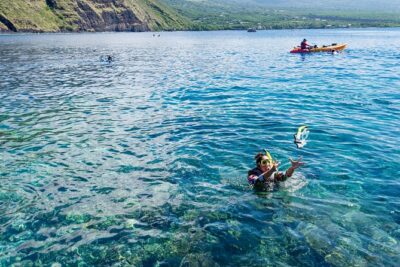
After the classroom and pool practice, you’ll head to the coast for the ocean portion near Hilo. You’ll spend about 30 to 50 minutes in open water, guided by PADI-certified instructors.
What makes this transition workable is that you’re not thrown into uncertainty. You already learned breathing and safety concepts in a controlled setting, then you’re coached again in the moment as you move into the real reef environment. That’s how you keep the experience calm instead of chaotic.
Also, plan for a straightforward start from the Hilo area rather than a long offshore boat ride. The operation is based at Hilo Ocean Adventures and then transports you to the reef location. Expect a typical morning flow: meet, teach, practice, then gear up and go.

What You Might See Underwater Near Hilo’s Reefs
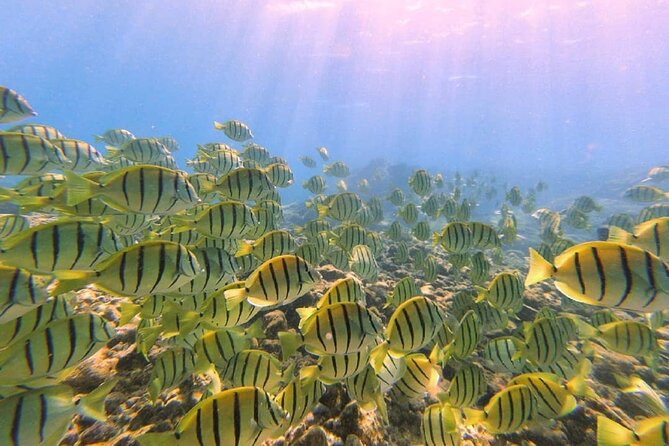
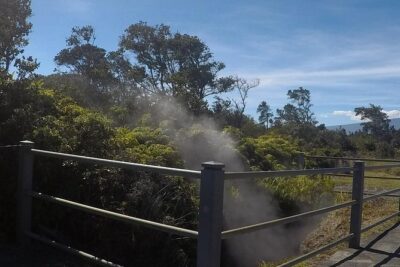
The reef area near Hilo Bay is why this feels special. Hawaii has major coral systems, and the tour notes that coral reef ecosystems make up about 60 percent of reef ecosystems in the United States. Translation: the underwater world here is built for seeing color and life.
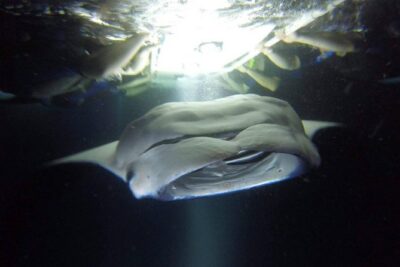
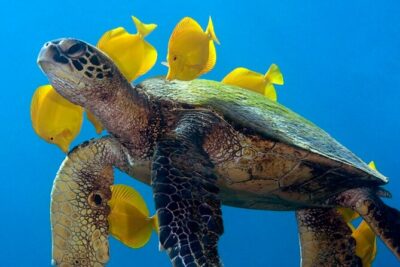
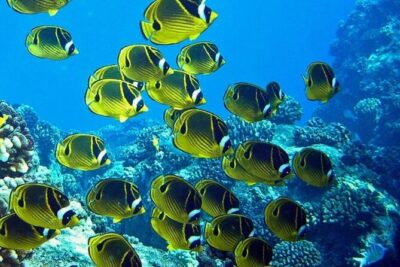
During your ocean time, you can look for tropical fish and—if conditions cooperate—Hawaiian green sea turtles. A calm, well-coached experience is especially helpful for wildlife spotting because you can slow down and actually watch what’s around you.
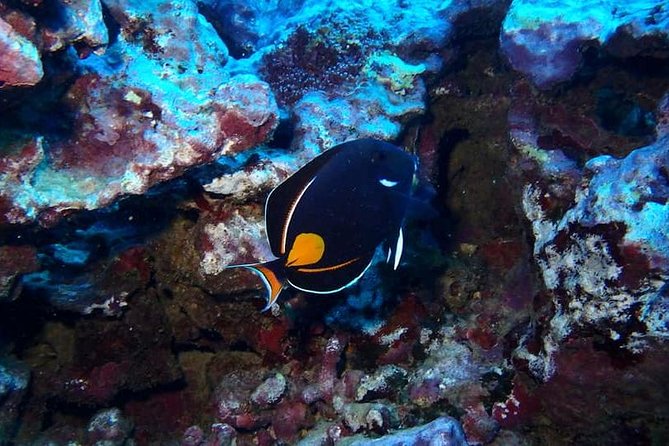
You should also expect coral. One of the standout memories people report is seeing a lot of coral close by, along with fish moving through it. That’s the kind of scene that makes learning worthwhile.
Coaching From PADI Instructors: Akara and Mark’s Approach
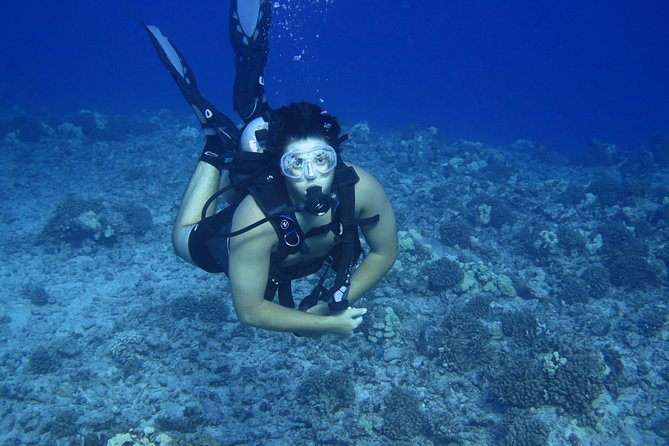
The best part of this kind of intro course is the human coaching. The instructors here focus on making sure you’re comfortable before pushing forward.
In particular, Akara is highlighted for keeping people at ease and checking that you’re comfortable at all times. That matters if you’re not a confident swimmer or if the gear feels strange at first.
You’ll also see mentions of Mark and his team providing ample coaching so the experience stays smooth and safe. For me, that’s the difference between a nervous first time and a memorable one: you need a team that talks you through it and watches your comfort level closely.
9:00 AM Logistics From 1717 Kamehameha Ave
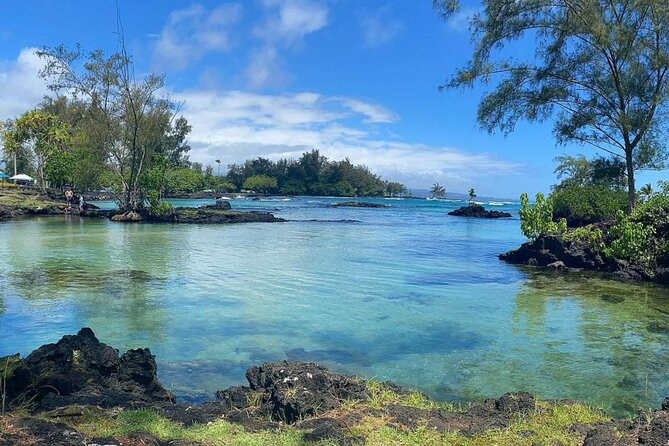
The tour meets at Hilo Ocean Adventures, 1717 Kamehameha Ave, Hilo, HI 96720, with a 9:00 am start. The activity ends back at the same meeting point.
Transportation is part of the plan, but read the fine print and confirm what applies to you. The tour includes transportation from your check-in location to the water site. The overview also notes round-trip transport from Hilo hotels or the cruise port, while the listing’s exclusions say hotel/port pickup and drop off are not included. In practice, this usually means you may need to check where you’re expected to check in.
If you’re staying in Hilo or docking at the cruise port, you’re probably in the right place for this kind of short, focused morning schedule. If you’re coming from farther away, build in buffer time—your success depends on arriving on time for the classroom and pool sequence.
Health Rules, English Requirements, and the Altitude Safety Limit
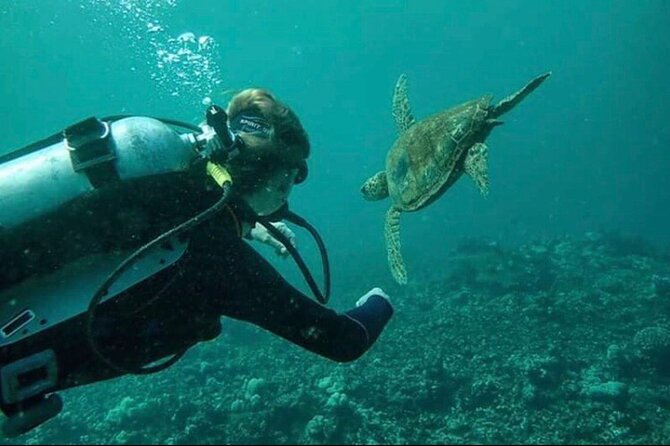
This isn’t for everyone, and the rules are clear.
The tour isn’t suitable for pregnant women, people with heart conditions, or those with neck or back problems. You also need a strong physical fitness level and must be able to swim unassisted in the open ocean, understand and converse in English, and carry that 50 lbs of equipment.
You also must complete and submit the PADI/NAUI mandatory medical questionnaire at least 72 hours before the excursion. If you submit it late, refunds aren’t honored, and if you can’t complete the classroom and confined (pool) portions, you won’t go to the ocean.
After your underwater session, there’s an altitude safety requirement: don’t travel to altitudes of 2,500 ft or higher within 18 hours following your experience. That means plan your day and any flight or road trip carefully.
And one more planning point: the tour needs good weather. If weather cancels it, you’ll be offered another date or a full refund.
Should You Book This Hilo Intro Course?
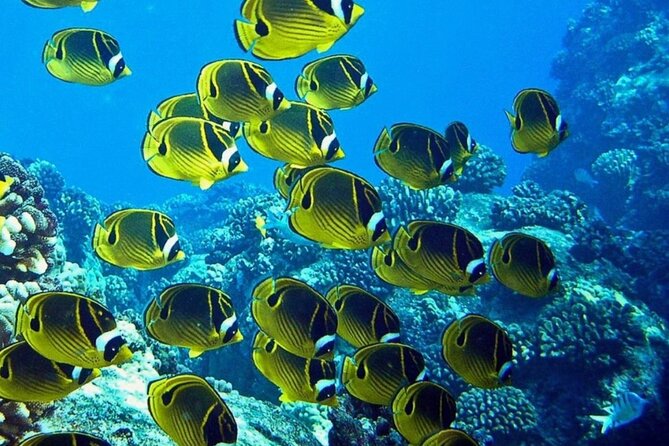
If you want a first scuba experience that’s built around comfort and coaching, this is a strong choice. The biggest reasons to book are the heated pool practice, the structured classroom theory, and the small group size that makes supervision real instead of rushed. Add in the included equipment and snacks, and it’s a practical way to try the reef without turning your vacation into a stress test.
I’d especially recommend it if you’re:
- new to scuba and want a step-by-step start
- the type who appreciates clear safety guidance
- hoping to see coral, fish, and possibly green sea turtles with a team watching you closely
I’d skip it if you can’t meet the swim, equipment-carry, or medical requirements, or if you know the English instruction and safety expectations won’t be realistic for you.
If you’re on the fence, do yourself a favor and read the medical questionnaire rules early. Then decide with confidence. This course works best when you come prepared to learn and follow the safety flow.
More Tour Reviews in Big Island of Hawaii
- Big Island in a Day: Volcanoes Waterfalls Sightseeing and History
★ 5.0 · 6,569 reviews - Big Island Manta Ray Night Snorkel
★ 5.0 · 5,656 reviews - Big Island: Kona Manta Ray Snorkel Tour in Keauhou Harbor
★ 4.5 · 2,465 reviews - Hilo Shore Excursion: Volcanoes National Park & Black Sand Beach
★ 4.5 · 2,338 reviews - Big Island: Captain Cook Snorkel On A Power Catamaran With Lunch
★ 5.0 · 2,232 reviews - KONA Manta Ray Night Snorkel – FREE re-ride if no Sightings
★ 5.0 · 2,212 reviews
More Kona Dive Sites
- One Tank Manta Night Dive and Snorkel
★ 5.0 · 56 reviews - Two Tank Morning Reef Dive and Snorkel
★ 5.0 · 54 reviews - 2-Tank Daytime Scuba Dive Boat Trip
★ 5.0 · 26 reviews - 2 Tank Shore Dive at Sea Turtle Cove
★ 4.5 · 19 reviews - Hilo’s Remote Tropical Reef 2 Tank Boat Dive
★ 3.5 · 5 reviews - Two Tank Morning Scuba Dive
★ 5.0 · 3 reviews
Just Added: The Newest Big Island Reviews


Kona Scuba Diving Trips, compared.
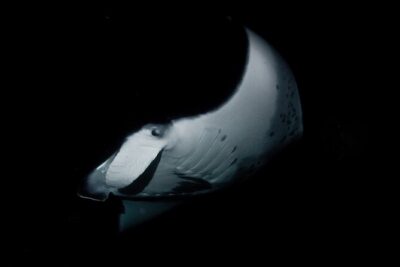 ★ 5.0One Tank Manta Night Dive and SnorkelFrom $13556 reviews
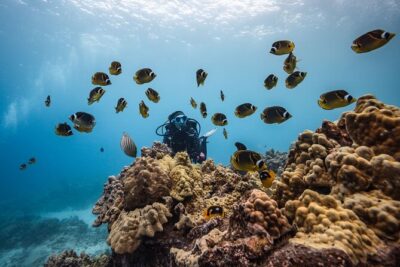 ★ 5.0Two Tank Morning Reef Dive and SnorkelFrom $19554 reviews
 ★ 5.02-Tank Daytime Scuba Dive Boat TripFrom $22826 reviews
 ★ 4.52 Tank Shore Dive at Sea Turtle Cove19 reviews
 ★ 3.5Hilo’s Remote Tropical Reef 2 Tank Boat Dive5 reviews
 ★ 5.0Two Tank Morning Scuba DiveFrom $2053 reviews
Browse the lists this tour appears in